






 Portuguese
  Spanish
  4 min of reading
  2 comments





The States That Lead The Ranking Of Least Dependent On Bolsa Família, According To IBGE Data; Program Represents Less Than 2% Of Family Income In These Regions.
The latest data reveals a curious picture of Brazil: while millions of families across the country depend on Bolsa Família, three states stand out for registering the lowest percentages of households benefiting from the program.
Santa Catarina appears once again at the top of positive indicators.
According to data from the IBGE, the state has the lowest participation in the Bolsa Família Program in 2024.
-
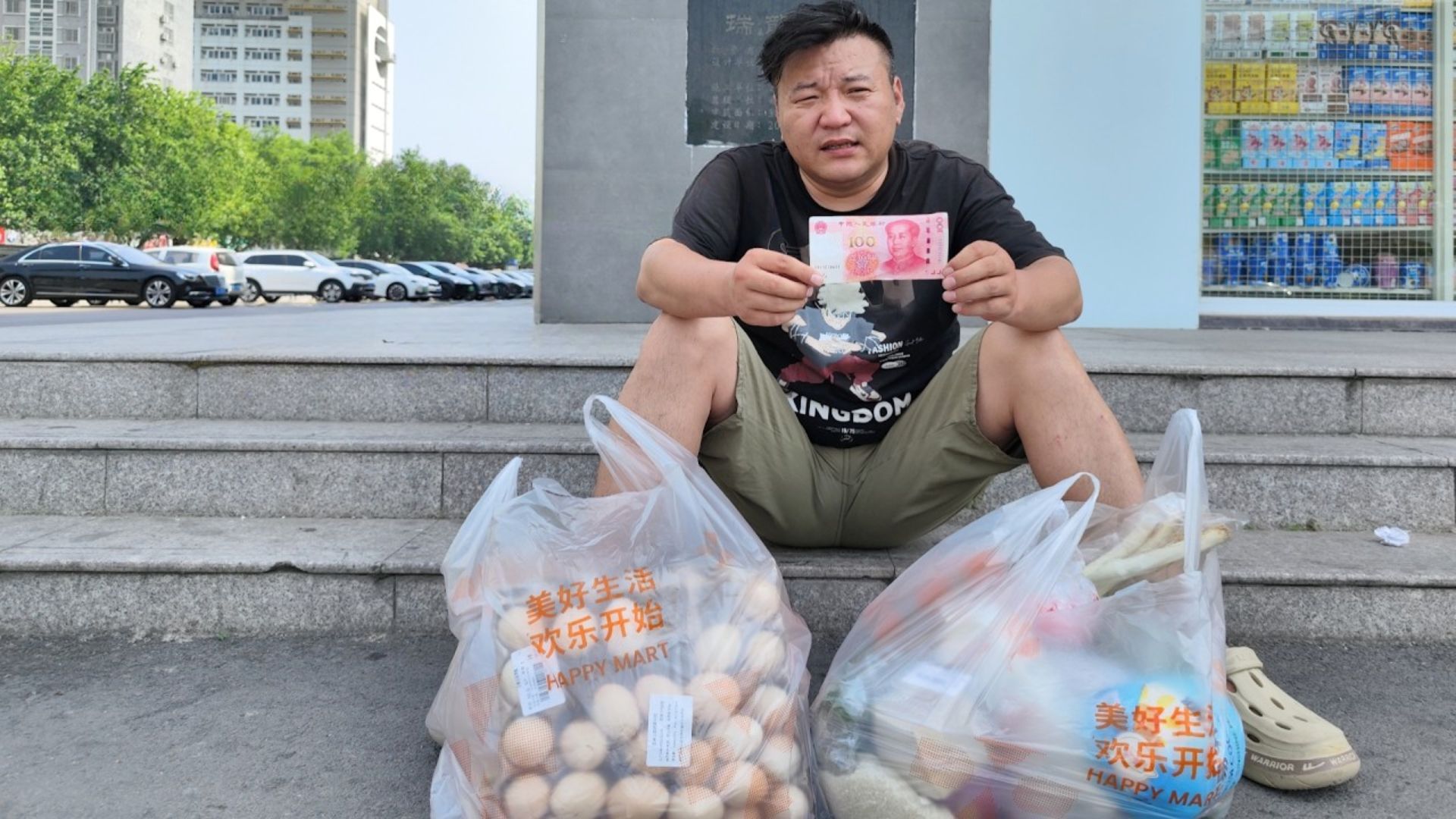
A man went to the supermarket in China with the salary of a single day’s work, and what he put in the cart will make any Brazilian question why they pay so much to eat so little.

-
Louvre sees $102 million worth of jewels disappear in daring heist, and now the crime that shocked Paris will hit the screens

-
The claw machine may seem like a shopping mall game, but a man who started from scratch has 1,000 of them spread across Brazil and earns R$ 800,000 per month while the claw holds the entire business together.
-
INSS Consigned Loans: Bank to Refund Amounts After STJ Nullifies Loans Made by Illiterate Person at ATM and Decides That Password, Chip Card, and Even Use of Money Do Not Validate Contracts



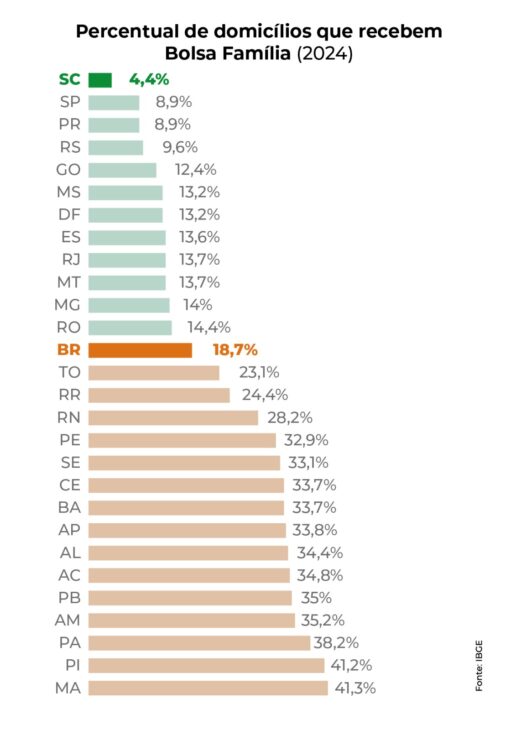
Only 4.4% of households in Santa Catarina receive the benefit. The national average is 18.7%.
São Paulo and Paraná share the second position, with 8.9% of the households served.
The data is part of the Continuous PNAD Survey — Income From All Sources 2024, conducted by the Brazilian Institute of Geography and Statistics.
Another state that shows very positive numbers is Rio Grande do Sul: only 9.6% of Gaúchos receive the benefit. These are the only four states with rates below 10%.
Reduced Participation In Bolsa Família
The survey shows that, in Santa Catarina, out of about 2.8 million households, only 123 thousand are included in Bolsa Família. In Brazil, 14.8 million households receive the benefit, out of a total of 79.1 million.
Thus, Santa Catarina maintains the lowest participation rate in the Bolsa Família program among all Brazilian states.
São Paulo and Paraná, with 8.9%, are also well below the national average. These three states lead the ranking of those least dependent on the federal government’s main income transfer.
Weight Of Social Programs In Income
The study brings another relevant fact: Santa Catarina is the state where social programs have the least impact on family income. Only 1% of the income of households in Santa Catarina comes from social benefits. The average in Brazil is 3.8%.
In comparison with other states, the difference is significant. São Paulo appears with 1.7%, the Federal District with 1.8%, and Paraná with 1.9%. In contrast, Maranhão registers 10.8%, Ceará has 10.2%, and Pará and Piauí reach 9.7%.
These numbers present a portrait of regional inequality in the country, but also highlight the strengthening of the economy in the South and Southeast states, mainly among those with the lowest indices.
Santa Catarina: Increase In Income And More Jobs
Santa Catarina also had a significant advance in average per capita income. The value went from R$ 3,203 in 2023 to R$ 3,590 in 2024, a growth of 12%.
The state now ranks fourth among the highest incomes in the country.
Above it are only the Federal District, with R$ 5,147, São Paulo, with R$ 3,785, and Rio de Janeiro, with R$ 3,618. The national average is R$ 3,057.
The income of Santa Catarina families is predominantly composed of labor, which represents 79.3% of total income.
Other sources, such as retirements and pensions, account for 20.7%. Social programs contribute only 1%.
Government Highlights Public Policies And Low Dependence On The State By Bolsa Família
Governor Jorginho Mello stated that the results reflect the actions of the state government. He highlighted investments in infrastructure, education, and stimulation of entrepreneurship as pillars of economic growth in Santa Catarina.
“Santa Catarina is doing its homework, attracting investments, betting on entrepreneurship, investing in infrastructure, education, and so many areas. All of this to stimulate our economy and ensure better opportunities for people. It’s no coincidence that we have the lowest levels of poverty and extreme poverty in the country,” he said.
The state secretary of Industry, Commerce and Service, Silvio Dreveck, emphasized that the focus is on job creation. According to him, this is the most effective policy for social inclusion.
“Social programs are important to guarantee the livelihood of the most vulnerable families. However, job creation is still the best policy for social inclusion. That is why the Government of Santa Catarina has focused on stimulating the economy and vocational training. And it has produced results. We generated over 60,000 formal jobs in 2025 and only the Sine has more than 7,000 open vacancies,” he stated.
Less Dependence And More Opportunities
The low dependence on social programs in Santa Catarina, São Paulo, and Paraná does not mean an absence of vulnerability, but indicates that most of the population in these states finds sustainable alternatives to secure their income.
IBGE data show that economic growth, combined with job and income generation policies, can reduce the need for government assistance.
These states establish themselves as references in combating poverty through the strengthening of the local economy.
At the same time, the numbers highlight the ongoing challenge in other regions of Brazil, where Bolsa Família represents a significant share of income.
The difference in percentages reinforces the importance of regional public policies that expand opportunities and ensure more financial autonomy for families.
Different Paths, Similar Challenges
Despite the distinct realities, all states face the challenge of improving the quality of life for the population.
Santa Catarina, São Paulo, and Paraná advance based on economic growth and low dependency rates.
Other regions still need specific policies to combat inequalities and promote inclusion, being extremely dependent on Bolsa Família.
This contrast helps to understand Brazil in its diversity and complexity — where development goes beyond assistance, but mainly through opportunities.








I have read some excellent stuff here Definitely value bookmarking for revisiting I wonder how much effort you put to make the sort of excellent informative website
Your blog is a treasure trove of valuable insights and thought-provoking commentary. Your dedication to your craft is evident in every word you write. Keep up the fantastic work!