






 Portuguese
  Spanish


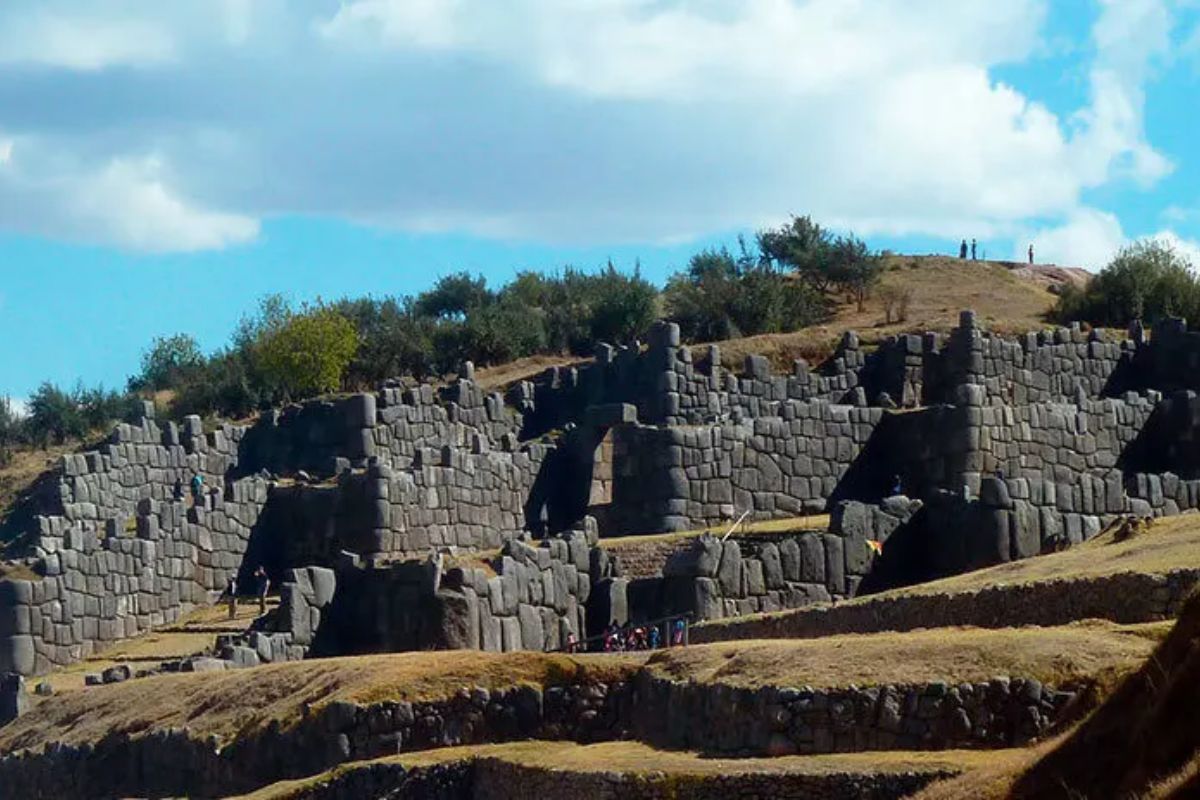


Recent Studies Suggest That The Gigantic Stones Of Sacsayhuamán May Be Much Older Than The Inca Empire, Blending Advanced Seismic Engineering, Enigmatic Underground Structures, And A Possible Legacy Of A Forgotten Civilization In Andean History.
High in the Peruvian Andes, at nearly 3,962 meters above sea level, the gigantic stones of Sacsayhuamán form zigzagging walls with limestone blocks weighing up to 200 tons, fitted together so precisely that a razor blade cannot fit between them. At first glance, they appear to be merely an extreme feat of Inca engineering, but a combination of laser scans, weathering analyses, and structural studies conducted in 2025 opened an unsettling possibility: the Incas may have inherited these megalithic foundations from a much older culture.
If confirmed, this does not just involve a date adjustment in textbooks. We are faced with a scenario where an essential part of South America’s history may have been built on an incomplete timeline, in which a previous civilization mastered techniques that we cannot replicate today, disappears without a name, and leaves as the only testimony precisely these gigantic stones of Sacsayhuamán, silent and almost impossible to explain with the traditional tools of archaeology.
Giant Stones of Sacsayhuamán That Should Not Exist
On the slopes above Cusco, the gigantic stones of Sacsayhuamán form zigzagging walls, with hundreds of blocks, many of which weigh over 50 tons and some exceeding 200 tons.
-
Man Converts Water Tank into $20,000 Luxury Boat, DIY Video Reaches 571,000 Views on World Tech Channel

-
Inventor Builds Amphibious Vehicle with Kayak and Electric Motors, Gains 223,000 Views on Quiet Nerd Channel
-
Former Yale Hospital Cleaner Returns as Resident Doctor After a Decade; Shay Taylor-Allen Transitions from Janitorial Duties to Medical Practice

-
Microsoft Submerges 855 Computers in Nitrogen-Filled Capsule 35 Meters Under the Scottish Sea, Records Eight Times Fewer Failures Than on Land After Two Years





In practical terms, it is like moving the equivalent of dozens of elephants or a fully loaded commercial airplane across rugged terrain, with no roads, no wheels, no pack animals, and at altitude where the air is thin and physical effort is brutal.
Geological studies based on laser mapping conducted in 2025 identified quarries in different locations. Some are nearby, on the same hill. Others are located between 24 and 32 kilometers away, separated by steep valleys and rivers.
The obvious question is why choose such distant blocks when stone was available nearby. One hypothesis is that these remote quarries offered specific characteristics of grain, color, or durability for certain parts of the construction, which would imply a sophisticated ability to select material and manage logistics.
Even with all this, what is most impressive is not just the transportation of the blocks, but the final result. The walls extend for almost 304 meters, with layers of stone fitted with a precision that has survived centuries of earthquakes, without mortar, without collapse, in an active seismic region.
A Three-Dimensional Puzzle of Micrometric Precision

These blocks are not simply stacked rectangles. Many have between 10 and 12 angles, forming a true 3D puzzle, where each stone fits into several neighboring ones at the same time. The joints are so perfect that there are no gaps, no signs of corrective filling, and no discarded stones due to mistakes.
In 2025, high-resolution 3D scans showed that the contact surfaces between the blocks are not flat.
They are subtly curved in three dimensions, which would require, today, digital modeling, laser-guided sculpting, or high-precision tools to reproduce this type of fit in stones weighing dozens or hundreds of tons.
The traditional explanation speaks of slow manual work, percussion with harder stones, and softer bronze chisels than the limestone itself.
Theoretically, it is possible. In practice, carving hundreds of curved surfaces that fit perfectly at multiple contact points, without a single visible error, seems to exceed what we would expect from such simple tools.
Some researchers suggest that techniques unknown today may have been used, ranging from highly controlled abrasion methods to possible temporary rock softening techniques.
There is no chemical confirmation to prove these hypotheses, but the concrete result remains before our eyes: the gigantic stones of Sacsayhuamán display a degree of precision that still challenges conventional engineering.
An Upside-Down Timeline In The Andes
Perhaps the most shocking point revealed by the studies of 2025 is not in the shape of the stones, but in time. Weathering analyses indicate that the lower blocks, precisely those with the perfect fittings, exhibit erosion signs compatible with a period of exposure of 1,000 to 2,000 years, well beyond the time when the Inca Empire thrived.
The upper layers, on the other hand, seem chronologically to correspond to the 15th century, the time of Inca expansion. And the difference is not just in age.
The older and deeper the stones, the more refined the quality of the masonry; the higher and more recent, the rougher and more irregular the execution, with the use of mortar and less precise joints.
This inverts the typical logic of technological development. Instead of observing a progression from simple to advanced techniques, we see the opposite: mastery appears at the base, and attempts at imitation arise later, on top of it.
This inversion is reinforced by analyses of tool marks that point to polished surfaces like glass and microscopic striations that do not align with the use of simple bronze chisels.
The Inca oral tradition had already hinted at something in this direction. In accounts recorded by chroniclers like Garcilaso de la Vega, elders claimed that the Incas did not build those gigantic stones of Sacsayhuamán, but inherited the structures from “builders of the first era” or from Viracocha, a civilizing deity.
For a long time, these statements were treated as myth. Recent data brings them back to the discussion table.
Seismic Engineering, Sky And Subsurface: A Much More Complex Project
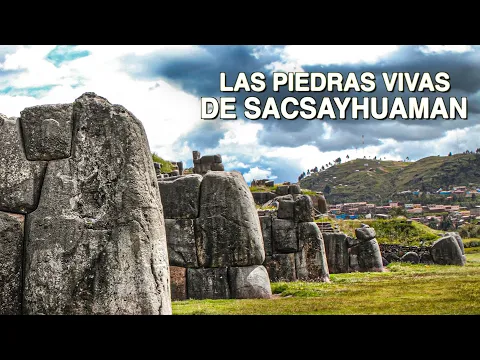

Sacsayhuamán does not impress only by the size and apparent age of the stones. The way they behave in one of the most seismic countries in the world suggests deliberate seismic engineering. The interlinked stones are not simply resting against each other.
They move together during an earthquake, absorb part of the energy, and readjust, keeping the wall standing without catastrophic cracks.
Moreover, there is evidence of alignments with solstices and celestial events, such as sunrises and sunsets on specific dates and appearances of important stars.
The Incas were excellent observers of the sky, but if the megalithic portions are indeed older, this suggests that this astronomical knowledge may have roots in an even earlier culture.
In 2025, ground-penetrating radar surveys identified subterranean structures beneath the visible areas of Sacsayhuamán, including chambers, corridors, and possible sealed compartments.
These are not natural voids, but rather designed and excavated spaces in solid rock at high altitude, with a purpose still not completely understood.
They may have been defensive shelters, ceremonial centers, or even repositories of knowledge, but the lack of complete exploration keeps the answers buried.
The pattern is repeated in other parts of the Andes, such as Ollantaytambo, Cusco, and Machu Picchu. Large blocks perfectly fitted at the bases, followed by smaller and simpler complements in the upper levels, as if a single megalithic tradition had left foundations spread across a pan-Andean network, later utilized by the Incas.
Are We Dating The Renovation Instead Of The Creation?
Much of the official chronology of Sacsayhuamán is based on dating organic materials associated with the site, such as remains of charcoal, wood, or plant matter.
These tests point to the 15th century and confirm intense Inca activity in the walls and surrounding areas. The problem is that one cannot date stones with carbon, only what was present during renovations, occupations, or reconstructions.
In 2025, researchers turned to optically stimulated luminescence dating on sediments trapped between the stones, trying to determine when those grains of sand were last exposed to light.
Some results indicated ages much older than the Inca period, suggesting that the more precise fittings could be well before. These data are still complex and need validation, but they open a provocative possibility.
If we are mainly dating renovations and not the creation of the megalithic layers, the Andean timeline ceases to be a linear sequence of progress and begins to resemble a cycle, in which knowledge is acquired, lost, and partially rediscovered.
In this scenario, the Incas would have been guardians and restorers of inherited sacred structures, not the original authors of all of them.
This does not diminish Inca importance. On the contrary, it shows that even an advanced empire recognized that there was something earlier, so impressive that it deserved to be preserved and integrated, even without full understanding of how it had been done.
What The Gigantic Stones Of Sacsayhuamán May Still Change In Our View Of History
Together, the evidence highlighted by recent studies suggests that the gigantic stones of Sacsayhuamán are not just a sophisticated Inca fortress, but a palimpsest in stone, in which different epochs left layers of work, respect, and attempts at imitation.
We have blocks weighing up to 200 tons coming from distant quarries, three-dimensional fittings with millimetric curves, advanced seismic behavior, erosion signs indicating differentiated ages, still little-explored subterranean structures, and a repeated pattern in other Andean sites.
Combined with the oral tradition that attributes the foundations to builders from an earlier era, these elements support the hypothesis of a lost civilization or a set of forgotten techniques that predate the Inca peak.
None of this means that there is already consensus or that the official history is automatically toppled. It means that each new study makes it harder to treat Sacsayhuamán as “just another Inca work”.
The gigantic stones of Sacsayhuamán remain silent, but for those who pay attention, they seem to say that we have not yet told this entire story.
And you, after learning so many details about the gigantic stones of Sacsayhuamán, do you find it more likely that they are merely the pinnacle of Inca engineering or the last visible vestige of a much older Andean civilization that we still do not know how to name?


