Portuguese
  Spanish


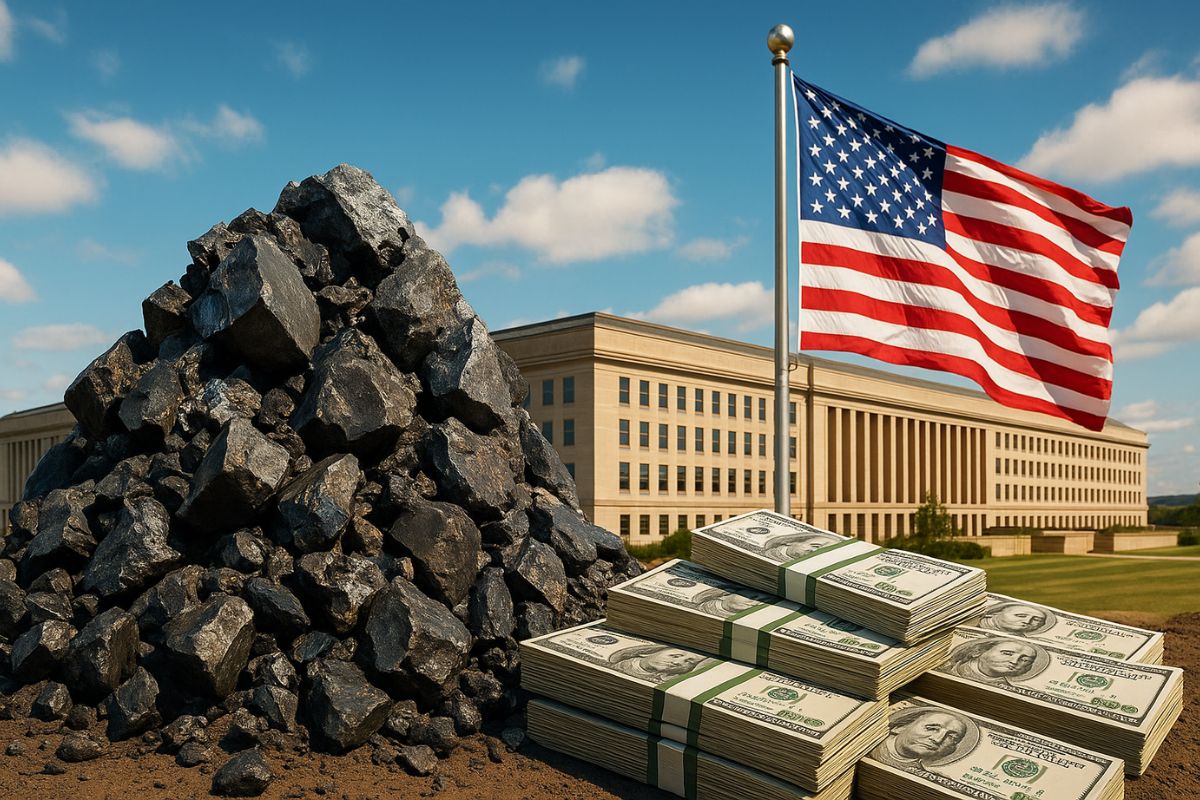


In The Midst Of Escalating Trade Tensions, The US Department of Defense Plans To Form A Strategic Stockpile Of Critical Minerals, Including Cobalt, Antimony, And Tantalum, Following New Export Controls Imposed By Beijing.
The Pentagon announced plans to invest US$ 1 billion in the purchase of critical minerals, in an initiative to create the largest strategic stockpile of its kind ever seen in the United States. This measure comes after the Chinese government imposed new restrictions on the export of rare earths and essential materials for the military and high-tech industries.
The decision reinforces the self-sufficiency and national security movement of the US in light of global dependence on China, which accounts for about 70% of the world’s rare earth production. According to the portal infomoney, the plan is led by the Defense Logistics Agency (DLA) and includes massive purchases of cobalt, antimony, and tantalum, inputs considered vital for defense equipment, semiconductors, and batteries.
Strategic Stockpile And Objectives Of The Pentagon
According to recent public documents, the Department of Defense intends to expand stockpiles of materials deemed sensitive to national security.
-
Brazil Faces Caregiver Shortage Despite Having 34.1 Million Elderly, Highlighting a Major Challenge for Families

-
Brazil’s Assaí Generates $4 Billion in Quarterly Revenue, Profits $16.7 Million, Highlighting High Tax Burden

-
Former Marketing Agency Owner Thrives on Foraging for 250 Days, Sampling Over 170 Plants, and Says He No Longer Remembers Supermarkets
-
IKEA’s AI Handles Nearly Half of Customer Calls, Company Reassigns 8,500 Staff as Design Consultants, Boosting Revenue by €1.3 Billion


The DLA plans to acquire up to US$ 500 million in cobalt, US$ 245 million in antimony, and US$ 100 million in tantalum, amounts that demonstrate the priority given to forming critical reserves.
These materials are essential for the manufacturing of weapons, electronic systems, and advanced technologies used in fighters, drones, and military communication equipment.
According to internal estimates, the DLA’s current stockpiles valued at US$ 1.3 billion in 2023 would not be sufficient to ensure supply in the event of a prolonged trade blockade with China.
Reaction To The Chinese Restriction Strategy
The American move comes in direct response to the decision of the Ministry of Commerce of China, which, last week, announced new controls on the export of rare earths and strategic materials.
These resources are essential not only for the defense sector but also for the production of chips, electric vehicles, and solar panels.
President Donald Trump reacted to the announcement by promising additional tariffs of 100% on Chinese products starting November 1.
Furthermore, the US government is considering imposing restrictions on the export of software deemed critical, escalating the so-called “technological war” between the two largest economies on the planet.
For analysts, the measures from both countries reflect an escalation of geoeconomic tensions that go far beyond tariffs.
Critical minerals have become a field of strategic dispute, where dominance over production chains can define military and technological advantages in the long term.
Global Dependence And Western Vulnerability
China dominates almost 70% of the global rare earth market and controls a significant portion of the refining of metals such as lithium, nickel, and cobalt, all crucial for energy transition and high-tech industries.
This dependence worries Western countries, which are looking to diversify suppliers and reactivate mines in domestic territory or in allied nations.
The American plan to create an emergency stockpile aims to reduce the industrial and military vulnerability of the United States, which currently relies on imports to supply up to 80% of its strategic mineral needs.
The Pentagon believes that the US$ 1 billion investment is an initial step within a broader project of reindustrialization and technological autonomy.
Economic And Geopolitical Implications
The Pentagon’s initiative signals a paradigm shift in US industrial and defense policy, moving closer to models adopted during the Cold War, when strategic stockpiles were considered instruments of sovereignty.
The accumulation of these materials may directly influence global prices of rare metals and provoke new realignments among producing countries such as Australia, Canada, and Brazil.
Experts claim that strengthening stockpiles and internal supply chains will be crucial for Western energy and technological security in the coming decades.
However, they warn that the race for critical minerals may intensify geopolitical disputes and create environmental imbalances in mining regions.
Do you believe that the United States is right to form strategic stockpiles of critical minerals in light of the restrictions imposed by China? Or could this dispute increase the risks of a new global economic war? Leave your opinion in the comments; we want to hear from those closely following the impacts of this rivalry on the global economy.