






 Portuguese
  Spanish


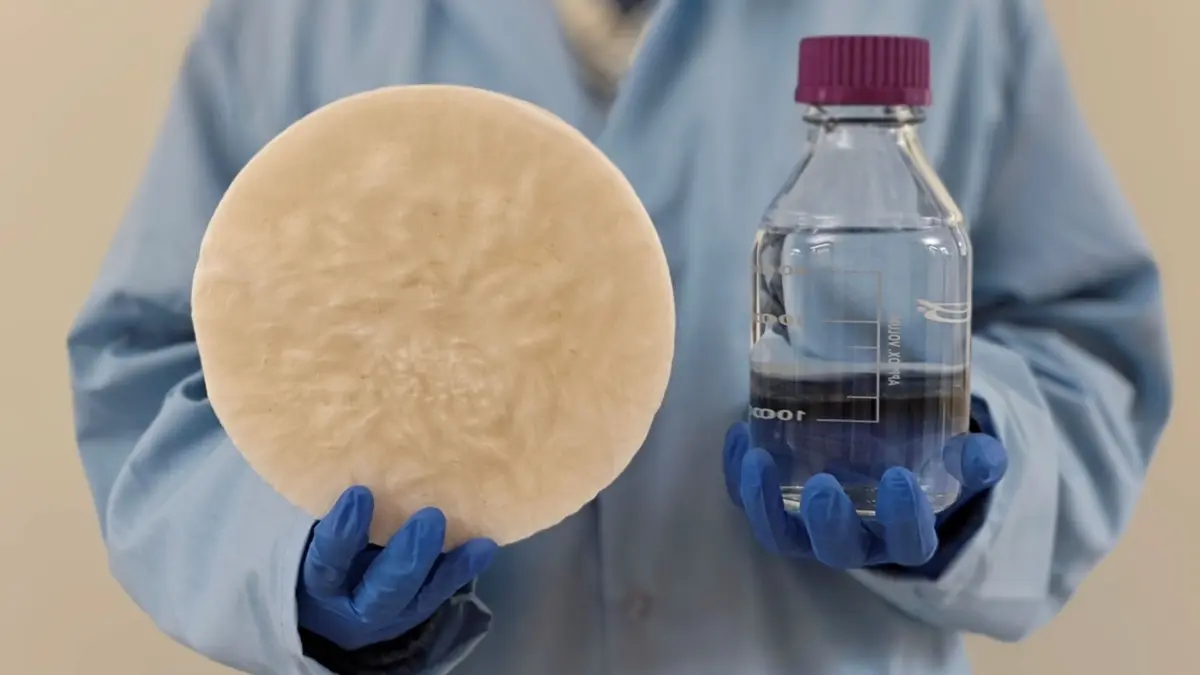


American Technology Transforms Food Waste Into Drinking Water Source, Extracting 14 Liters Daily From Air and Contributing to Sustainability in Water Scarce Areas
Researchers from The University of Texas at Austin have found an innovative method capable of extracting up to 14.19 liters of drinking water from the air per day. The difference? The process uses only one kilogram of biomass daily, such as food scraps and shells.
This technology has the potential to transform access to water in arid regions and remote communities, utilizing materials that would normally be discarded.
Transformation of Biomass Into Functional Hydrogels
The developed system transforms biomass into “functionally molecularly modified biomass hydrogels.” These hydrogels capture moisture directly from the atmosphere.
-
China Develops Custom 140-Ton Electric Mining Truck with 770 kWh Swappable Battery, Deploys 290 Units in Xinjiang’s Largest Zinc Mine

-
Meta to Launch Arena, a New Prediction App Targeting 3.56 Billion Users, Competing with Polymarket and Kalshi

-
Scientist Challenges Famous Human Evolution Theory, Argues Homo Sapiens Evolved Gradually Over Thousands of Years
-
15-Year-Old American Builds Ocean Generator with PVC Pipe and 3D-Printed Propeller for $12, Wins National Prize, Presents at White House, and Makes Forbes 30 Under 30 List




“This material gives us a way to tap into the most abundant resources of nature and produce water from the air, anytime and anywhere,” said Weixin Guan, the lead researcher of the study.
Guihua Yu, a professor at the Texas Materials Institute, highlighted the specifics of the method: “With this innovation, we have created a universal molecular engineering strategy that allows various natural materials to be transformed into high-efficiency sorbents“.
How the Drinking Water Generation Process Works
The method works in two stages. First, natural polysaccharides are modified at the molecular level, enhancing their capacity to capture moisture from the air.
In the second stage, the hydrogels are moderately heated to about 60°C, releasing the stored water in purified form. This temperature can be achieved with solar energy or waste heat from industrial processes, making the process sustainable.
This approach differs from traditional methods, which shut down and consume a lot of energy. Moreover, it avoids the use of petrochemical materials, common in other technologies.
Superior and Sustainable Production
Tests showed that one kilogram of hydrogel can produce up to 14.19 liters of water per day. This performance surpasses current technologies, which generate between 1 and 5 liters per kilogram.
The researchers also confirmed the effectiveness of the process with various types of biomass, including cellulose, starch, and chitosan. This demonstrates the possibility of repurposing a wide range of materials to produce clean water.
“Instead of the traditional ‘select and combine’ approach, which requires choosing specific materials for specific functions, this general molecular strategy allows almost any biomass to be transformed into an efficient water collector,” emphasized the researchers.
Suitability for Different Conditions
The new method can extract water even in arid environments, making it a viable alternative for different climatic conditions.
“This opens an entirely new way of thinking about sustainable water collection, marking a major step toward practical water collection systems for households and small communities,” stated Guihua Yu.
Another relevant aspect is sustainability. Biomass-based hydrogels are biodegradable and can be produced from available materials.
With information from Interesting Engineering.





