Portuguese
  Spanish


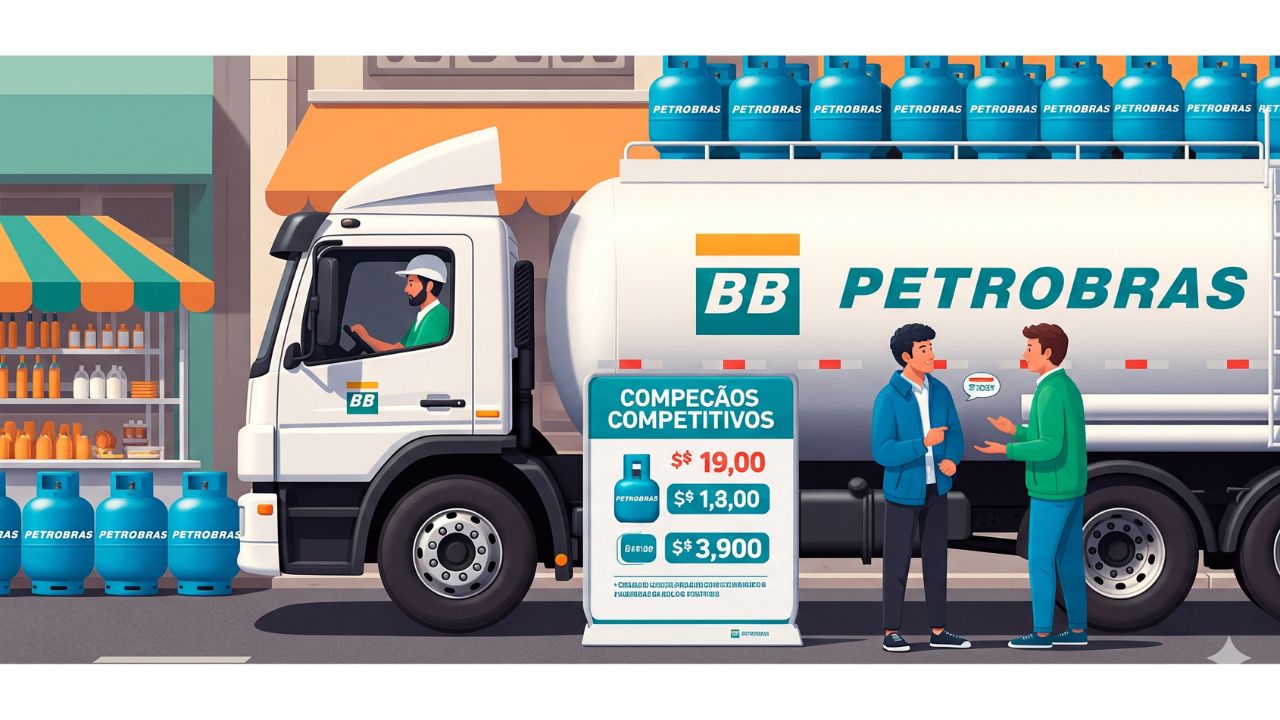


Petrobras Evaluates Return to Kitchen Gas Distribution After Sale of Liquigás. Understand the Impacts on Cylinder Prices.
Petrobras has decided to resume studies to return to the kitchen gas distribution in Brazil, five years after selling Liquigás.
The measure was approved in August 2025 by the company’s board of directors and may directly impact the price of gas cylinders, which has been criticized by the federal government.
It is still unclear whether the company will return to direct sales to consumers or just act as a distributor, but the movement reignites the debate about competition and accessibility to the product.
-
Oil production grows in Rio, but reserve replacement raises a warning sign

-
Petrobras is expected to complete the drilling of the Morpho well in the Foz do Amazonas in August 2026, the first well in the Equatorial Margin, an oil frontier that the ANP estimates at more than 30 billion barrels and could redraw the map of Brazil.

-
Oil returns to the center of concerns with tension between the US and Iran

-
IEA reduces forecast for global oil demand in 2026 after impacts of the Middle East crisis



Why Does Petrobras Want to Return to the Kitchen Gas Market?
According to an official statement, Petrobras aims to engage in “profitable businesses and partnerships in distribution activities, respecting current contractual provisions.”
The return is part of the company’s Strategic Plan and is still in the embryonic phase.
This decision comes at a time when the Lula government is pushing for a reduction in gas prices. In May, during an agenda in Paraíba, the president stated:
“Petrobras sells the kitchen gas at R$ 37. When it arrives here, it’s R$ 110, R$ 120, and in some states even R$ 140. And I can say that it’s wrong.”
How Did Petrobras Operate Before the Sale of Liquigás?
Until 2020, Petrobras operated in gas distribution through Liquigás, responsible for bottling and marketing LPG.
The company had 23 operational centers, over 4,800 authorized resellers, and a presence in all states, holding about 21.4% of the national market.
The sale of Liquigás for R$ 4 billion occurred during the Bolsonaro administration, as part of the privatization program.
The goal, according to the management at the time, was to reduce debts and concentrate investments in pre-salt oil exploration.
Can Gas Cylinders Become Cheaper?
Experts disagree. According to Eric Gil Dantas from the Brazilian Institute of Studies and Social Research (Ibeps), there is room for price reduction since the profit margins of distributors grew by 188% between 2020 and 2023.
On the other hand, Bruno Benassi from Monte Bravo warns that any cut in the final price compromises Petrobras’s profitability:
“The lower the price of the cylinder, the lower the operating margin will be. The equation is not simple: reducing prices may please consumers, but it jeopardizes the return on investment.”
What Is the Current Price of Kitchen Gas in Brazil?
According to a survey by the National Oil Agency (ANP), the average price of a 13 kg cylinder is R$ 107.82.
The final price includes production costs, taxes, transportation, and profit margins from gas distribution and resale.
The sector is concentrated in a few companies. In 2022, four distributors held nearly 90% of the market: Copa Energia, Ultragaz, Nacional Gás, and Supergasbras.
What Do Gas Distributors Say?
The National Union of GLP Distributors (Sindigás) stated that Petrobras’s entry does not pose a significant threat:
“Any new entrant that adheres to the same market rules is welcome. The period when Liquigás was part of the sector was considered healthy for all,” said President Sérgio Bandeira de Mello.
According to him, the main way to reduce costs lies in logistical efficiency, such as using georeferencing and technological innovation in deliveries.
Impacts on Competitiveness
For analysts, Petrobras’s return could reshape the sector’s dynamics. If the state-owned company operates only as a distributor, it will compete for margins with private competitors.
A direct sales strategy to consumers, with its own fleet and resale points, could transform how kitchen gas is marketed in the country.
Ilan Arbetman from Ativa Investimentos sums it up:
“Any new player alters the market dynamics. The competition is similar to that of bottled water or soft drinks, with a fierce battle for sales points and space.”