






 Portuguese
  Spanish




Petrobras, The Largest Oil Producer in Brazil, Launches an Ambitious Strategy to Recover Production at the Tupi Field in the Pre-Salt and Increase Natural Gas Production at Roncador.
In a move that promises to shake up the energy sector in Brazil, Petrobras has announced a bold strategy to revitalize its production at the first pre-salt field to operate in Brazilian territory.
Despite recent challenges at the Tupi field, located in the Santos Basin, the state giant aims to reach a historic milestone: returning to a level of 1 million barrels of oil per day (bpd) by 2027.
This revelation was made by Petrobras’ Director of Exploration and Production, Sylvia dos Anjos, last Thursday (24) during an interview with the Reuters news agency.
-
Qantas and Airbus Invest in Company Aiming to Convert Unsorted Household Trash into Jet Fuel

-
Brazil’s ANP Opens 86 New Oil Blocks in the Equatorial Margin, Expanding the Amazon River Mouth Frontier

-
OPEC+ Boosts Oil Supply by 188,000 Barrels per Day in July 2026, Leading to Price Drop from $112 to $89 per Barrel in Under Two Months

-
TotalEnergies Signs 20-Year Deal to Purchase 2 Million Tons of LNG from Alaska, Boosting Project Viability
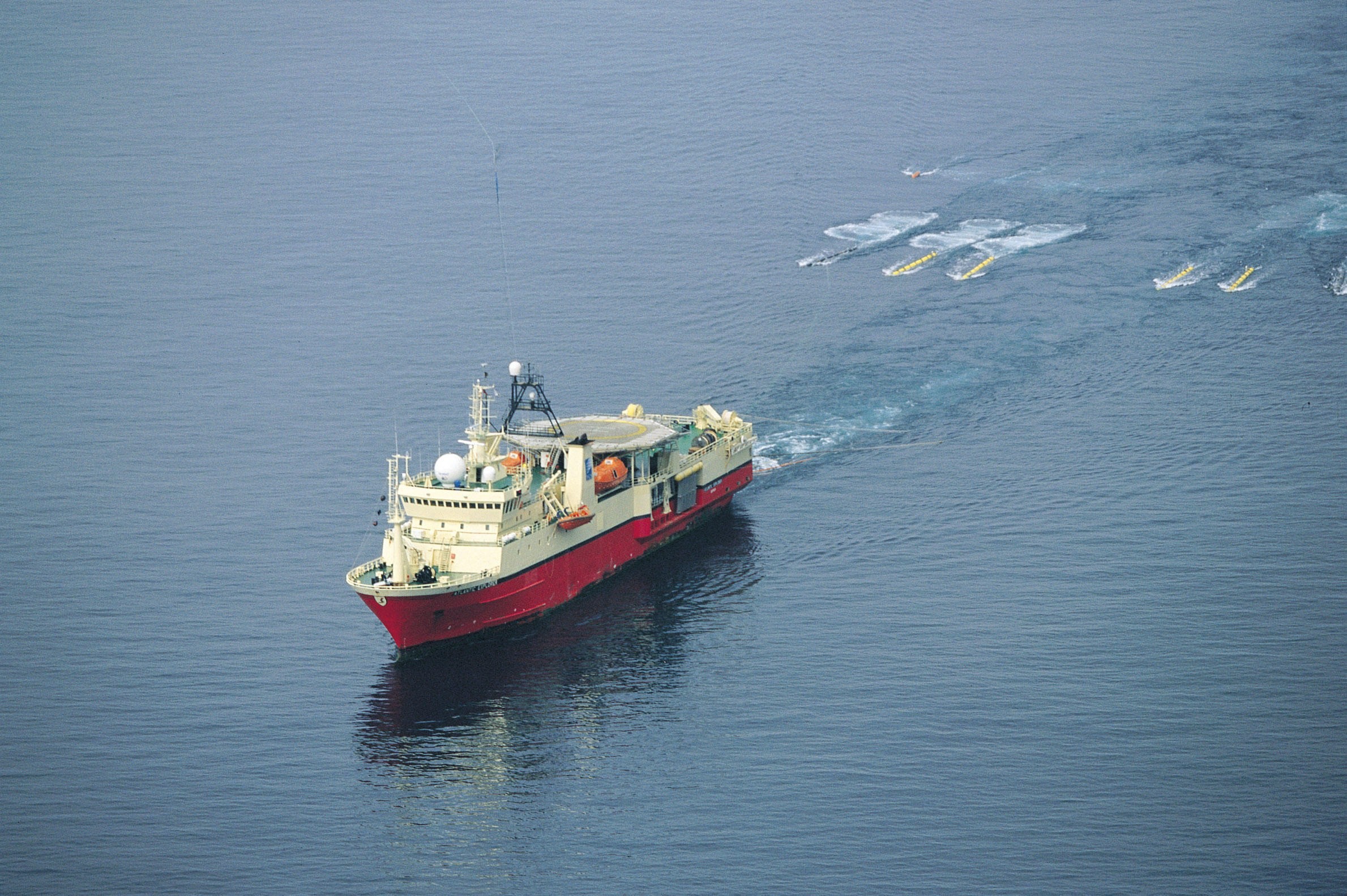


According to dos Anjos, Petrobras intends to make a strategic investment in the Tupi field, which has already been one of the country’s largest producers but has experienced a natural production decline in recent years, stabilizing at 832.6 thousand bpd in August this year.
Nevertheless, the significance of Tupi for the Brazilian oil economy is undeniable.
In comparison, Búzios – another field in the Santos Basin – has already reached 605.6 thousand bpd, according to data from the National Agency for Petroleum, Natural Gas and Biofuels (ANP).
“Our goal is to reach 1 million in Tupi again, it was declining, but it will rise again,” dos Anjos told Reuters.
The Bet on New Drilling and Expansion of Fields
To achieve this goal, Petrobras plans to increase the number of drillings, focusing on additional wells to enhance Tupi’s potential. “Búzios will surpass (Tupi), but Tupi is also exciting,” the executive added.
The plan is part of Petrobras’ new business project for the period from 2025 to 2029, whose official announcement is scheduled for November this year.
Additionally, the investment program includes 25 new complementary wells to be drilled in the Campos Basin in 2025, aimed at reinforcing oil and gas discoveries.
These operations will also cover strategic areas of the Santos Basin, with a new drilling campaign planned for next year.
Búzios and the Projected Production Record
Although Petrobras is committed to reversing the natural decline trend in Tupi, the expectation is that the Búzios field will surpass Tupi’s results and reach a mark of 1 million barrels of oil equivalent per day (boed) in the second half of 2025.
The term “boed” includes natural gas production, which is also strategic for the Brazilian state company.
With the production units already planned for Búzios, Petrobras estimates a production jump to approximately 2 million barrels of oil per day by 2030.
This significant advance is aligned with the company’s long-term plan, according to a statement released in April this year.
Reopening Wells to Expand Natural Gas Production
While Petrobras works to boost its oil production, natural gas production is also receiving special attention from the state company.
The goal is to increase by about 3 million cubic meters per day the production of this essential input, with the reopening of two wells in the Roncador field, located in the Campos Basin.
According to dos Anjos, this expansion directly meets the expectations of the federal government, which has been pressuring Petrobras to explore new opportunities to increase the supply of natural gas in Brazil.
The director also highlighted that one of these wells, which has the potential to produce 1.7 million cubic meters of natural gas per day, is expected to resume operations in 2025.
“Together, the two will add 3 million a day. There is a third well, but the team said they need more time to assess,” dos Anjos told Reuters.
Exploration in the Equatorial Margin and Environmental Barriers
Another important chapter in Petrobras’ expansion is the exploration of the Foz do Amazonas, a region with high oil potential in the Equatorial Margin.
However, carrying out this operation still depends on obtaining an environmental permit.
Even with all efforts to meet the requirements set forth by Ibama, the permit remains pending, postponing the start of the exploratory campaign until at least 2025.
The frustration over this delay is evident, as expressed by the executive during an event held in the auditorium of Coppe, at the Federal University of Rio de Janeiro (UFRJ).
This issue is sensitive for Petrobras, which sees significant growth potential in the area. Dos Anjos emphasized:
“I am frustrated that Petrobras has not yet obtained the license for the exploratory campaign, despite considering that the main requirements of Ibama have been met.”
The Promising Future of Petrobras in Deep Waters
Petrobras’ expansion in pre-salt fields reaffirms Brazil’s importance in the global energy sector.
With strategies such as recovering production in Tupi, strengthening Búzios, and advancing in Roncador, the state company projects a future marked by an even more robust and diversified production capacity, while seeking to optimize resources and expand its horizons in search of new sources of natural gas.
With the goals set for the next five years and the ambitious production plan through 2030, will Petrobras be able to maintain its leadership in the national energy landscape and respond to the growing demand for oil and gas in Brazil?




Para quem ou para quê? Não temos plantas suficientes para o volume de refino. É a mesma mentira de autossuficiência que já ouvimos. De fato mesmo, foi o petrolão e a quebradeira na empresa e nos fundos de pensão. Ah, também estive por lá, desde 1987…
A PETROBRÁS , ENTRA NUM DESAFIO EXTREMAMENTE IMPORTANTE PARA A SUA HISTÓRIA! , COMO PARTICIPEI UM POUCO DE SUA HISTÓRIA, COMEÇANDO PELO MEU PAI QUE FOI FUNCIONÁRIO DA PETROBRÁS, EU QUE COMECEI A TRABALHAR NA BACIA DE CAMPOS RJ , EM EMPRESAS DE PERFURAÇÕES DE CAMPOS DE PETRÓLEO E GÁS, E TRABALHEI PELO SISTEMA PETROBRÁS NAS PLATAFORMAS P 08 , P15 , P16 , P 09 , P10 , P 33 , P 35 , P 50, P 51 , P 52 , P 53 , P 54, P 55, P 60 , P 62 E P 66 , SENDO DE 2002 A 2021 , QUASE 20 ANOS ! , AGORA FORA DO SISTEMA PETROBRAS, SEI QUE A PETROBRÁS ESTÁ NESTE DESAFIO DE MANTER A SUA PRODUÇÃO PARA MANTER A SUA AUTOSUFICIÊNCIA DE PRODUÇÃO DE PETRÓLEO E GÁS, E DESCOBRIR NOVOS CAMPOS EXPLORATÓRIOS DE POÇOS PETROLÍFEROS PARA CONTINUAR MANTENDO A AUTOSUFICIENCIA DE PRODUÇÃO DE PETRÓLEO E GÁS !!! , ESSAS LICENÇAS DO IBAMA TEM QUE SER LIBERADAS RAPIDAMENTE , PARA NÃO HAVER UMA QUEBRA DESTA PRODUÇÃO !!! , PODENDO A PETROBRÁS VOLTAR A IMPORTAR PETRÓLEO NOVAMENTE !!! ,ESSE É O NOVO DESAFIO DA PETROBRÁS NESTA TERCEIRA DÉCADA DO SÉCULO 21 !!!! . E INOVAR EM NOVAS MATRIZES ENERGÉTICAS PARA O SEU FUTURO ! .
Muito interessante sua visão e experiência direta com a Petrobras! Com certeza, o desafio de manter a produção em alta e buscar novos campos exploratórios é enorme, especialmente num contexto onde o setor está passando por transformações significativas. Você tocou num ponto crucial sobre as licenças do Ibama, que são muitas vezes um gargalo nesse processo – qualquer atraso pode impactar direto a produção e, como você disse, até a nossa autossuficiência, gerando uma dependência de importações.
Ao mesmo tempo, essa pressão ambiental em cima das licenças também tem um peso, e a Petrobras parece andar num dilema entre crescer na produção de petróleo e buscar uma diversificação em energias renováveis. Você acredita que a Petrobras vai conseguir equilibrar esses dois caminhos, ou acha que ainda é cedo para a empresa focar em outras matrizes energéticas?
Eu também estava quando estourou a lava jato.os ratos quase quebraram a empresa.