






 Portuguese
  Spanish
  4 min of reading
  0 comments



Sensors, Submarine Drones, and Even Programming Languages: Discover the Innovations Created for Oil Workers That Are Now Transforming Areas Such as Civil Construction, Agriculture, Defense, and Technology in Brazil.
The oil industry in Brazil, traditionally associated with fuel transportation and offshore exploration, has generated innovations that go beyond the ocean. Thanks to investments in research and development made by the oil and gas sector, especially in offshore exploration and production, various technologies originally created to face extreme conditions at sea have begun to be applied in areas such as civil engineering, health, defense, agriculture, and information technology.
These advancements emerged from the need to operate in challenging environments, with high pressure, salinity, corrosion risk, and the requirement for automation and remote monitoring. What started as solutions for platforms, ships, and underwater pipelines has ultimately impacted everyday life on land.
Technologies Created for Oil Workers That Are Now in Use Outside the Sea
Optical Wire Monitoring (M.O.D.A.)
Developed by Petrobras in partnership with PUC-Rio, the M.O.D.A. system was designed to detect failures in steel cables used in flexible risers of platforms. Utilizing fiber optic sensors (FBG), the technology has been adapted to monitor elevators, bridges, and other structures in urban environments, enhancing safety in civil buildings.
-
North Korean Fiasco: Launch of the Largest Warship Ends in Sinking

-
While giant ships still burn heavy fuel and the maritime sector races against climate targets, Maersk and Vale are starting to bet on ethanol as a new route to reduce emissions at sea.

-
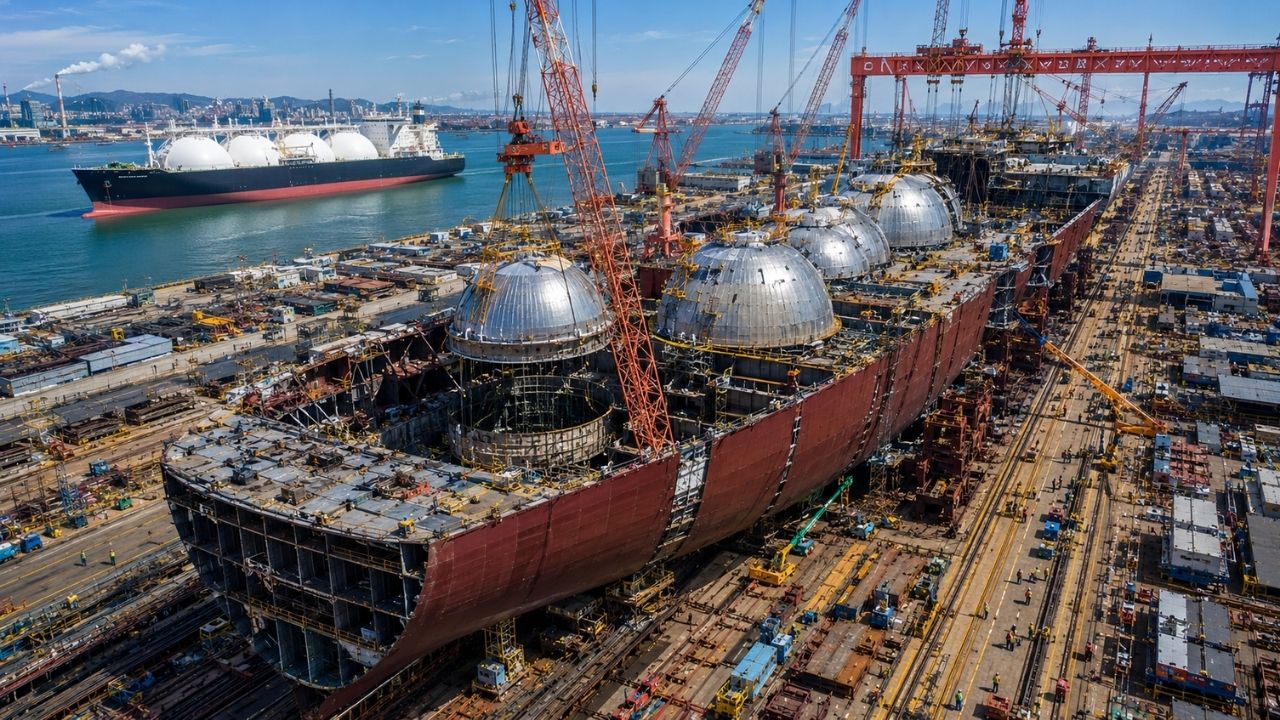
China begins construction of the world’s largest LNG ship, a 344-meter giant capable of supplying 4.7 million homes for a month, carrying 271,000 m³ of gas, and placing QatarEnergy in the largest naval order ever recorded in world history.
-
China is designing a container ship with a thorium nuclear reactor that will operate for 40 years without refueling, and the 25,000-container giant from Jiangnan Shipyard will cross oceans without emitting carbon in an industry that burns 300 million tons of fuel per year.



ROVs – Submarine Drones
ROVs (Remotely Operated Vehicles), used for underwater inspections on platforms and ships, have been adapted for marine scientific research, dam inspections, and even in drinking water treatment plants. The autonomous robot Flatfish, developed by Petrobras and Saipem, is an example of how underwater robotics from the oil sector has found new functions outside the sea.
Lua Programming Language
The Lua language, created by researchers at PUC-Rio to serve automation in embedded systems in the offshore sector, has become one of the most widely used programming languages globally in areas such as game development, industrial control, building automation, and Internet of Things (IoT).
Distributed Control Systems (SDCD)
Designed to monitor refineries and platforms with multiple simultaneous processes, SDCDs have been adapted for industrial plants, power plants, water distribution centers, and urban climate control systems. The modular architecture and remote operation capability are key points that have been transferred from the sea to land.
Advanced Anti-Corrosive Coatings
The high corrosivity of the marine environment has driven the development of resistant materials and anti-corrosive coatings, now applied to bridges, metal towers, plants, and buildings. Some of these coatings are produced from renewable sources, enhancing sustainability in the construction sector.
Expanded Impact: From the Sea to Society
The technologies that originated in offshore operations face high physical pressures, technical demands, and elevated environmental risks. Therefore, many solutions developed for platforms, ships, and underwater pipelines are robust, reliable, and versatile enough to be adapted to other sectors.
This transposition is not coincidental: offshore exploration and production require constant innovation, and investment in engineering and automation has created a fertile environment for solutions that extend beyond the energy sector. Petrobras itself, in its innovation portal, recognizes that the R&D projects undertaken with universities, research centers, and technology companies bring broad benefits to the country.
Applications in Health, Agriculture, and Defense
In the healthcare field, remote monitoring techniques and structural integrity sensors inspired by platforms are being used in smart hospitals and life support equipment. In agriculture, georeferencing technologies, autonomous sensors, and communication networks adapted from offshore platforms are employed in irrigation systems and soil analysis.
In defense, the experience with embedded automation, remote control, and modular structures has been adapted for unmanned vehicles, radar stations, and mobile operational bases — including in remote areas of the Amazon and national borders.
The Offshore Industry as a Vector of National Innovation
The oil and gas sector, through its maritime activities, has become one of the main vectors of technological innovation in Brazil. The demand for resilient, integrated, and sustainable solutions has motivated collaborations among universities, startups, and multinational corporations, promoting a transfer of knowledge that spreads across various fields.
The patents registered by institutions such as Petrobras and Brazilian universities linked to the offshore industry demonstrate how this innovation ecosystem has transversal impacts. Many of these technologies were developed with the support of the Innovation Law, ANP, and public tenders that encourage the dual use of solutions.
A Legacy Beyond Energy
The oil industry and its intense activity in deep waters have resulted in a technological portfolio that benefits much more than energy supply. With concrete applications in urban infrastructure, Industry 4.0, environmental sustainability, and public services, these innovations prove that the fruits of marine engineering are also reaped on land.
More than just producing oil, the offshore industry has generated knowledge that crosses borders and contributes to the development of strategic sectors of the Brazilian economy.
Sources: Petrobras, Saipem, Folha de S.Paulo, Revista Oil & Gas Brasil, UFRJ







Be the first to react!