Portuguese
  Spanish


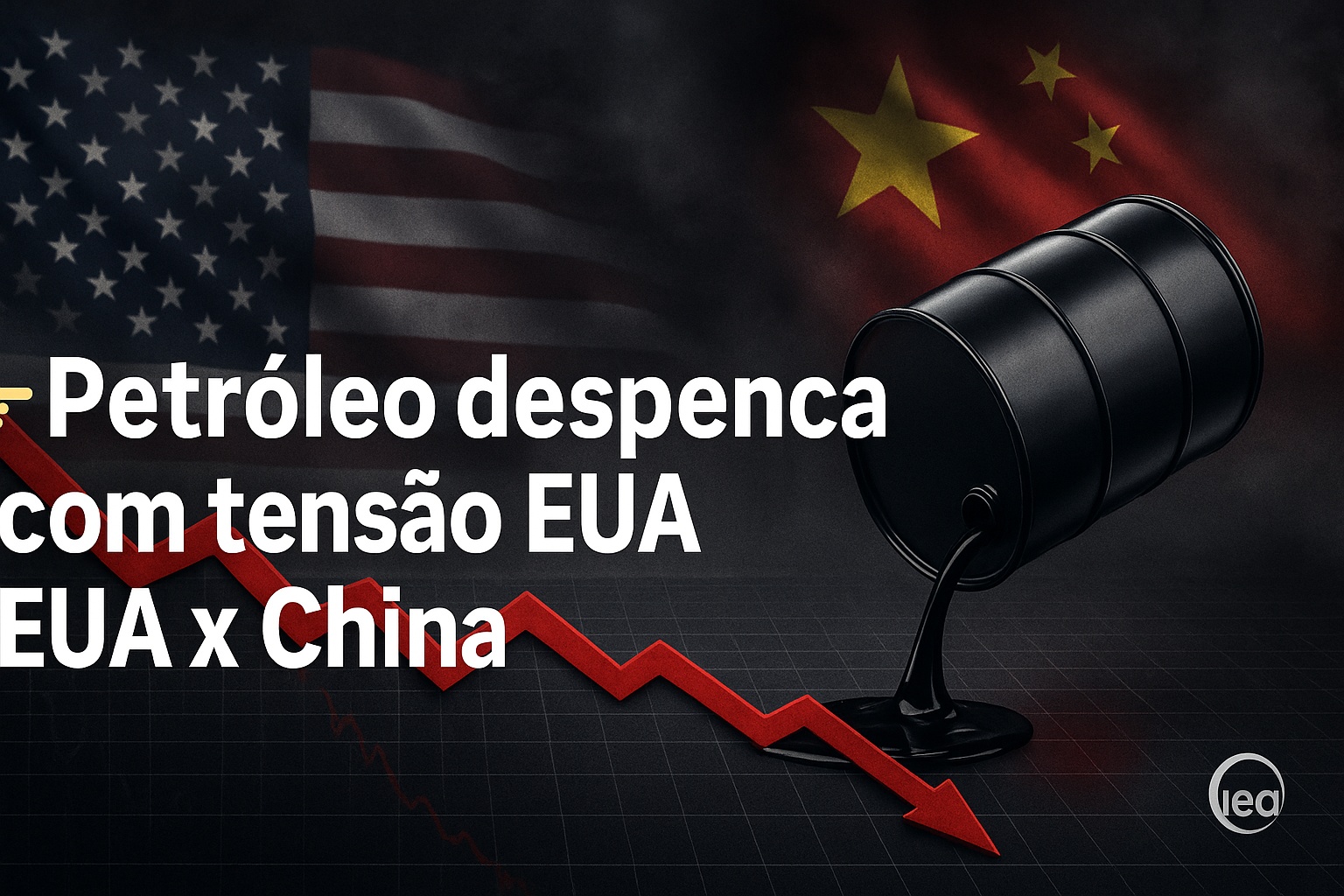


Oil Hits Lowest Level Since May Amid U.S.-China Trade War and IEA Warning About Global Supply Glut That Could Affect Brazil.
The oil market experienced one of its most tense days of 2025. On Tuesday, October 15, futures contracts for Brent, the global benchmark, fell 0.8% and closed at the lowest level since May 7, while WTI, the U.S. benchmark, dropped 0.7%, also hitting its lowest point in over five months. This movement reflects a combination of factors: the intensification of the trade war between the United States and China, fears of a global supply glut, and the slowdown in global energy consumption.
The analysis was published by Money Times based on data from the International Energy Agency (IEA), which warned of the risk of a structural oil surplus in 2026—a scenario that could trigger a new round of price volatility and pressures on exporting countries such as Saudi Arabia, Russia, and Brazil.
Trade Tensions Return to the Center of the Market
The recent diplomatic escalation between Washington and Beijing reignited risk aversion among investors. The U.S. government threatens to raise tariffs on Chinese tech products, and in response, Beijing signaled that it might restrict strategic exports of rare metals and semiconductors.
-
Oil production grows in Rio, but reserve replacement raises a warning sign

-
Petrobras is expected to complete the drilling of the Morpho well in the Foz do Amazonas in August 2026, the first well in the Equatorial Margin, an oil frontier that the ANP estimates at more than 30 billion barrels and could redraw the map of Brazil.

-
Oil returns to the center of concerns with tension between the US and Iran

-
IEA reduces forecast for global oil demand in 2026 after impacts of the Middle East crisis



The immediate effect was a wave of corrections in commodity markets, especially in oil, which serves as a barometer of global confidence.
According to analysts at Reuters, the possibility of new trade barriers reduces expectations for industrial demand growth, especially in Asia, a region responsible for over 55% of global oil consumption.
“Every new tariff between the two largest economies on the planet is interpreted as a potential brake on global economic recovery,” said Warren Patterson, head of commodities at ING.
Global Supply Rises Faster Than Demand
The other factor pressuring prices is the increase in global production, particularly in the United States and the Middle East.
The latest report from the International Energy Agency (IEA) indicates that global production could exceed 104 million barrels per day in 2026, surpassing the estimated demand of 103 million barrels/day. This slight imbalance, according to the agency, could push Brent crude below US$ 70 if OPEC+ does not intervene with additional cuts.
The cartel itself has been facing difficulties in maintaining discipline among its members. Countries like Iran and Nigeria have quietly increased their production, while Russia, even under sanctions, continues to export robust volumes to Asia, contributing to the rise in supply.
The Impact on Brazil and Petrobras
Brazil, which has established itself as one of the ten largest oil producers in the world, also feels the repercussions. Petrobras exports more than 70% of its crude oil production, mainly to China, and lower prices tend to reduce the state-owned company’s revenue.
On the other hand, falling oil prices help contain fuel prices in the domestic market, reducing inflationary pressures and easing the work of the Central Bank.
Analysts from XP and Itaú BBA point out that if Brent remains between US$ 75 and US$ 80, the Brazilian government can maintain its fuel policy without significant pass-through to consumers.
“Super Supply” Risk Concerns the International Energy Agency
The IEA highlighted that the 2025 scenario is paradoxical: while some countries still face difficulties with internal supply, the global market is moving towards an excess of barrels.
This transition, according to the report “Oil Market Outlook 2025”, is expected to intensify with the entry of new platforms in the Gulf of Mexico, Guyana, and the Brazilian pre-salt.
The agency also warned that the global oil stockpiles have reached their highest level since 2020, which could further pressure prices in the coming months.
“If OPEC+ does not act in a coordinated manner, the barrel could fall below the fiscal balance levels of several producing countries,” warned the IEA.
A Cheaper Barrel but with Growing Volatility
Despite the recent drop, analysts believe that oil will continue to fluctuate within a narrow range until the end of the year.
Economist Edward Moya from OANDA assesses that the market is divided between fears of global recession and optimism over interest rate cuts in the U.S., which tend to weaken the dollar and make commodities more attractive.
“Volatility should remain high until there is clarity about the pace of the Federal Reserve’s cuts and the developments of U.S.-China tensions,” Moya said.
According to projections compiled by Bloomberg, the average price of Brent is expected to close 2025 in the range of US$ 82 to US$ 85 per barrel, with a slight recovery trend starting in 2026, provided there is no supply shock.
Focus now shifts to the OPEC+ meeting scheduled for December, where potential new production cuts will be discussed to stabilize the market.
Meanwhile, Brazil continues to increase investments in exploration and export, betting on the pre-salt as a strategic long-term vector.