Portuguese
  Spanish


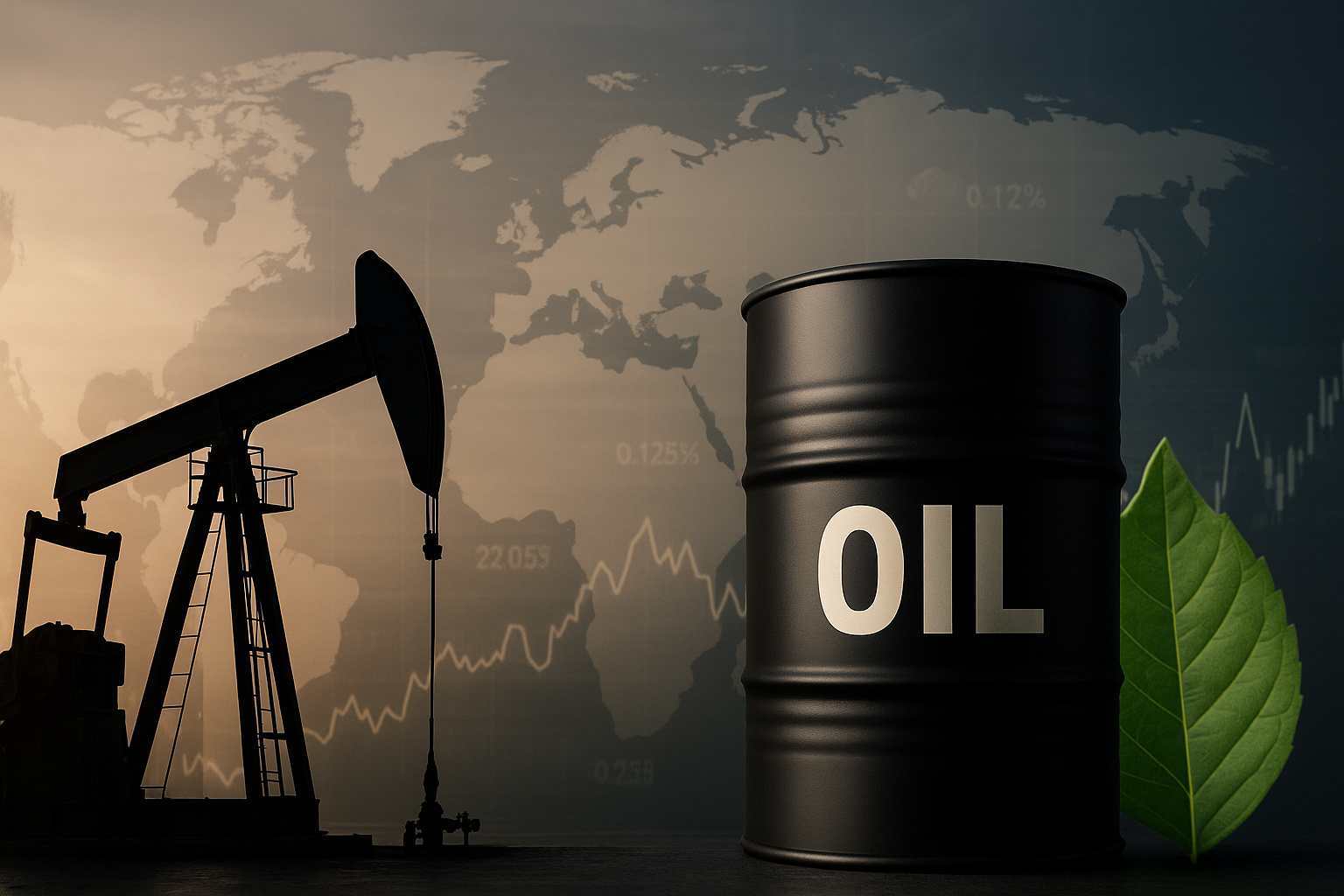

On November 26, 2025, oil prices closed significantly higher. West Texas Intermediate (WTI) rose 1.20%, reaching US$ 58.65, while Brent increased 1.19% to US$ 62.54.
This appreciation occurred amid divergent statements between Moscow and the European Union regarding the possibility of a ceasefire in the war between Russia and Ukraine — which reinforces uncertainty and keeps market volatility intact.
This movement, however, reveals a striking contrast: although brief, the rise in oil prices reignites deeper questions about the role of the commodity in a world that needs to advance in energy sustainability, transition to renewables, and reduction of carbon emissions.
Historical Context: Oil and Energy Between Boom and Environmental Criticism
For much of the 20th century and the beginning of the 21st, oil dominated as the main source of global energy. It fueled economic growth, industrialization, transportation, and development. However, environmental warnings gradually emerged. With advancements in climate science and international reports on emissions, the world began to see fossil fuels as a problem, not just as a solution.
-
São Paulo LNG Terminal Approved to Connect to Pipeline Network, Sparking Debate Over Larger Alternative Through Serra Route

-
Petrobras Explores Entry into Corn Ethanol Market, Aiming to Become a Biofuel Giant
-
Brazil’s $8.5 Billion Auction Secures New Power Plants to Prevent Peak Hour Energy Shortages
-
Why Gasoline Prices Remain Stable: How Petrobras’ Subsidies and Pricing Policies Control Fuel Costs in Brazil


As a result, the search for alternative sources — such as solar, wind, and other clean technologies — gained momentum. Still, oil remained relevant due to its energy density, installed infrastructure, and strategic importance. This dual role — indispensable and criticized — transformed the sector into an arena of tensions between market, politics, economy, and environment.
Now, with the recent spike, these tensions are renewed. The appreciation reinforces global dependence on oil but also highlights the contradictions of a system struggling to balance supply, demand, and sustainability.
Why Prices Rose: Geopolitical Factors and Uncertainties
The price increase this week is directly linked to the fragility of peace negotiations between Russia and Ukraine. Despite initial hopes, recent statements from the Kremlin and the European Union’s Chief of Foreign Relations and Security made it clear that a ceasefire will not materialize soon. This reactivates the “risk premium” on the barrel.
Additionally, the possibility that global supply remains restricted — due to sanctions, production cuts, or logistical limitations — supports investor demand for the commodity. For now, oil remains sensitive to political developments.
However, there are contradictory factors: U.S. oil stocks have risen beyond expectations recently, which typically pressures prices downward. This imbalance creates a volatile scenario, where oil fluctuates between periods of increases and sharp drops.
The Rise in Oil Revives the Debate on Energy Sustainability
When oil prices rise, many economies and consumers feel the impact on fuel costs. But the issue goes beyond that: the appreciation of the commodity can delay the transition to renewable sources.
If companies and governments perceive oil as still profitable, there is less incentive to invest in clean energy. This diminishes the political and economic urgency to finance and expand green alternatives, such as solar, wind, and biofuels.
On the other hand, oil instability — sensitive to wars, sanctions, and policies — reinforces the vulnerability of relying on a finite and political resource. Thus, for those thinking long-term, strong arguments emerge in favor of energy diversification, investment in renewables, and prioritizing sustainability.
Therefore, the current rise can be seen as a reminder: the changing price of oil highlights the risks of an economy dependent on it, reinforcing the need to accelerate the energy transition.
Impacts on Consumers and the Environment
For consumers, especially in countries dependent on fuel imports, the increase in oil prices tends to be passed on in the cost of gasoline, diesel, and energy. This raises the cost of living and makes transportation and production of goods more expensive.
For the environment, the resumption of incentives for oil may delay the adoption of clean technologies. The more the market stabilizes around fossil fuels, the less priority is given to the expansion of renewables, undermining climate goals and global carbon neutrality.
Moreover, the high demand for oil may mean increased production, extraction, and intense burning — generating pollution, deforestation (in exploration areas), and environmental risk.
The Energy Transition as a Structural Response
To address these contradictions, various voices argue that the solution requires planning, investment, and firmness — not just in speech. It is necessary to bet on clean energy, efficiency, storage, technology, and diversification of the matrix.
Renewable sources such as solar, wind, green hydrogen, and biofuels have the potential to offer constant, clean energy with a lower impact. With regulatory incentives, public and private funding, and research, it is possible to make these sources competitive with fossil fuels.
Additionally, public policies that promote the transition of transportation, industry, and electricity generation are fundamental to reducing dependence on oil.
Finally, transparency and corporate and governmental commitment become essential: without clear decarbonization targets and environmental governance, the cycle of oil is likely to repeat.
The 2025 Surge: A Test for the Resilience of the Energy System
The recent rise in oil prices shows how fragile the market remains to external factors. Among wars, peace negotiations, sanctions, and stocks, the price fluctuates rapidly. This unpredictable scenario exposes structural vulnerabilities for both economies and the climate.
If the world aims to achieve environmental goals and ensure energy security, depending solely on oil becomes increasingly risky. The current rise may represent immediate profits, but it also perpetuates a cycle of dependence and environmental impact.
Therefore, the discussion on sustainability, clean energy, and diversification of the matrix cannot be delayed — it needs to progress alongside market movements, influence decisions, and secure decisive space in global planning.