






 Portuguese
  Spanish


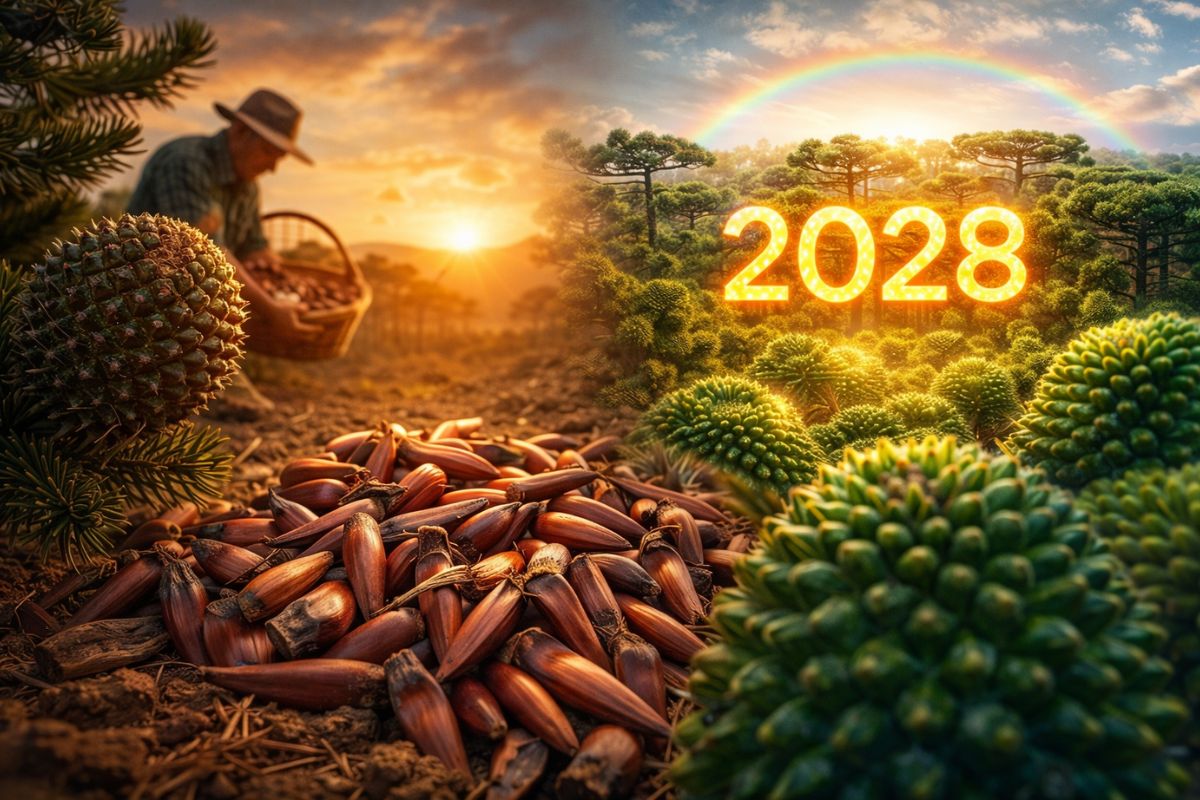
With less pine nut, production declines and harvest is delayed; the green cone on the araucaria helps explain why 2028 could be greater.
The production of pine nuts this year is expected to be between 30% and 35% lower, and the harvest also appears to be delayed, according to the assessment made in the Cambuim community, in the interior of Videira, during a conversation with producer Benjamim Bartolomeu, at the Recanto do Tigre property, during a period when trade usually starts on April 1st.
At the same time, a simple observation on an araucaria branch raised an expectation that caught attention: 2028 appears as the big turnaround, with signs that there could be a much larger production, as long as some risks along the way do not knock down the cones. And the reason for this bet is literally hanging on the tree.
Less pine nut this year and a clear sign in the araucarias
Benjamim Bartolomeu states that he sees, in practice, fewer pine nuts this season because the araucarias have few cones. The estimate mentioned in the conversation is a decline of 30% to 35% in production, something he notes when comparing with other years on his own property.
-
India’s Sugar Export Cuts and Ethanol Shift Amid El Niño Threat Could Impact Global Prices and Stocks

-
Quarantine Pest Threatening Palm Trees Puts Brazilian Authorities on Alert, Prompts Monitoring at University of Taubaté and Potential Control Measures Across São Paulo
-
Global Alert: Report Finds 159 Pesticides in Coffee Beans Sold in Europe, Posing Serious Risks to Millions of Farm Workers
-
Low-Demand Brazilian Beef Offal Gains Popularity Abroad: Indonesia Purchases $19.5 Million, Boosting Revenue and Reducing Waste

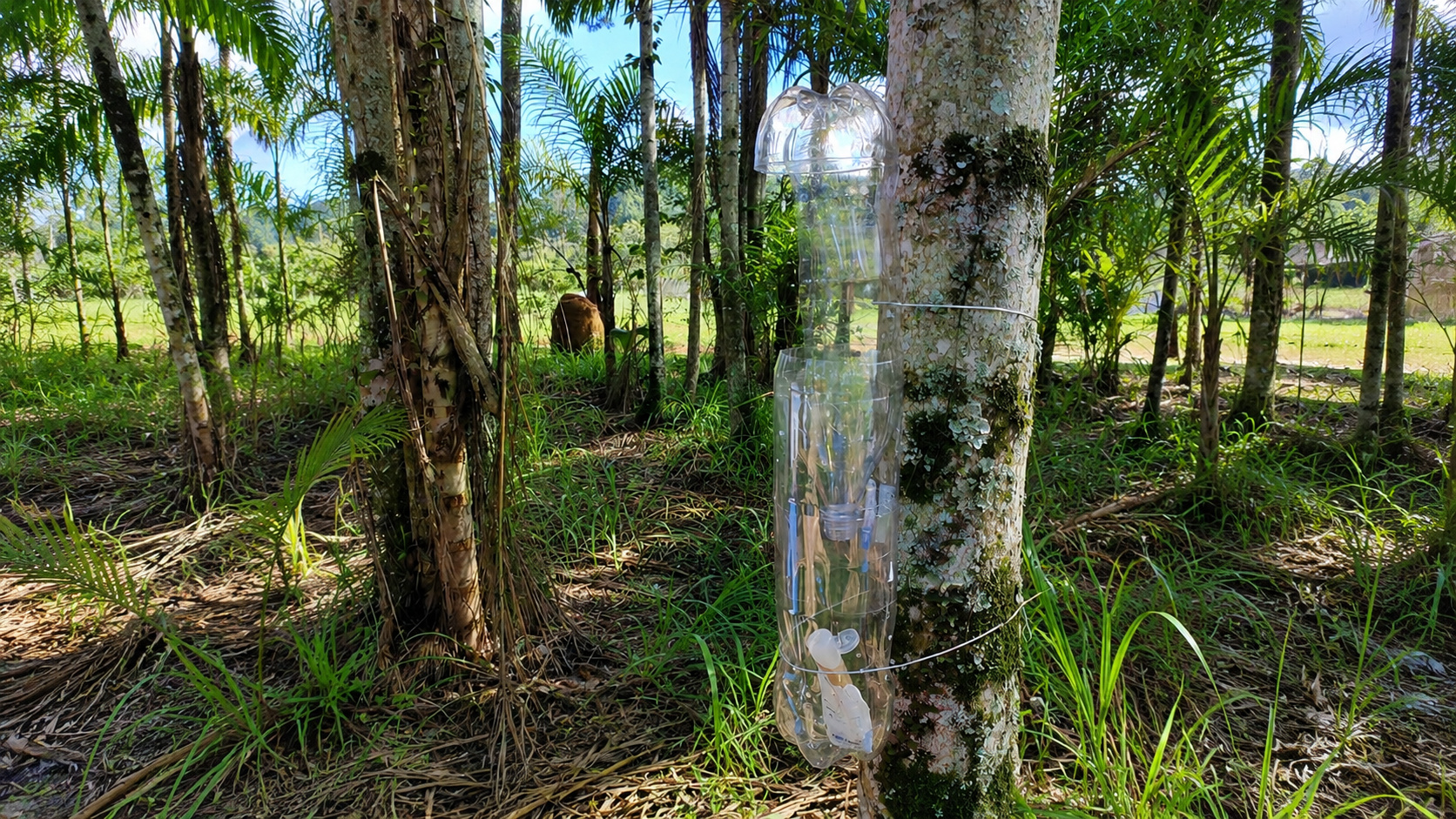


Even with cones that may be well-loaded when they mature, the problem is the smaller number of cones overall. It’s the kind of detail that the consumer only notices when the supply decreases at the stalls, and then the inevitable question arises: why did this happen now?
Delayed harvest: the clue is in the green cone

Besides fewer pine nuts, the harvest appears delayed. The producer reports that, at this time, they should already be threshing, but there are still green cones on the same branch where more mature cones also appear, a contrast he uses as an example of the delay.
In practice, this means that part of the pine nuts has not yet reached the ideal point. And when the fruit is not ready, the difference is not just visual. The flavor changes, the texture changes, and the experience changes, and this can catch many people by surprise during the first purchases. And here comes a warning he makes insistently.
Green pine nut and mature pine nut are not the same thing
Benjamim draws attention to the early harvest of pinhão at the end of March, done by some people to sell as soon as April 1st arrives. He describes the green fruit as “just water,” with less flavor and worse results in the kitchen.
His assessment is straightforward: ripe pinhão is what delivers taste and quality, both in roasting and in cooking. The simplest way to perceive this is to observe the appearance and firmness of the fruit, as well as the stage of the pine cone. In the end, haste can lead the consumer to take home a product that does not meet expectations. And there’s one more curious detail.
Why the south side of the pine tree comes into the conversation
The producer comments that pinhão tends to ripen earlier on the south side of the pine tree. His practical recommendation is that, when observing ripeness, it’s worth mentally dividing the tree and comparing the sides to understand where the fruit is more advanced.
This type of reading of the pine tree, done in the daily life of those who live with araucaria, helps explain why, in the same period, there can be pinhão at different stages of ripeness. And it is precisely by looking at branches and stages that he reaches the most anticipated point of the conversation.
2028 as a turning point: what the branch “shows” about the pinhão
Pointing to a branch, Benjamim describes a sequence of years and explains that pinhão takes about two years to be ready. In his reading, 2027 is already expected to increase slightly compared to this year, but 2028 is what stands out the most due to the number of structures that could turn into pine cones.
He claims to see five pine cones projected for 2028 and says he usually observes a pattern of good harvests every five years. The idea of a “turning point” in 2028 arises from this direct comparison, made on the tree, without relying on guesswork. However, this turning point has an enemy that could appear sooner.
The borer can derail expectations and everything depends on the path to get there
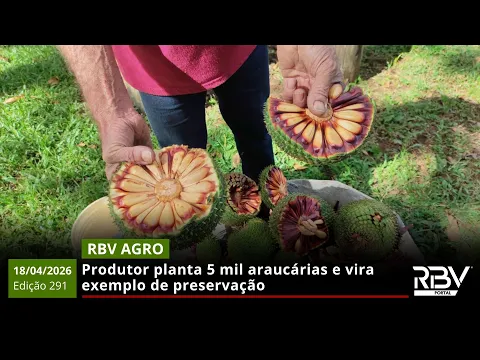

The producer mentions the risk of a borer that attacks the pine cone when it is still small, during a period he associates with the beginning of pollination, around September. According to him, this attack can cause the pine cone to dry out and drastically reduce the final quantity, to the point where a branch that seemed promising ends up with few or no pine cones.
In other words, even if 2028 seems like a year of greater pinhão, the final result still depends on what happens along the way. The promise lies in the branch, but the confirmation comes only later, and that’s what keeps the curiosity alive.
When the pine cone is small, the number impresses and the pine nut appears well-loaded
During the visit, an example of a small pine cone was shown that yielded a final count of 124 pine nuts, after initial estimates in the range of 96 to 110. The demonstration reinforces a point: when the pine cone reaches maturity, it can concentrate a lot of pine nuts even without being large.
This contrast helps to understand why the debate is not just about fruit size, but about the number of pine cones on the tree and the right stage for harvesting. In the end, what determines the harvest is the whole, and that is where the scenario of decline this year and hope in 2028 fits in.





Be the first to react!