






 Portuguese
  Spanish


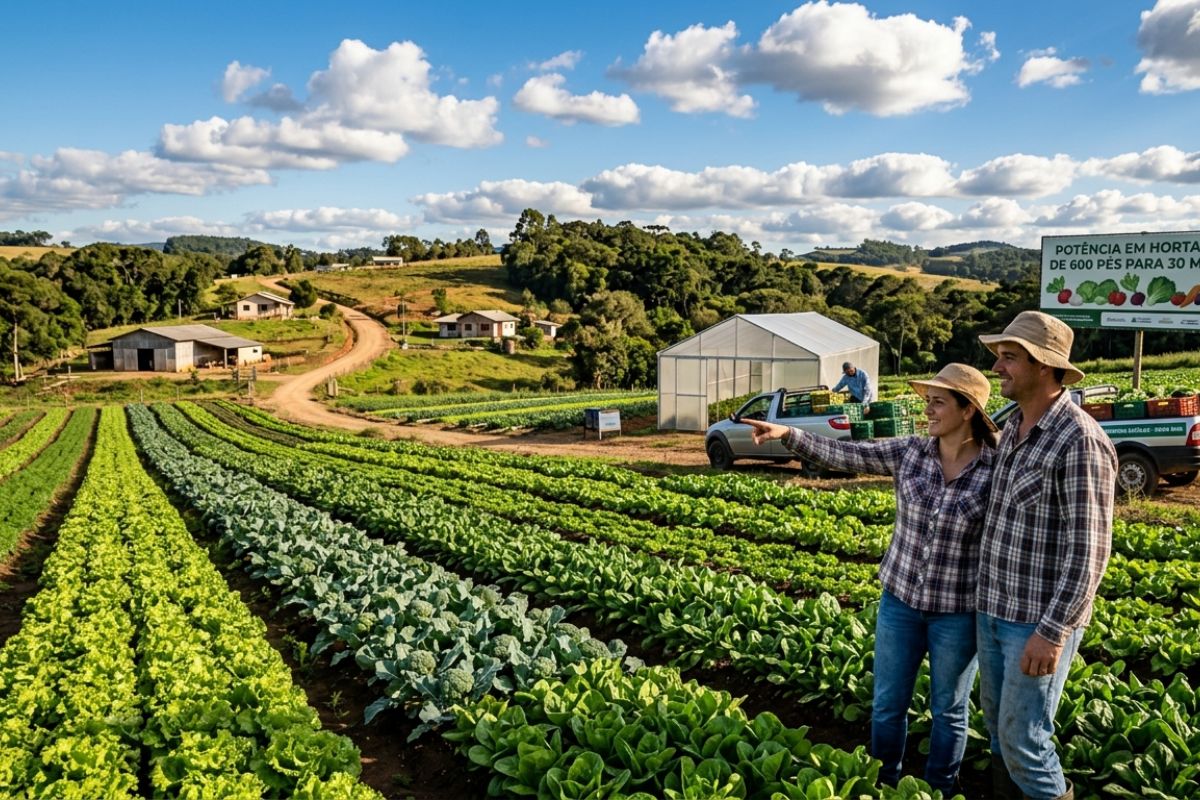

In Dona Ema, couple exchanges cucumber for vegetables, ensures market, and already delivers for school meals, greengrocers, and market.
The couple Luís and Luana started planting in 2020, on a plot near the center of Dona Ema, and increased production as demand grew. What began as a small cultivation turned into a well-divided farming routine, with technical assistance and a focus on vegetables that have a market year-round.
Today, the couple primarily produces cauliflower, broccoli, and cabbage and claims to have reached about 30,000 per month. The decision to change what they planted was not due to trends, but strategy: they chose a path with more viable investment and a market ready to buy.
From summer cucumber to cultivation that doesn’t stop in winter
Initially, Luís and Luana planted cucumber, a crop linked to the summer harvest. Over time, the practical question arose: what to produce in winter? The answer was cauliflower, first in a smaller volume.
-
Producer receives news and had to cull almost the entire herd, bounced back with the help of compensation, and is now producing 450 liters of milk per day in SC.

-
Quail Eggs Reveal a “Secret Code” on Their Shells Explaining Unique Patterns and Colors

-
Rare Tropical Fruit Canistel, with Egg Yolk Color and Caramel Flavor, Gains Interest from Researchers and Small Producers in Brazil
-
Brazilian Farmers Develop Wheeled Metal Lever to Ease Cassava Harvesting Without Heavy Machinery


They report that they started with about 600 plants per month, aimed at preserves. Later, they expanded to 1,000 monthly, and as the market began to demand more, the leap happened. Today, the couple says they are around 30,000 per month combining cauliflower, broccoli, and cabbage.
2.5 hectares and guaranteed market for everything that comes from the farm

The cultivated area is about 2.5 hectares in Dona Ema. And one point stands out: the production already has a certain destination. According to reports, part goes to school meals, part to greengrocers, and a portion to the market.
When sales are predictable, planning changes. Instead of planting in the dark, the couple can adjust volume, cutting rhythm, and work organization based on real demand.
Technical assistance and division of labor in practice
To start and maintain production, the couple states that they needed support, especially from a technician who provides assistance to this day. They say that when doubts arise, they send a message and receive guidance.
In the routine, the work is divided. Luís reports that he takes care of stages such as sowing, planting, and harvesting, while the rest is handled by Luana, including the more constant daily care. In summer periods, the pace requires quick attention after planting, especially to prevent the heat from burning the seedlings.
Water, fertilization, and care in the formation of vegetables

The couple also describes critical points of management: irrigation right after planting, fertilization, pesticides, and the care with lack of water, especially during the head formation phase of the vegetables.
It is a production that depends on sequence and consistency. If the cycle fails at one point, the loss appears in the harvest and delivery.
Feet on the ground and plans for the future
Although they are considering increasing the area, they reflect that, since there are only two of them, an expansion would require hiring someone. Therefore, they prefer to maintain the current size and grow cautiously, without losing control of the process.
Do you think that this type of growth, with a guaranteed market and production gradually scaling, is the safest path for small producers today?








