Portuguese
  Spanish


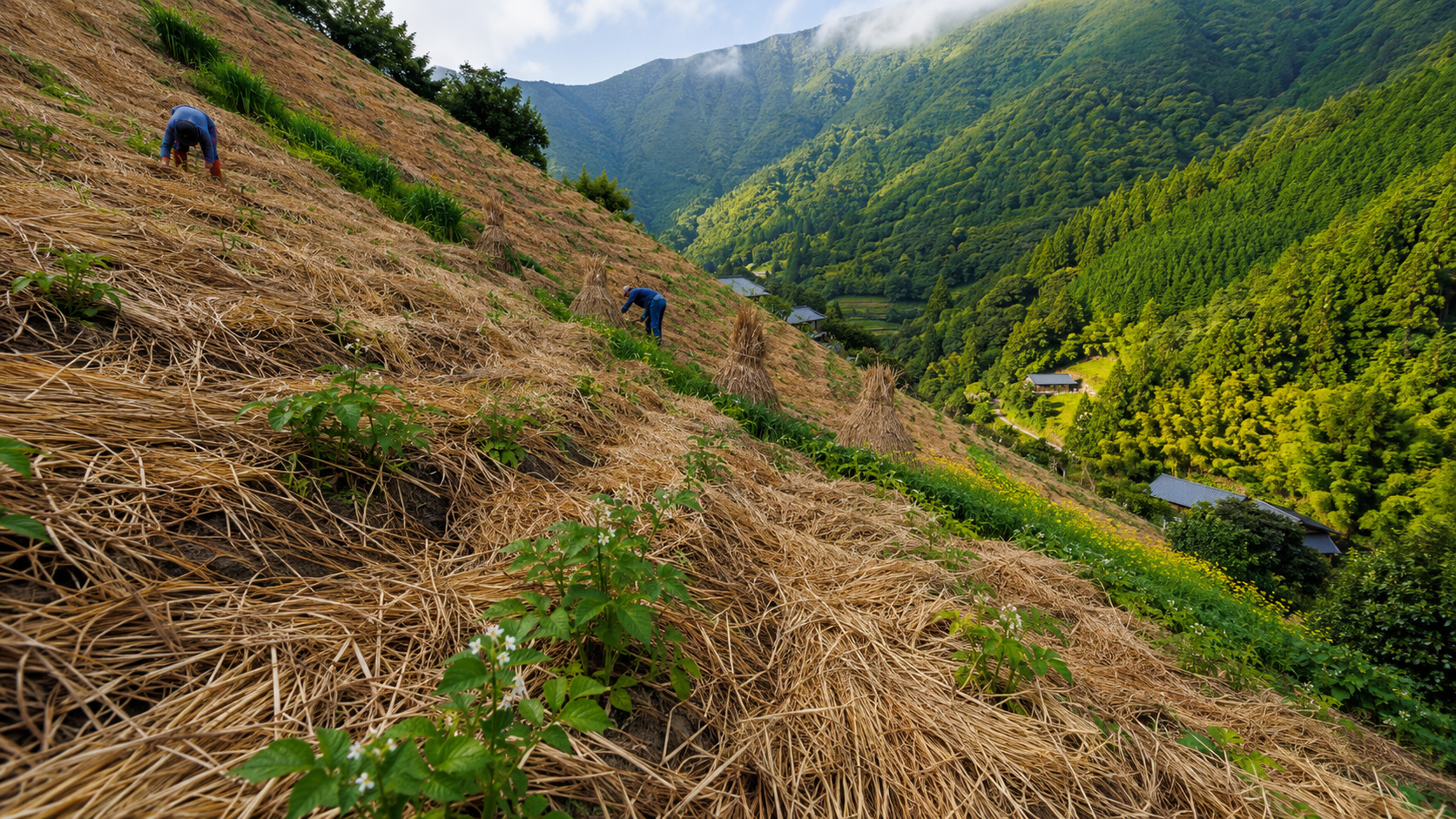

In the mountains of Nishi Awa, Japan, agriculture on slopes of up to 40 degrees uses dry grass to reduce erosion, conserve moisture, and protect the fertile layer, while maintaining the cultivation of millet, buckwheat, potatoes, and agricultural varieties preserved for generations.
Japanese farmers cultivate on slopes of up to 40 degrees without leveling the mountains or building large terraces. Where conventional tractors can hardly work, planting continues with manual techniques and a thick cover of dry grass.
The FAO, the United Nations agency for food and agriculture, records that the history of the Nishi Awa agricultural system dates back to approximately 300 BCE. The practice maintains the original shape of the slopes and adapts production to the terrain conditions.
The central element is kaya, the name given to the grasses cut in nearby areas. Once dried, they are spread over the land to reduce soil erosion, conserve water, and prevent heavy rains from washing the fertile layer down the mountain.
-
Hospitalized with a weak heart in the yellow room of a UPA in Santarém, Mr. Tito, 73, asked to get married, and the team held the wedding at the UPA and even found the children he hadn’t seen through the internet.

-
After 20 years together, Mr. Luiz, 94 years old, entered the Matriz Church of Brumado on the arm of his daughters and walked up to the altar with Rosinha, the bride 40 years younger, in a wedding that moved Bahia.
-
The incredible Batman mansion goes on sale for R$ 164 million with 1,734 m², 7 bedrooms, 11 bathrooms, and a history in Hollywood movies and series.

-
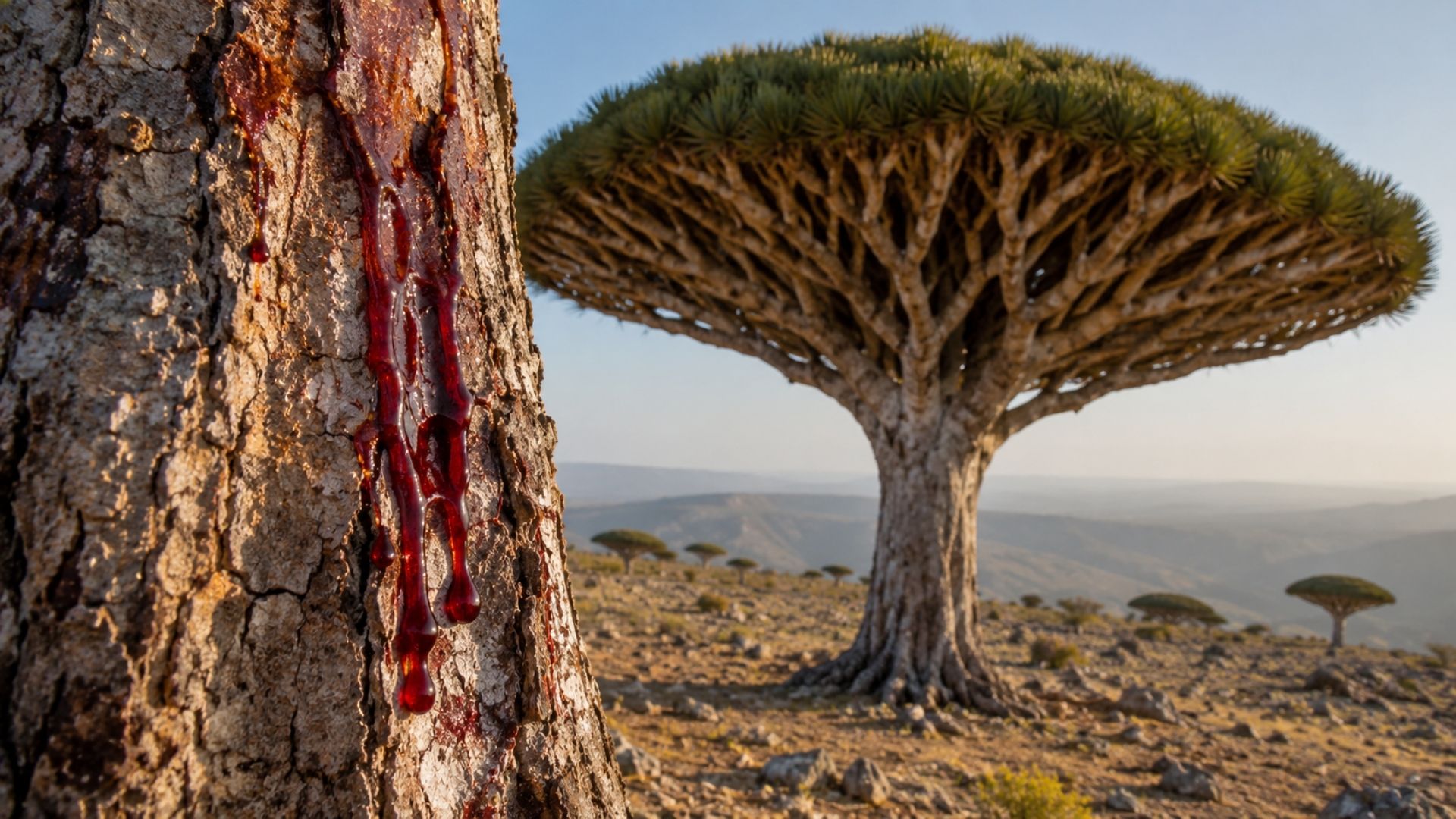
The “dragon tree” of Socotra Island, in Yemen, has an umbrella-shaped crown and “bleeds” a blood-red resin when wounded, grows only 2 to 3 centimeters per year, and can live for hundreds of years.


Agriculture works where conventional tractors can hardly reach
The fields of Nishi Awa occupy mountainous areas where flat terrain is limited. Instead of transforming the entire landscape, farmers plant directly on the slopes and adjust each stage of the work to the incline.


The production includes millet, buckwheat, potatoes, tubers, vegetables, and fruits. Some of these plants can grow in less fertile soils and help maintain the variety of foods produced by small farms.
The use of agricultural machinery is limited by the incline. Preparing the land, distributing the grass, planting, and harvesting mainly depends on manual labor, which increases the effort needed to keep each area productive.
Some points may receive small stone walls to reduce the incline and contain erosion. However, the main characteristic remains: the mountain is not completely leveled nor divided into large terraces.
40-degree slopes are much steeper than they appear
The slope in degrees measures the angle between the terrain and a horizontal line. The slope in percentage compares how much the area rises in relation to the distance traveled horizontally.
This means that 40 degrees does not equal 40 percent slope. They are different ways of measuring inclination, and confusing these values can make the slope seem less steep than it really is.
Viewed from below, a field with this slope seems to rise like a large green wall. The terrain makes it difficult for tractors to move and requires constant attention from people working on the plantation.
Even under these conditions, farmers manage to maintain cultivation by protecting the soil and organizing planting lines following the mountain contour. This arrangement helps to reduce the speed of rainwater.
Tons of grass form a barrier against erosion
Kaya is harvested in the vegetation areas surrounding the plantations. After cutting, the grass dries and is divided into smaller parts before being distributed over the soil.
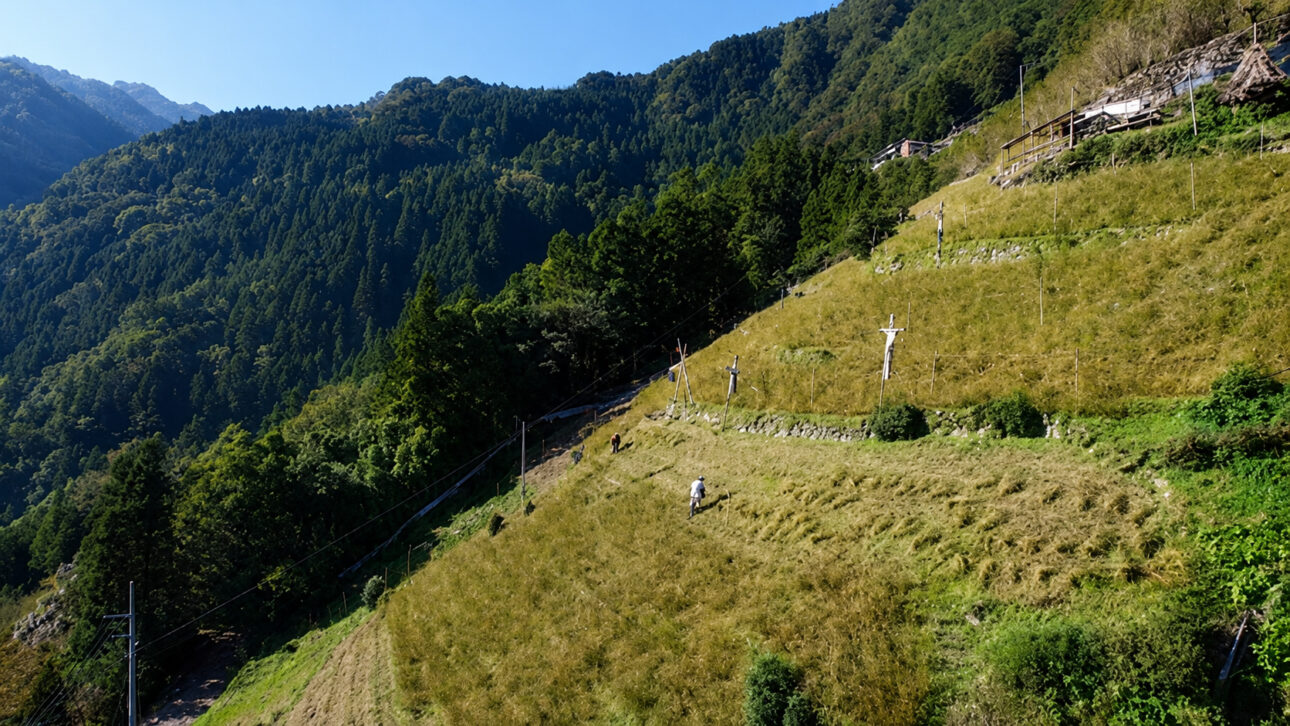
The cover reduces the direct impact of rain on the land. Without this protection, the droplets would hit the surface with force and facilitate the movement of particles, fertilizers, and organic matter down the slope.
The FAO, the United Nations agency for food and agriculture, details that kaya helps to conserve moisture, control temperature, and reduce the growth of unwanted plants. The material also adds organic matter to the soil.
Part of the grass can be incorporated into the soil, while another part remains on the surface. In this way, a resource taken from the landscape itself functions as physical protection for the crop and as support for soil conservation.
Conical stacks store the grass before distribution
After harvesting, kaya is gathered into conical stacks locally known as koeguro or guro. These structures store the material until the time to spread the grass over the plantations.
The stacks remain visible in the landscape and reveal a direct connection between the fields, grass areas, houses, and forests. Each part of the territory has a function within the Nishi Awa agricultural system.
The grass is not treated as waste. It is harvested, dried, stored, and applied in a planned way to maintain cultivable slopes and reduce the loss of the fertile layer.
This organization allows for the use of local resources without profoundly altering the terrain. The result is agriculture adapted to the mountain, not a mountain completely modified to accommodate agriculture.
Local seeds depend on continuous planting
Nishi Awa maintains varieties of millet, buckwheat, potatoes, and other foods cultivated by successive generations. Families keep part of the harvested seeds for new plantings.
This process forms a kind of living bank of agricultural varieties. The seeds remain connected to the fields because they need to return to the soil to produce new generations and preserve their germination capacity.
When a variety stops being planted, the risk of disappearance increases. The loss involves not just a food, but also characteristics developed over time in contact with the region’s climate and soil.
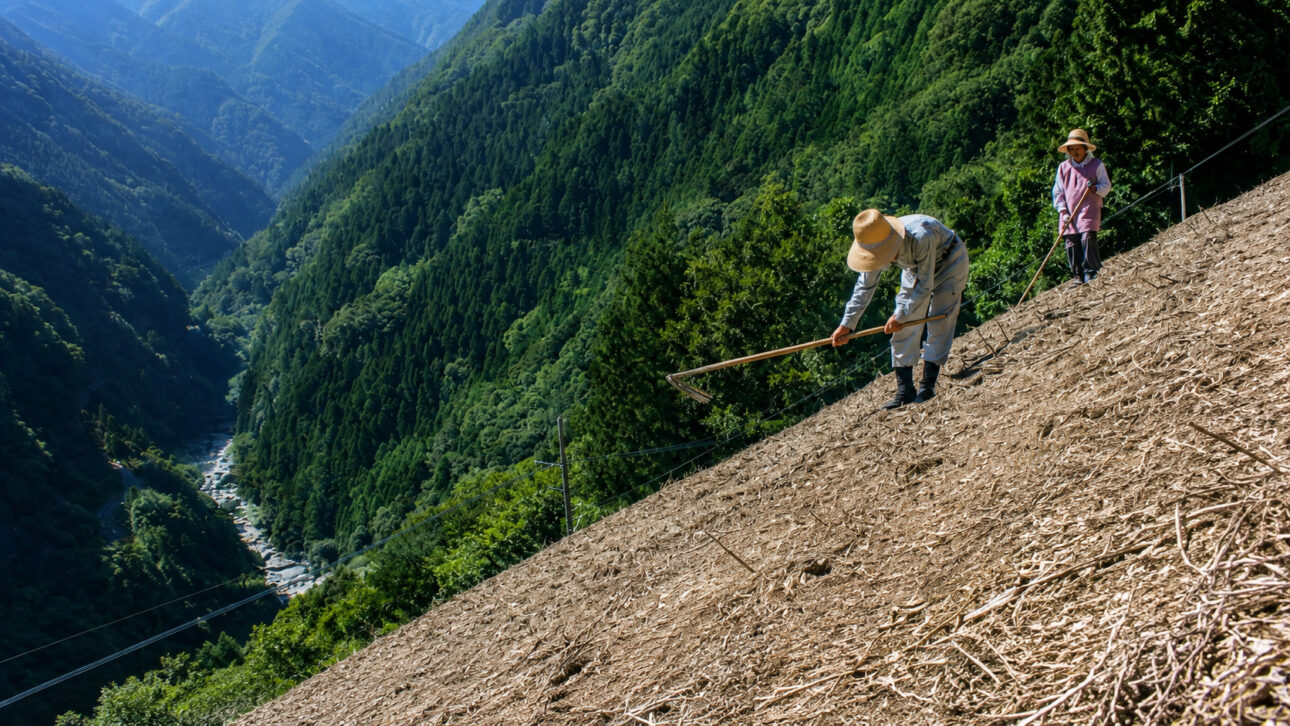
Maintaining agriculture on the slopes means, therefore, preserving agricultural diversity and knowledge about production in difficult terrains. These resources may gain importance in the face of environmental changes and food supply issues.
Manual labor and aging threaten the continuity of the system
The technique depends on many steps performed manually. Cutting the grass, stacking it, preparing the field, planting, and harvesting on inclined terrain requires time, experience, and physical effort.
Small properties sustained mainly by elderly people face difficulties in keeping all areas cultivated. The low presence of machines also limits the amount each farmer can produce.
The abandonment of a field affects more than just the production of that land. Without continuous management, local seeds, conservation techniques, and knowledge passed down through generations may disappear.
The economic challenge is to maintain an activity that protects the environment and produces food but requires a large amount of work. Continuity depends on people capable of taking on tasks that can hardly be replaced by common tractors.
Nishi Awa’s agriculture shows how tons of dry grass can keep slopes of up to 40 degrees productive. The cover preserves moisture, reduces erosion, and allows for the cultivation of food without completely leveling the mountains.
However, intense manual labor, an aging population, and the risk of abandonment put this system under pressure. Preserving the crops means protecting the soil, the seeds, and an agricultural technique built over centuries.
If a simple solution protects the soil where machines barely reach, how can this knowledge be adapted to Brazilian agricultural slopes without losing productivity? Comment and share the publication.