Portuguese
  Spanish


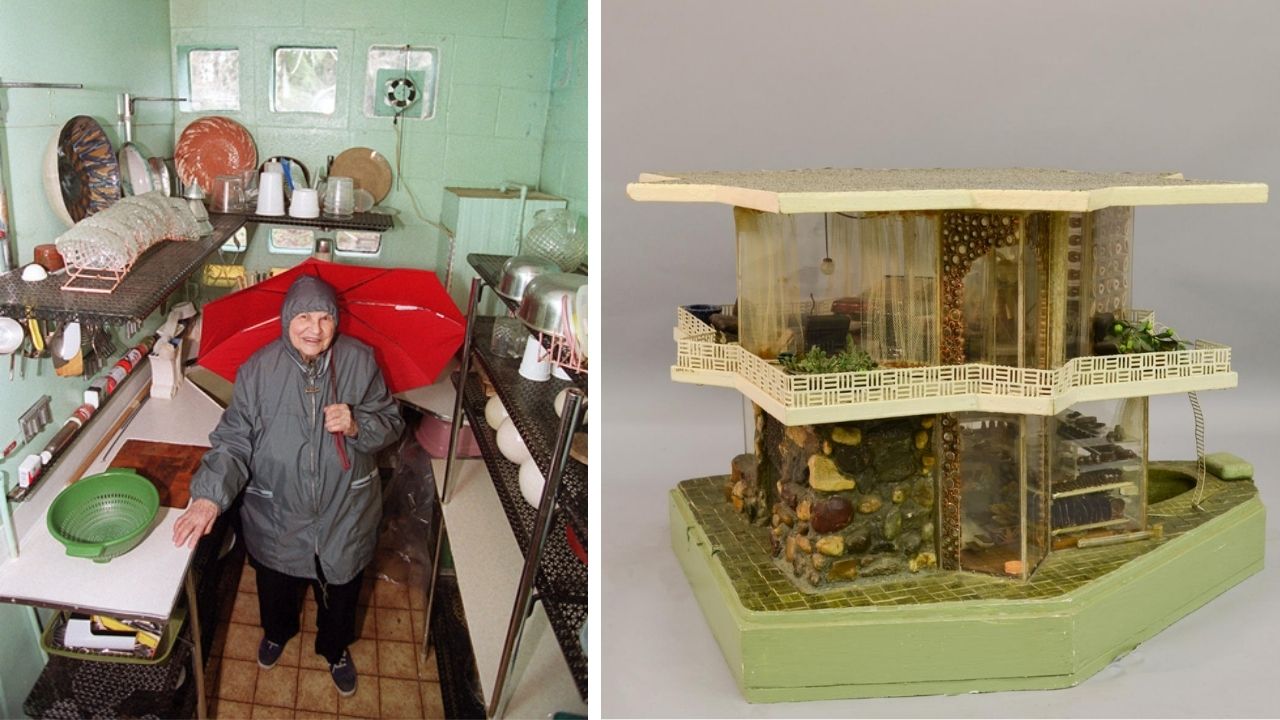

The self-cleaning house created by Frances Gabe featured water jets, detergent, hot air, sloped floors, drains, and smart cabinets to wash walls, ceilings, floors, dishes, clothes, and bathrooms, aiming to reduce repetitive tasks and enhance the autonomy of the elderly, people with disabilities, and residents overwhelmed by household cleaning.
The self-cleaning house was created by American inventor Frances Gabe in Newberg, Oregon, USA, after more than two decades of testing, drawings, and adjustments. The patent was granted on January 31, 1984, for a self-cleaning construction designed to keep the house clean with the activation of a few commands.
The information was published by the Hagley Museum and Library on October 23, 2017 and also contextualized by the Lemelson Center, Smithsonian, on August 31, 2017. The institutions highlight that Frances Gabe’s invention was not just a domestic curiosity, but an attempt to reduce repetitive movements and increase independence for the elderly and people with disabilities.
Frances Gabe wanted to eliminate unnecessary movements
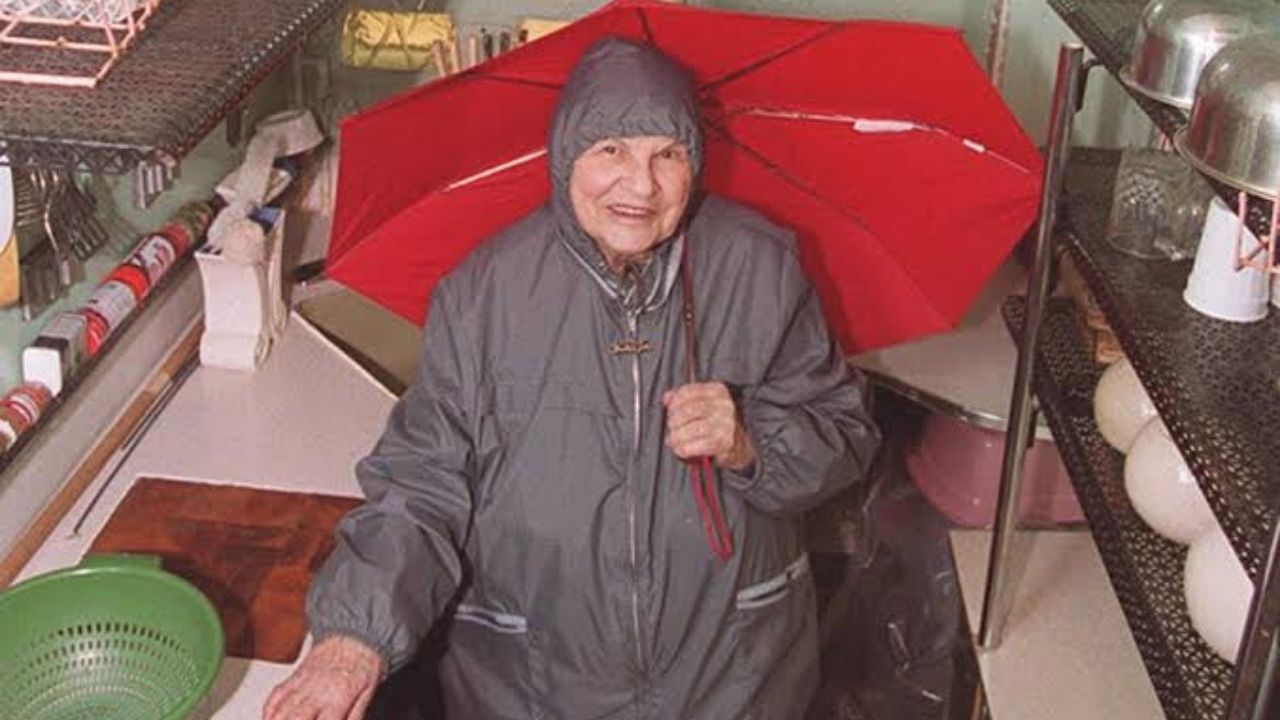
Frances Gabe was born in 1915 and had direct experience with construction and maintenance by running a company in the sector for many years. This technical knowledge helped transform a common complaint about cleaning into a radical project: a residence capable of washing and drying parts of its own structure.
-
A producer from Maranhão started making fruit pulp on a small scale, faced the bureaucracy to certify the agro-industry, went from 1 ton per year to over 100 tons, and turned guava, soursop, cupuaçu, cashew, and acerola into a business authorized to sell throughout Brazil.

-
Giant Havan statue left Camboriú heading to Rondônia on a 5-day trip, drew attention on BR-101, stopped traffic in Balneário Camboriú, and revealed the operation behind the replicas that leave Santa Catarina for stores throughout Brazil.
-
A woman left her job as a cashier in a supermarket to create frozen pulps with leftover fruits from her family’s farm in a quilombola community in Minas. She turned the surplus into a business and established the only formalized factory in the municipality, which now processes up to 10,000 kg per month and supplies schools, regional commerce, and large industrial meals.
-
Drivers hugged after a car crash in Santa Catarina, surprising those who expected a fight in the middle of the street, and went viral with a rare scene: the man who was hit got out of the vehicle, consoled the person who caused the accident, and turned traffic tension into a lesson in empathy.




The inventor argued that her self-cleaning house was not meant to scrub a dirty house, but to maintain an already clean house. The difference is important because the system was designed as prevention and maintenance, not as a magical substitute for neglect, accumulated dirt, or structural carelessness.
1984 Patent Described a Self-Cleaning Construction
The patent application was filed in 1980, and Frances Gabe received U.S. Patent No. 4,428,085 on January 31, 1984. The document described a construction equipped with devices to apply a fine jet or mist of water, water with detergent, and then hot air on internal surfaces.
The patent also included sloped floors to direct excess water to drains. Additionally, it included devices for clothing closets, built-in dishwashing in cabinets, self-cleaning bathtubs, and self-cleaning sinks. Overall, the project brought together dozens of integrated solutions within the same domestic logic.
How the Self-Cleaning House Worked
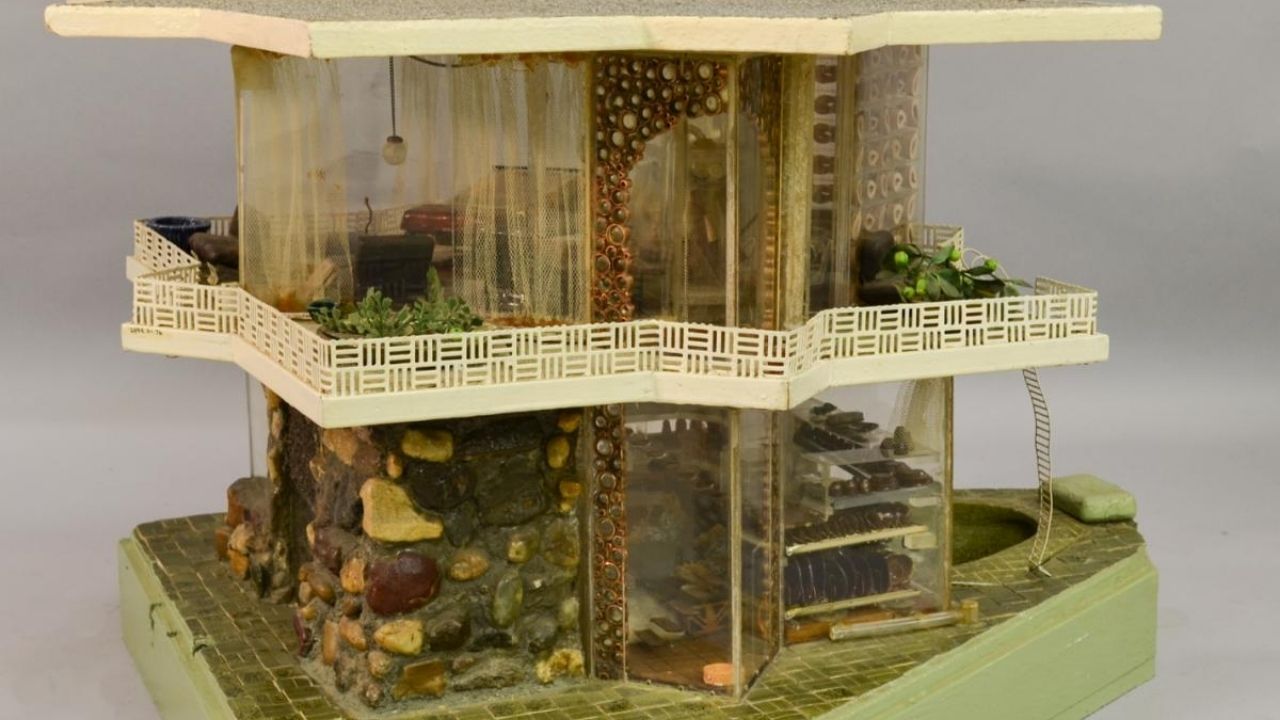
The system used sprinklers on the ceiling or at strategic points to spray water and detergent on walls, floors, and other surfaces. After the washing stage, hot air helped dry the environments, while the water flowed down the sloped floors to the drains.
In the kitchen, open shelves allowed water to drain more easily. The idea was that dishes, surfaces, and cabinets could go through the cleaning process without the traditional routine of scrubbing, rinsing, and manually drying. The self-cleaning house functioned like an expanded machine, applied to the entire domestic space.
Smart Cabinets Washed Clothes and Dishes
One of the most unusual aspects of the invention was in the cabinets. Frances Gabe designed compartments for washing dishes and also a system for clothes, where hanging items would go through washing, drying, and storage stages.
The proposal seemed futuristic because it moved the cleaning of objects into the architecture of the house itself. Instead of separating washer, dryer, cabinet, and sink as independent equipment, Gabe tried to integrate everything into a continuous system. The residence ceased to be just the setting for cleaning and began to perform part of it.
Invention Also Targeted the Elderly and People with Disabilities
Frances Gabe stated, in an interview cited by sources, that she wanted to eliminate unnecessary movements so that the elderly and people with disabilities could take care of their homes on their own. For her, pressing a few buttons could mean less dependence on others and more autonomy in daily life.
This point changes the perception of the invention. The self-cleaning house was not just a response to laziness or the inconvenience of cleaning, but an attempt to address physical limitations, domestic isolation, and loss of independence. The project anticipated current discussions about assistive technology within the home.
House had two floors and a real prototype
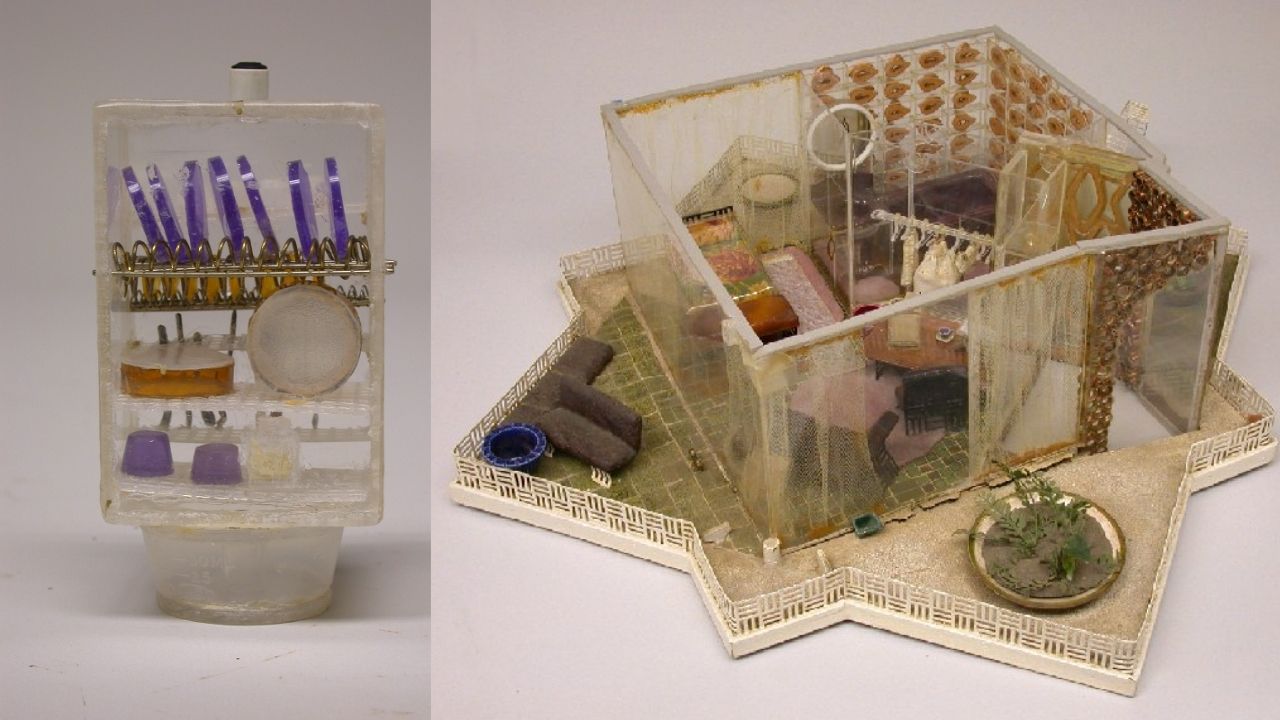
Frances Gabe’s house had two floors. The first floor included a living room, dining room, and kitchen; the second had a bathroom, bedroom, closet, and outdoor patio. Before the damage caused by an earthquake in 2001, Gabe activated the cleaning system twice a year, according to the Hagley Museum and Library.
The prototype was the inventor’s own residence, in Newberg. This made the creation different from many futuristic ideas that never leave the drawing board. Frances Gabe lived within the experience she designed, testing, correcting, and promoting the invention over decades.
Materials needed to resist water
For an entire house to receive water and detergent, the materials needed to be chosen differently from those used in common residences. The patent included waterproofing solutions and even plastic covers for books, as almost everything needed to withstand washing and controlled humidity.
This requirement shows one of the major challenges of the project. The idea did not rely solely on water nozzles or drains, but on an entire architecture designed to withstand the process. Without proper waterproofing, drainage, and drying, the invention could create precisely the problem it sought to avoid: internal damage.
Project attracted attention, but did not become standard


Frances Gabe promoted her creation for years in radio and television interviews and house visits. She charged a small fee to people interested in learning about the system and hoped that many similar houses would be built in the United States.
Despite the attention, the self-cleaning house did not become a commercial standard. The cost, complexity, need for specific materials, and adaptation of living habits help explain why the idea remained more of a visionary prototype than a common market solution.
Model was preserved in museum
Although the cleaning devices were removed from the house after the property was sold, the model built by Frances Gabe was preserved. The model is part of the collections at the Hagley Museum and Library in Wilmington, Delaware, alongside other models related to the invention.
This preservation keeps alive the story of an inventor who tried to solve an everyday problem through architecture, engineering, and practical imagination. Even without becoming a mass product, the house entered the memory of domestic innovation, especially for combining housing, autonomy, and assistive technology.
Repetitive cleaning became an invention problem
The journey of Frances Gabe shows how a common task can turn into a technological challenge. For many people, cleaning the house is just part of the routine; for her, it was a problem of time, effort, dependency, and repetition that could be tackled with design, patent, and construction.
The self-cleaning house might seem exaggerated, but it anticipated debates that remain current: how to reduce domestic work, how to adapt homes for the elderly, and how to use technology to preserve autonomy. Would you live in a house capable of washing walls, floors, and cabinets by itself, or do you think this type of invention would create more problems than solutions? Share your opinion.