






 Portuguese
  Spanish


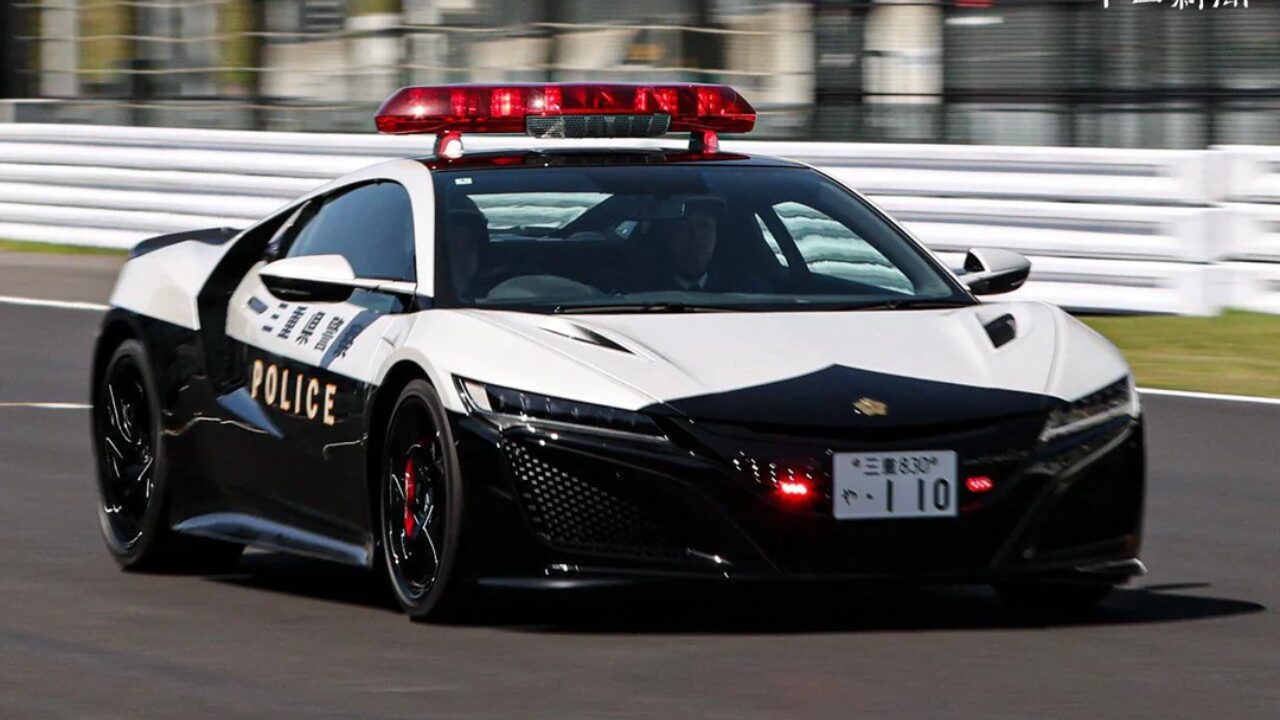

The 573 HP Honda NSX Donated by an Entrepreneur Will Be Featured at a Race Event in Suzuka. The Vehicle Enhances Police Patrols in the Region.
The police force of Mie Prefecture in Japan surprised everyone by incorporating an unusual vehicle into its fleet: a powerful 573 horsepower Honda NSX. The supercar, traditionally associated with tracks and collectors, is now part of the patrol in the surroundings of the famous Suzuka Circuit, located on Honshu Island.
The official delivery took place at a special ceremony at the racetrack, featuring a musical performance and the dramatic reveal of the vehicle, which was covered by a sheet until the announcement.
Honda NSX: Supercar in the Japanese Police
The new Honda NSX in the Japanese police fleet completely diverges from the standard Toyota sedans that are more common in the country’s police forces.
-
2027 Toyota Corolla Cross Unveiled: New Design, Enhanced Fuel Efficiency, Reduced Maintenance Costs, Advanced Technology, Connected Services, and Up to 10-Year Warranty

-
Fiat Cronos Precision 2018: Affordable Sedan with Spacious Trunk and Reliable Maintenance
-
Volkswagen to Cut Production by 1 Million Cars by 2030, Reducing Jobs and Platforms, Focusing on More Profitable Models

-
Toyota Launches First 100% Electric Car in Brazil: bZ4X with 343 HP, All-Wheel Drive, 361 km Range, Priced at $419,990 BRL, Limited to 99 Units



Painted in the traditional black and white scheme, with “Police” written on the doors and red lights on the roof, the car exudes power and modernity.
Its presence marks a new phase for policing in the region, bringing not only cutting-edge technology but also a symbolism of strength and prestige.
The Honda NSX Was Donated by a Track Enthusiast
Contrary to what many might imagine, the vehicle was not acquired with public funds or seized from police actions. The Honda NSX was donated by Toshiya Kobayashi, a 43-year-old real estate entrepreneur passionate about motorsports.
During the delivery event, Kobayashi was moved to see the car on a slow demonstration lap of the circuit: “This is cool!”, he exclaimed. He even joked about the speed: “Maybe they were being a bit reserved about the speed.”
The donation, valued at 25 million yen (approximately R$ 996,168.00), included all the necessary modifications to transform the supercar into an official patrol vehicle.
According to the portal The Drive, the new police NSX will be featured in a parade during the SuperGT race scheduled for August at the Suzuka Circuit itself.
The public appearance will be a rare opportunity for enthusiasts to check out the impressive vehicle up close, which is expected to attract even more attention to the motorsport event.
Japan Has Had Other Supercars in Its Police Fleet
This is not the first time sports cars have taken to the streets of Japan. Models such as the Nissan GT-R, Skyline, 350Z, and even the Mazda RX-7 have previously been integrated into police service, maintaining the same characteristic black and white appearance.
Still, the use of these models is generally limited to events, demonstration patrols, and educational activities.
While Japan draws attention with its police Honda NSX, the city of Dubai is already famous for boasting a police fleet made up of true dream machines.
There, one can find patrol cars such as the Bugatti Veyron, Porsche 918 Spyder, Lamborghini Aventador, and other breathtaking supercars.
In Brazil, Rarity Stands Out in Santa Catarina
Although they are isolated cases, Brazil has also had its moments of luxury in policing. The most recent involves a Porsche 911 Turbo, seized by the Federal Police during Operation Toppare, in Balneário Camboriú (SC), in 2024.
The vehicle, previously owned by a criminal organization, was transformed into a patrol car and began to be used in educational activities and special operations.
The use of high-performance cars as patrol vehicles has gained symbolic significance in various countries.
In addition to serving as policing tools, they also represent the depletion of criminal organizations and the intelligent use of seized assets.
In the case of the Brazilian Porsche, for example, the car has become an attraction at exhibitions and campaigns against organized crime.








