






 Portuguese
  Spanish
  3 min of reading
  0 comments


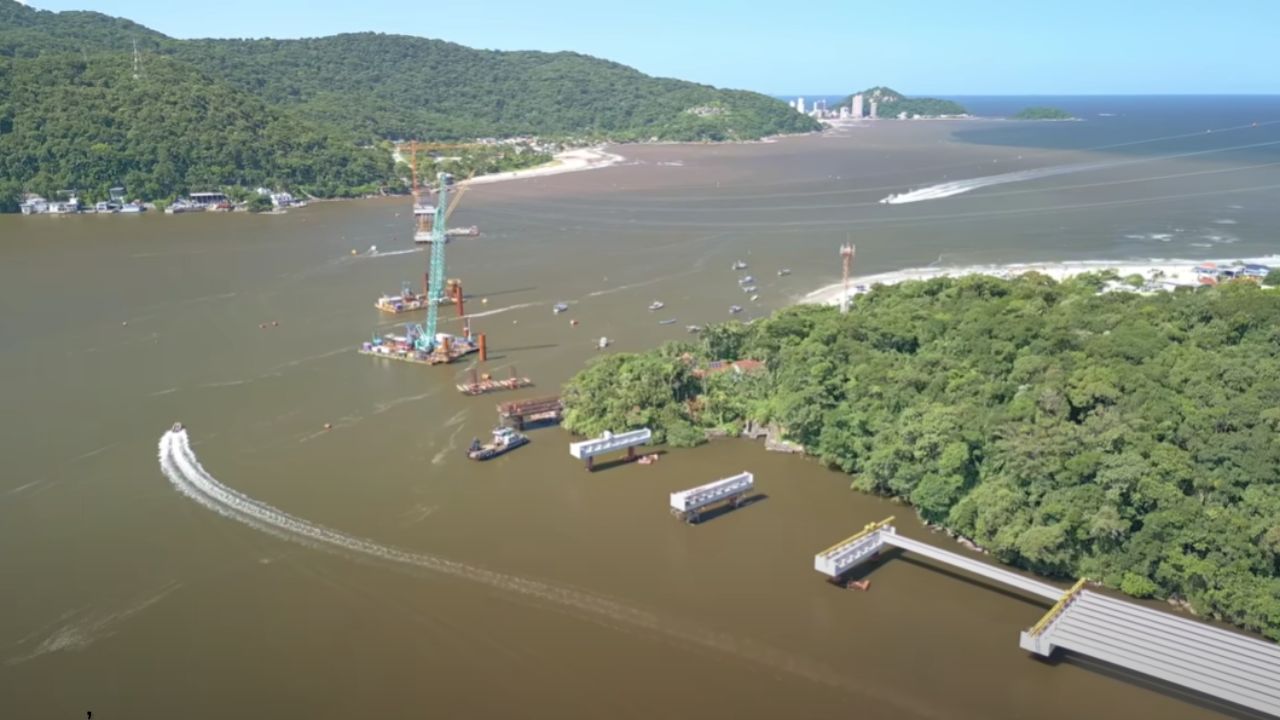
The Guaratuba Bridge Is One of the Most Awaited Infrastructure Projects in Paraná. Its Objective Is to End the Dependency on the Ferry Crossing Between Matinhos and Guaratuba Once and for All. But Is the Project Really on Schedule? And Is the Pouring of the Crown Block, One of the Most Critical Moments of Construction, Posing Risks to the Safety of the Structure and Workers?
Anyone who has been following the progress of the Guaratuba Bridge has already noticed that the project goes far beyond the bridge itself. The access roads are also receiving significant improvements, with the duplication of lanes on both the south side (Guaratuba) and the north side (Matinhos).
Currently, the access section on the south side already shows great progress, with containment work being finalized to ensure the stability of the road. After all, no one wants the soil to give way in the future and cause disruptions similar to those already occurring on some roads in the Serra do Mar.
On the Matinhos side, the access work is progressing more easily, as the area already has two traffic lanes. This reduces the need for major interventions and speeds up the process.
-
Bolivian Female Construction Workers Form Association to Combat Discrimination and 38% Pay Gap in the Industry

-
Near Amsterdam, residents buy land and discover they must also build streets, manage drainage, handle waste, and grow food on half their plot.
-
Brazil’s WEG to Open New Factory in China by 2027, Expanding Production of Large Rotating Electric Machines and Low to Medium Voltage Motors in Rugao

-
Chinese Shipyard Secures $1 Billion in Orders for Low-Carbon Container Ships Amid Global Fleet Renewal Efforts


Is the Project Timeline Being Met?
Initially, the forecast was that the project would be delivered in the second half of 2026. But recently, it was announced that the delivery has been moved up to April of the same year. Sounds like great news, right?
However, for those who follow the project’s progress closely, this advancement may be more optimistic than realistic.
Realistic Expectation: Will the Delivery Be Delayed?
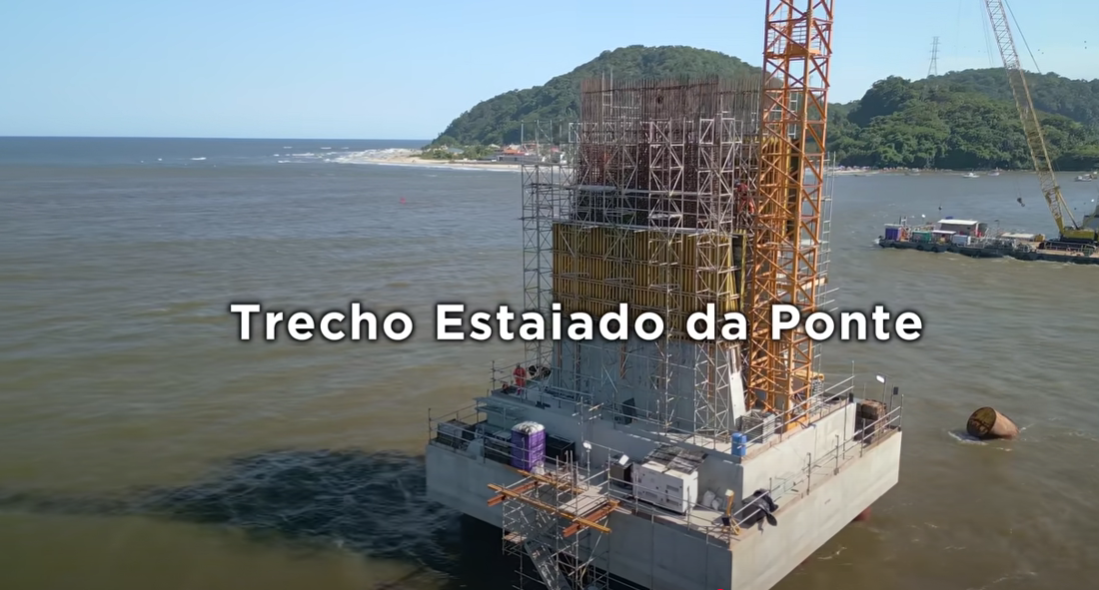
The project has already reached over 40% completion, with a significant volume of work already done, particularly on the bridge’s base. However, constructing a structure of this size always involves unforeseen issues.
Expropriations, project adjustments, and even weather conditions can interfere with the project’s progress. Therefore, there is a possibility that the delivery may occur after April 2026. But if the current pace is maintained, the difference in timeline may not be significant.
Now, one of the most critical points of this phase of the Guaratuba Bridge construction is the pouring of the crown block. Let’s understand why this requires such attention.
Pouring of the Crown Block: A Critical Process
The pouring of the crown block is an essential step for the bridge’s support. This block serves as a large supporting pillar for the stayed section of the Guaratuba Bridge, where the support cables will be located.
The process involves using concrete mixer trucks transported by barges to the pouring site. This alone presents enormous logistical challenges. Any mistake in the concrete mix, temperature, or vibration can compromise the structure’s strength.
The weather can also be a risk factor. On the day of the recent pouring, the winds were very strong, which could compromise the accuracy of the process.
Worker Safety and Structure Stability
Another essential point is the safety of the workers. Since the project involves high altitudes, the presence of strong winds can increase the risk of accidents.
To minimize this danger, the team has been using the “lifeline” – a safety system that allows workers to be secured with harnesses, preventing falls. Even so, it is a delicate operation that requires extreme attention.





-

-

8 people reacted to this.