






 Portuguese
  Spanish


The Future of Urban Traffic Has Arrived: Japanese Solution Reduces Car Size While Parking and Frees Up Street Space.
Japan, always ahead when it comes to mobility innovation, has surprised us again with the Earth-1 — a foldable electric microcar that can be parked in unimaginable places. Developed by Four Link Systems, this vehicle is designed to solve a growing problem in large cities: the lack of space.
With a design inspired by foldable toys and origami art, the Earth-1 literally transforms. In motion, it resembles a regular compact car. But when parked, it folds into itself, taking up less than half of a traditional parking space. The result is a real space-saving solution — essential in crowded urban centers like Tokyo.
How Does the Earth-1 Work?
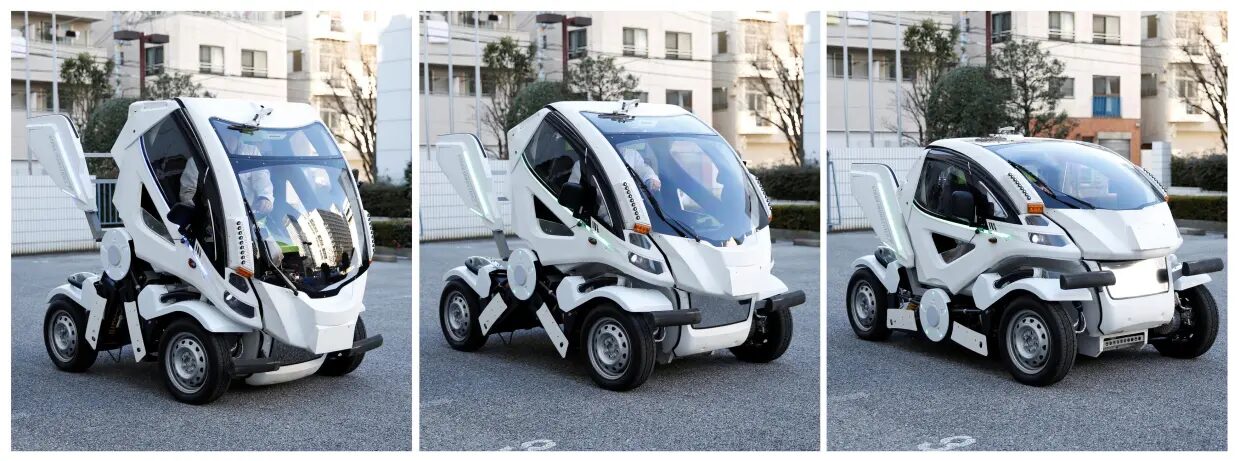
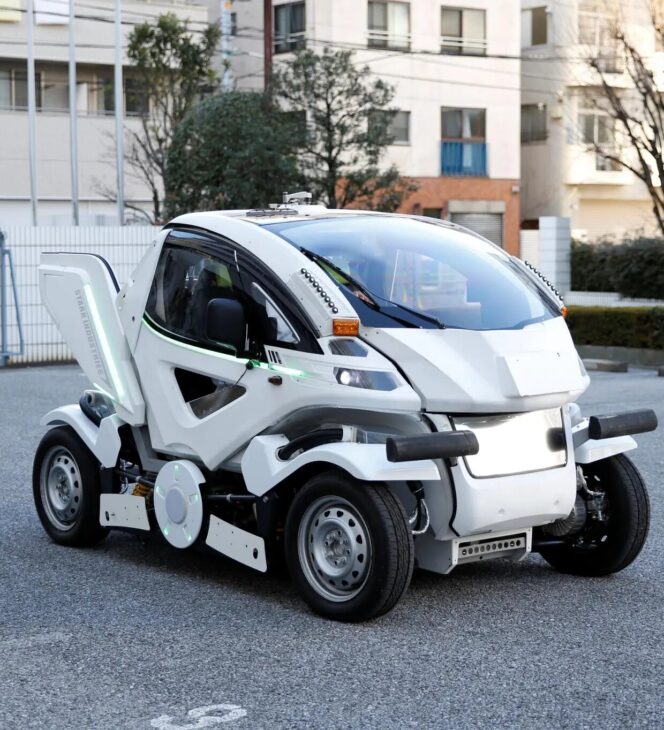
Unlike many futuristic concepts that never leave the drawing board, the Earth-1 already exists as a functional prototype. It has four wheels, a glass cabin for the driver, and is driven while seated, like a conventional car. Its motor is electric, and while detailed commercial specifications are yet to be released, the goal is for it to be used for short commutes in urban areas.
-
Workers renovating a playground in northern England uncover 176 World War II bombs buried underground; training artifacts still contained explosives.

-
Brazilian Architect Transforms Waste into Sustainable Homes with Solar Power and Rainwater Systems for 40 Years

-
Security Guard Becomes Doctor at Louisiana Hospital Where He Once Worked, Studied Chemistry Between Shifts

-
Woman Rescued from Luxury Complex in Brazil Worked Without Pay for 55 Years, May Be Entitled to Over $300,000




The main differentiator lies in its articulated mechanical system, which allows the rear axle and body to fold, automatically compacting the vehicle when parked. The process is similar to the transformation of a robot in Transformers — hence the visual and media appeal the vehicle is gaining.
The Future of Transportation in Overcrowded Cities
The Earth-1 proposition directly addresses one of the biggest urban challenges: space. In cities like Tokyo, Seoul, New York, or São Paulo, the lack of parking and pollution caused by large cars are constant issues. The Earth-1 offers a practical solution: smaller, foldable, and electric vehicles that reduce environmental and physical impact in urban spaces.
Moreover, with the advance of smart cities and automation, ultracompact vehicles like the Earth-1 can be integrated into shared mobility systems, replacing scooters, motorcycles, and even bicycles in certain contexts.
Credit: Reuters
Is a Foldable Car Safe?
This is one of the most frequently asked questions about the Earth-1. As it is a vehicle still in testing, many of the safety certifications have not yet been applied. However, the structure has been designed with a focus on low-speed use — especially for urban environments and short trips.
The idea is not to compete with traditional passenger cars or SUVs, but rather to offer a real alternative to personal transport over short distances. In the near future, this type of vehicle may be ideal for delivery workers, seniors, or people living in large metropolises.
Japanese Innovation with Urban DNA
The Earth-1 is not the only Japanese concept for alternative mobility. Toyota, for instance, has already introduced vehicles like the i-REAL and i-Unit, proposing individual driving and ergonomic formats. However, the Earth-1 stands out by offering a functional mechanism and a concrete proposal for everyday use, with an estimated cost lower than many compact cars on the market.


US $ 70 000…muito caro pra uso urbano
Adorei. Queria um
Eu queria 2 e meio