






 Portuguese
  Spanish
 6 min of reading
  6 comments




Future Tracks: Brazil’s Railway Crossroads Between High-Speed Dreams and the Heavy Freight Reality
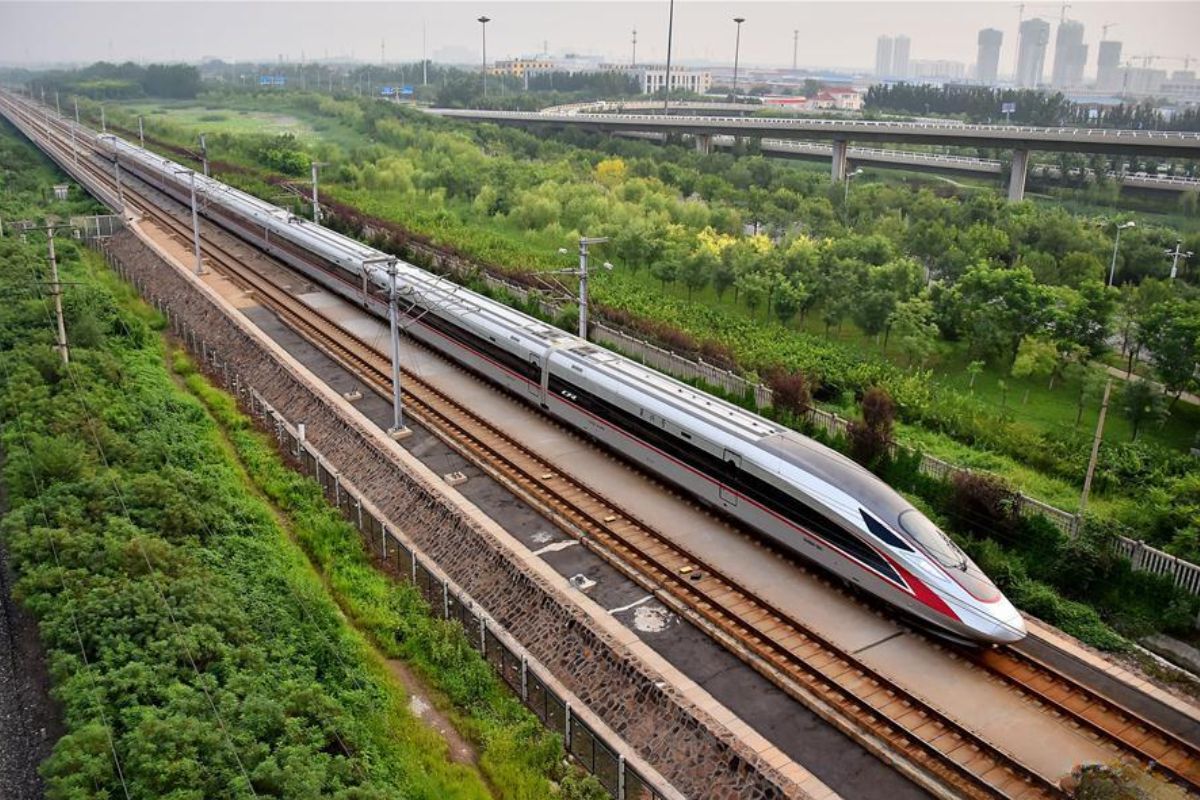
Brazil, a giant of continental dimensions, has always faced logistical challenges that directly impact its economy and the daily lives of its population. Amid this complex scenario, railways emerge as a key piece in the development puzzle, and Chinese interest in this sector has sparked heated debates about the future of our tracks. Are we on the right path dreaming of bullet trains, or is the true locomotive of progress found in freight trains?
China “Ripping” Brazil: Investments and Expectations
It is no secret that China has become a significant global player, and its quest for new trade routes and sources of raw materials has brought it directly to the heart of South America. The Minister of Planning and Budget, Simone Tebet, stated in May that China wants to “rip Brazil with railways” – a strong image that reflects Beijing’s ambition.
Chinese investments are not just promises on paper. Recent data, such as that compiled by the Brazil-China Business Council (CEBC), shows that China has already injected about US$ 66 billion into Brazil over the past 14 years, with US$ 25 billion allocated to infrastructure between 2019 and 2024. This includes discussions about a transcontinental railway connection, linking the Pacific (via the megaport built in Peru) to the Brazilian Atlantic. Although Brazil’s joining the “New Silk Road” was discarded in 2024, bilateral commitments for the construction of the Transoceânica remain firm. This railway and the new port are expected to accelerate the transport of commodities such as soybeans and iron ore, further strengthening trade between the two countries.
-
Railway returns to prominence in Brazil after STF approval: a R$ 25.2 billion project promises to save R$ 9 billion in freight, transport 50 million tons per year, and transform Sinop into a logistics powerhouse for agribusiness.

-
North Korean Fiasco: Launch of the Largest Warship Ends in Sinking

-
While giant ships still burn heavy fuel and the maritime sector races against climate targets, Maersk and Vale are starting to bet on ethanol as a new route to reduce emissions at sea.
-
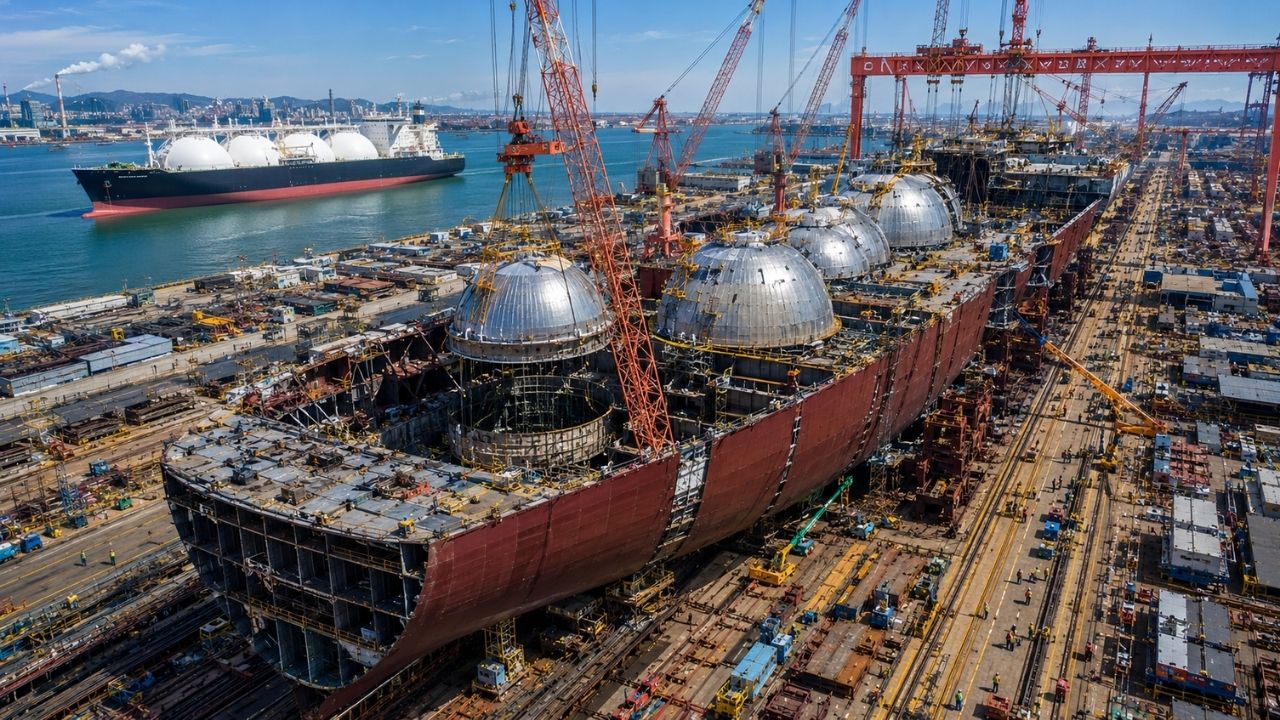
China begins construction of the world’s largest LNG ship, a 344-meter giant capable of supplying 4.7 million homes for a month, carrying 271,000 m³ of gas, and placing QatarEnergy in the largest naval order ever recorded in world history.



The Fascinating Yet Controversial Rio-São Paulo Bullet Train
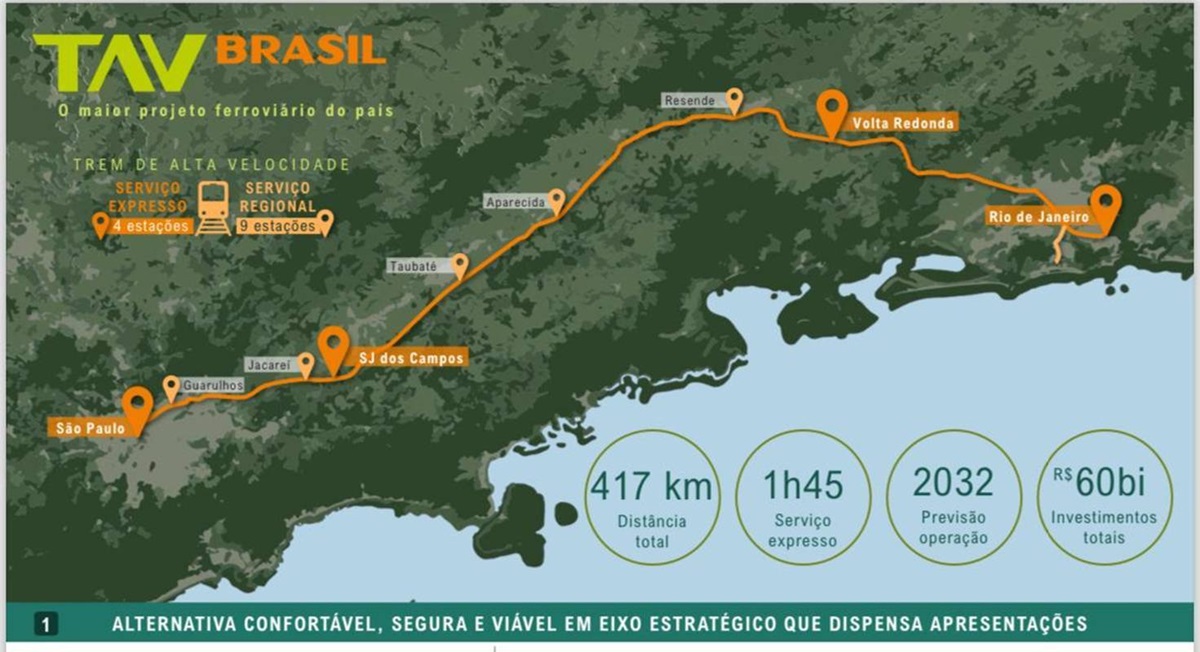
Internally, the star of the debates is the High-Speed Train (TAV) project between Rio de Janeiro and São Paulo, the much-dreamed-of Brazilian “bullet train.” Estimated at around R$ 60 billion, the project seeks private partners – and Chinese, Spanish, and Middle Eastern companies have already expressed interest in financing the work, as public funds are insufficient.
The expectation for the TAV Rio-São Paulo is high. Optimistic forecasts suggest that construction could begin in 2027 and operations in 2032, with the capacity to transport up to 30 million passengers per year. The CEO of TAV Brasil, Bernardo Figueiredo, envisions trips from Rio to São Paulo in 105 minutes, at a cost of around R$ 500 per ticket. The project includes four stations along the 417 kilometers of track and is seen as a landmark for mobility in the country.
However, the bullet train project does not have unanimous support and raises many questions about its real viability.
The Challenges of High-Speed Rail in Brazil
Despite the technological appeal and the promise of speed, international experience and Brazil’s own reality impose a brake on TAV enthusiasts:
- Financial Viability: China, with its impressive 48,000 km of high-speed lines, the largest network in the world, serves as an example. However, many of its routes operate at a deficit and depend on heavy government subsidies. Passenger revenue barely covers interest on debts. Reports from the World Bank and the OECD indicate that most require significant public funding to sustain operations. The cost of the Rio-São Paulo project is R$ 60 billion, and the fact that it relies on private investments is already a red flag.
- Population Density vs. Demand: Studies from the International Union of Railways (UIC) indicate that bullet trains thrive in densely populated and moderately extended corridors (200 to 500 km). The National Land Transport Agency (ANTT) suggests that 6 to 9 million passengers per year are needed to financially balance a TAV. Although the air shuttle between Rio and São Paulo is one of the busiest in the world, with 7 million annual passengers, the ticket price (R$ 500 for the train, compared to R$ 250 for flights purchased in advance) and competition with air and road transport may hinder meeting the projected 25-30 million annual passengers for the train.
- Topography and Construction Costs: Brazil’s rugged terrain, with mountains and valleys, poses a significant technical and financial obstacle. The construction of tunnels and viaducts increases costs exponentially. The Fraunhofer Institute in Germany estimates that in challenging regions, the cost of building a high-speed line can double, exceeding US$ 66 million per kilometer in extreme cases. For the Rio-São Paulo stretch, one challenge is the implementation of an 8.6 km tunnel to cross the Serra das Araras.
- History of Promises: The TAV Rio-São Paulo project is not new. It dates back decades, with attempts and stoppages, leading to skepticism about meeting current deadlines.
More Realistic Alternatives: Regional Trains and Freight Railways
In light of the challenges of the bullet train, the original article and current information from the internet reinforce the discussion about more viable and impactful alternatives for Brazil.
Conventional High-Speed Trains (Regional)
Instead of stratospheric speeds (above 300 km/h), conventional high-speed trains operating between 160 and 200 km/h could be a more economical and efficient solution. They require much lower investments, often making use of existing sections and serving intermediate cities, which can enhance viability. The Pequi Express project (Brasília-Goiânia), which would operate at around 160 km/h, is an example, although it was shelved in 2019 due to projected losses over 28 years. However, the idea of connecting regions with lower cost and greater flexibility remains pertinent. The National Rail Plan even estimates R$ 8.9 billion in investments for six passenger transport projects, with studies expected to be completed by September 2025.
The Gold in the Tracks: Freight Railways
This is where Chinese investment focus in Brazil seems to find its greatest potential for return and impact. Currently, the freight transport matrix in Brazil is dominated by roads (65%), while railways account for only 15%. This represents a glaring inefficiency for a country that exports commodities on a large scale.
China and other investors have targeted this gap. Freight railways are crucial for transporting Brazilian agricultural and mineral production to ports, integrating the national network into global supply chains. Projects like the West-East Integration Railway (FIOL), which will connect the future port of Ilhéus (BA) to Figueirópolis (TO), foresee massive cargo transport, with estimates of 18 million tons/year at the outset and 50 million tons/year within a decade.

The West-East Integration Railway – FIOL (EF-334) spans 1,527 kilometers between Ilhéus/BA and Figueirópolis/TO. The project is divided into three segments
The New PAC from the federal government ensures resources to strengthen railway transport, with R$ 94.2 billion allocated until 2026, focusing on resuming structural works like FIOL and the North-South Railway (FNS). Additionally, the National Rail Plan estimates R$ 138.6 billion in investments in 15 freight assets. The private sector has also heavily invested, with over R$ 173.2 billion since the start of concessions and R$ 10 billion alone in 2023. This modernization is vital for improving the country’s competitiveness and reducing logistical bottlenecks.
The Way Forward: Pragmatism Over Dreams?
Brazil stands at a railway crossroads. The dream of the Rio-São Paulo bullet train, while seductive, encounters questions of economic viability, passenger demand, and the geographical challenges of a country with complex terrain. It is a promise that, for now, floats more in PowerPoints than runs on tracks.
On the other hand, heavy investment in freight railways and, to a lesser extent, in more modest regional trains, seems to be the more pragmatic bet with greater potential for real transformation in the Brazilian economy. The modernization and expansion of the railway network for commodity transport can reduce costs, increase export competitiveness, and decrease reliance on highways, which suffer from congestion and higher costs.
Chinese interest is a driving force to propel this agenda. It is up to Brazil to channel these investments strategically, prioritizing projects that bring broad and sustainable benefits, even if they are not as “glamorous” as a bullet train. After all, the infrastructure that moves the economy is the one that efficiently and cheaply transports the country’s wealth, whether at high speed for passengers or in large volumes for the cargo that connects us to the world. The future of Brazilian tracks may not be the fastest, but it needs to be the smartest and most effective.





Como se as rodovias não dependesse de altos investimentos públicos, parece ser uma matéria revestida de hipocrisia rodoviarista.
Matéria anti-China, revestida de “seriedade” e de “objetividade”, numa página de “petróleo e gás “.
Sou favorável a um projeto ferroviário construído com inteligência e planejamento, unindo as ferrovias já existentes, restaurando os trechos mais antigos..e colocando trens modernos , a exemplo da Europa.. E.UA., e de outros países mais desenvolvidos…