Portuguese
  Spanish


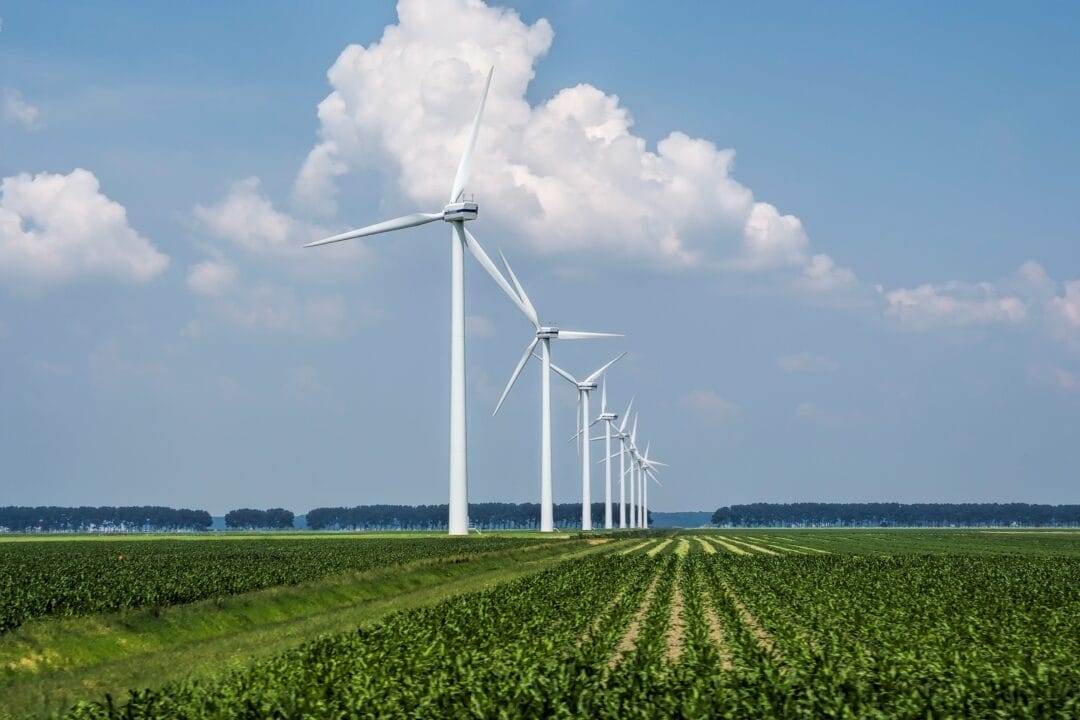


Discover How The Design Of 3 Blades In Wind Turbines Balances Efficiency, Cost-Effectiveness, And Stability To Generate Clean Energy In An Optimized Way.
Have you noticed that the wind turbines we see in wind farms almost always have 3 blades? At first glance, it seems that adding more blades could generate more energy, right? After all, the more blades, the more wind captured, right? But, in fact, the 3-blade design is the result of extensive research and engineering. Let’s understand together why wind turbines have this design and how it relates to efficiency and cost-effectiveness.
The Evolution Of Wind Turbines
The idea of harnessing the power of the wind to generate energy is not new. In fact, the first forms of harnessing wind power date back over 1,000 years, when they were used to grind grain and pump water. Today, wind turbines have evolved significantly and have become giant structures capable of generating clean and renewable energy.
Although there are turbines of different sizes and some design variations, the 3-blade configuration is the most common. But why?
-
Couple receives a quote of $50,000 to install a built-in refrigerator, decides to do the work themselves, spends $6,000, and claims to have saved over $100,000 by renovating the house.

-
At 77 years old, an elderly woman lives alone in an almost ghost village in the French Alps, at an altitude of 1,000 meters, where there is a town hall, a mayor, and an entrance sign, but only she lives there every day in a place destroyed by a landslide and almost erased from the map.

-
India excavates a 28 km artificial lake in the Thar Desert, lines the bottom with a giant plastic sheet to prevent 1.41 million tons of water from disappearing into the sand, and attempts to supply 5 million people throughout the year.
-
12-year-old girl develops a virtual receptionist with artificial intelligence for small businesses and demonstrates how the combination of creativity, programming, and automation can boost productivity, reduce repetitive tasks, and expand access to digital transformation.


More Blades Do Not Mean More Efficiency
When we think of wind turbines, it is natural to imagine that by adding more blades, they would capture more wind and generate more energy. It seems logical, but the scenario is a bit more complex. Wind turbines operate based on a cost-benefit principle. That is, every engineering design needs to balance the amount of energy that can be generated with production and maintenance costs.


If we added more blades to a turbine, we would be increasing production costs, making the structure heavier and more complex. Additionally, each extra blade adds wind resistance, which, rather than helping, can reduce efficiency. The key is to find the right number of blades to optimize wind capture without overloading the structure or increasing manufacturing costs. That’s why the 3-blade design is considered the ideal.
2-Blade Wind Turbines: What Is The Difference?
You might wonder: “What if the turbines had only 2 blades?” Interestingly, the 2-blade design can also be efficient, but it has its disadvantages. Two-blade turbines tend to spin faster than 3-blade ones, as they experience less wind resistance. This means they can generate a similar amount of energy. However, this higher speed creates new problems.
When a turbine spins too fast, it experiences greater vibration and centripetal force. These additional forces can cause more wear on the parts and require stronger, more expensive materials to ensure the turbine operates safely and efficiently. Another point is that the faster the blades spin, the more noise they make, which can be an issue in areas close to inhabited zones.
Therefore, although the 2-blade turbine can generate energy under ideal conditions, the 3-blade one offers a balance between efficiency, safety, and cost.
The Cost-Effectiveness Of The 3-Blade Design
The great advantage of the 3-blade design lies in the perfect balance between efficiency and economic viability. By adding a third blade, the design manages to capture more wind at a lower rotational speed. This means less vibration, less centripetal force, and consequently, less wear and maintenance needs.
The 3-blade wind turbines can generate energy more efficiently in slower winds, making them ideal for most locations where wind farms are installed. And even though they spin slower than 2-blade ones, they still manage to produce a significant amount of energy. The 3-blade structure also contributes to greater stability of the turbine, reducing maintenance costs over its lifespan.
Why Don’t Wind Turbines Have 4 Blades?
Now that we understand why turbines generally don’t have 2 blades, another question may arise: Why not add a fourth blade? Well, the answer again lies in the cost-benefit. With a fourth blade, production costs would increase significantly, without a substantial gain in the amount of energy generated.
In addition to the increased weight of the turbine, a fourth blade would add more wind resistance, making rotation more difficult and less efficient. The design of 4 blades would bring more disadvantages than advantages, making the cost very high for the extra amount of energy that would be generated. Thus, engineers found in the design of 3 blades the ideal solution.
Does The Size Of Wind Turbines Matter?
Besides the number of blades, the size of wind turbines is also crucial for determining their efficiency. The larger the turbine, the more wind it can capture, and consequently, the more energy it can generate.
For example, the largest wind turbine in the world, the MingYang Smart Energy, has 260 meters in diameter and each of its 3 blades measures an impressive 123 meters. This gigantic size allows the turbine to generate enough energy to power thousands of homes but also requires an extremely robust structure to support the weight and forces involved.
The blades of a turbine need to be strong enough to capture the wind without wearing out quickly, but they also cannot be too large to overload the turbine’s components. The cost of construction and maintenance increases significantly as the turbines get larger.
Why 3 Blades Is Ideal?
Ultimately, the 3-blade design is the perfect balance for wind turbines. It offers the best combination of efficiency, stability, and cost-effectiveness, ensuring that turbines can generate energy efficiently without becoming too expensive to build and maintain.
Adding more blades or increasing the size beyond certain limits would make the turbines heavier, more expensive, and less efficient. And while 2-blade turbines can generate energy in specific conditions, they present more challenges in terms of vibration and wear.
So the next time you pass by a wind farm and see those large wind energy turbines with 3 blades spinning quietly, know that there is a lot of engineering behind this design. It is the result of years of research to create a solution that maximizes wind capture at the lowest possible cost.