Portuguese
  Spanish


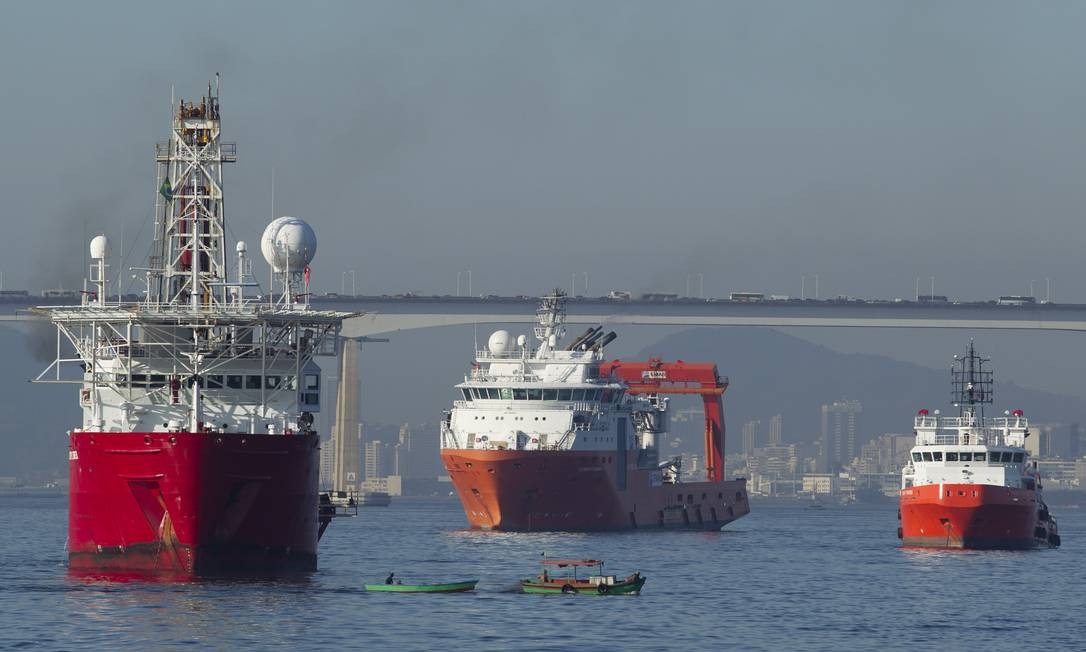

The Use of This New Technology at the Port of Rio de Janeiro Will Bring More Safety and Dynamism to Navigation Operations in Guanabara Bay
Rio de Janeiro, January 17, 2020 – During a meeting of the Working Group (GT) responsible for studies to improve the waterway access to the Port of Rio de Janeiro, held on Wednesday (15) at the headquarters of the Companhia Docas do Rio de Janeiro (CDRJ), the company Argonáutica presented a report on the evaluation runs of the ReDRAFT® software, conducted for future implementation of dynamic draft.
You May Also Like
- Equinor’s Peregrino C Platform is Installed in Brazil and is Expected to Create 350 Offshore and Onshore Jobs
- Job Openings to Work in Macaé at the Oil Industry Giant Halliburton, on This Day 17
- Job Openings in the Construction Sector Have Been Announced for Projects and Works in Bahia
For the necessary viability tests and maneuvers measurements, 20 runs were conducted on container ships of different sizes, with entry and exit routes from the Ports of Rio de Janeiro and Santos, under different conditions. The analyses indicate an estimated average gain of at least half a meter over the maximum draft of 14.6 meters.
The use of this technology brings agility to the navigation channel in Guanabara Bay, more navigation safety, and economic benefits, as it allows for optimizing the loading capacity on ships, reducing the anchorage of vessels in the port, and maximizing channel operations by increasing entry and exit windows.
-
Brazil’s ANP Opens 86 New Oil Blocks in the Equatorial Margin, Expanding the Amazon River Mouth Frontier

-
OPEC+ Boosts Oil Supply by 188,000 Barrels per Day in July 2026, Leading to Price Drop from $112 to $89 per Barrel in Under Two Months

-
TotalEnergies Signs 20-Year Deal to Purchase 2 Million Tons of LNG from Alaska, Boosting Project Viability
-
Turkey Deploys Çağrı Bey Drilling Ship to Explore New Oil Frontier Off Somalia’s Coast
According to the manager of the Vessel Traffic Management and Information System (VTMIS) at the Port of Rio de Janeiro, Marcelo Villas-Bôas, the runs were the first step, but for the implementation of the system, “we still lack definitions regarding the software to be used in the calculations of the under-keel clearance and operation windows, as well as regarding the monitoring of bathymetric data (tidal and sedimentological studies) and environmental factors (sea level, waves, winds, and marine currents).”
Still in the meeting, the GT – composed of representatives from CDRJ, the Brazilian Navy (MB), Pilots, and container terminals – addressed the progress of nautical signaling projects for Cotunduba Channel, which is expected to be operational by the 1st semester of 2020; and the modernization and reactivation of tidal and oceanographic stations, in partnership with MB, necessary for the implementation of VTMIS. Studies related to the reception of 366-meter vessels at container terminals and the improvement of navigation in São Cristóvão Channel have also begun.
Learn More About Dynamic Draft
Systems like ReDRAFT® analyze how various environmental factors affect the dynamic behavior of each vessel, calculating the maximum operational draft for each maneuver. The implementation of this system will ensure that vessels, even in adverse meteorological and oceanographic conditions, will maintain a safe distance between the ship’s keel and the bottom of the navigation channel.
A series of variables are considered, such as: type of ship, speed, tides, winds, currents, waves, salinity, squat effect due to speed in restricted waters, and the vessel’s path in the channel. All this information, along with bathymetric data and channel characteristics, is processed in real time, generating a result that presents the maximum draft in each situation, considering the vertical displacement of the moving ship, without compromising navigation safety. This monitoring facilitates decision-making regarding the entry and exit of ships.