Portuguese
  Spanish


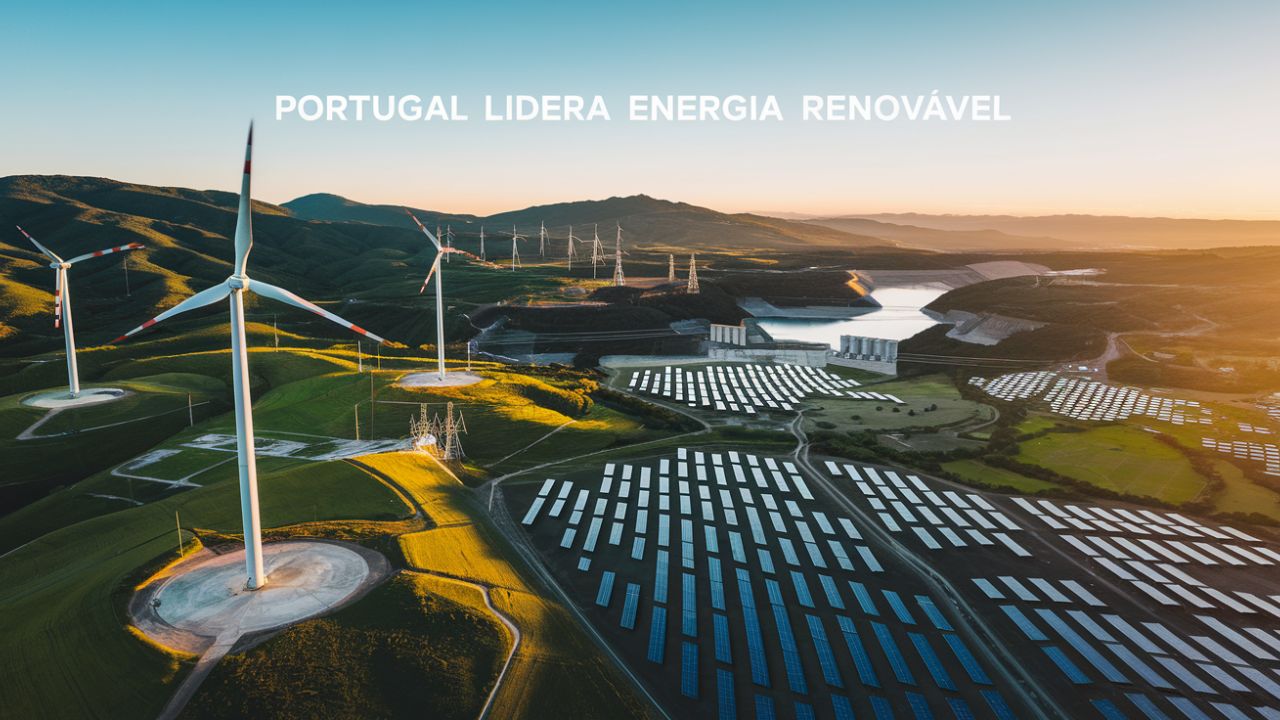


With 71% of Energy Generated Locally From Renewable Sources and Only 10% Coming From Fossil Fuels, Portugal Has Become a Global Leader in the Energy Transition, Promising Over 90% Renewable Energy by 2030.
If you have ever wondered whether a country can live almost exclusively on renewable energy, Portugal is here to prove that it can. This small European giant is achieving one milestone after another in the race for sustainability. But how did Portugal get there? Let’s unravel this inspiring story.
The Current Scenario of the Energy Transition in Portugal
In recent years, Portugal has taken impressive steps in the energy transition. In 2024, the country reduced its dependence on gas by 56%, marking its lowest consumption since 2003. And the most impressive part? Only 10% of the electricity consumed came from fossil fuels. It seems like a dream, but it’s pure reality.
With sources such as hydropower, wind, and solar energy, the Portuguese electricity mix has reached historic levels: 71% of the energy comes from local renewable sources, while another 20% is imported from low-carbon sources from neighboring Spain. This performance has placed Portugal alongside global leaders like Denmark and Chile.
-
Brazilian scientists are simultaneously advancing two research projects on clean hydrogen and driving solutions that could transform the energy matrix, enhance industrial competitiveness, and accelerate large-scale emission reduction targets.

-
Advancement in renewable energy: A R$ 150 million project launched by Petrobras and Finep aims to create state-of-the-art electrolyzers for green hydrogen, strengthening national research and preparing Brazil to compete in a billion-dollar energy market.
-
Illiterate or semi-literate grandmothers were trained to repair solar systems, open rural workshops, and light up homes that still depended on kerosene.
-
The world has bet on green hydrogen as the fuel of the future, but now faces the side effect: producing 1 kilogram requires about 9 liters of ultrapure water, and the largest projects on the planet are precisely in the driest regions of the Earth, where water is already scarce for people.





The Iberian Peninsula Strategy: Portugal and Spain Together in Sustainability

Portugal and Spain are not just sharing a border; they are building a sustainable electric grid. This collaboration has not only strengthened energy security but also accelerated the decarbonization of the energy matrix.
Interestingly, 82% of the energy in the Iberian Peninsula already comes from clean sources. Importing low-carbon electricity from Spain has become a key piece for Portugal’s success. It’s like watching two neighbors planting trees together and reaping the benefits of a renewable forest.
Remarkable Results and a Promising Future
Portugal closed its last coal plant in 2021, making it clear that it is committed to clean energy. The goals for 2030 are bold: over 90% of the country’s energy will be renewable.
This model is not just a milestone; it is an inspiration. The 17% decrease in gas consumption in 2024 reinforces how structural changes can transform an energy system.
Lessons from Portugal for Other Countries
So, what can other countries learn from Portugal? First, consistent public policies are essential. Strategic investments in clean infrastructure also make a significant difference. And, of course, regional partnerships like that of the Iberian Peninsula show that together we can go further.
If we want to build a sustainable future, looking at what Portugal has done is like finding a manual for instructions. It is a combination of vision, planning, and above all, flawless execution.
Why Portugal Is a Model for Renewable Energy
According to the site Xataka, Portugal is not just a pioneering country; it is an example of how to unite technology, sustainability, policy, and international collaboration to achieve what seemed impossible. It’s like watching a conductor leading an orchestra: everything is in perfect harmony.
If the question was, “Can a country sustain itself solely on renewable energy?” Portugal answers with a resounding yes. And you? Are you ready to follow this example?