






 Portuguese
  Spanish
  4 min of reading
  0 comments


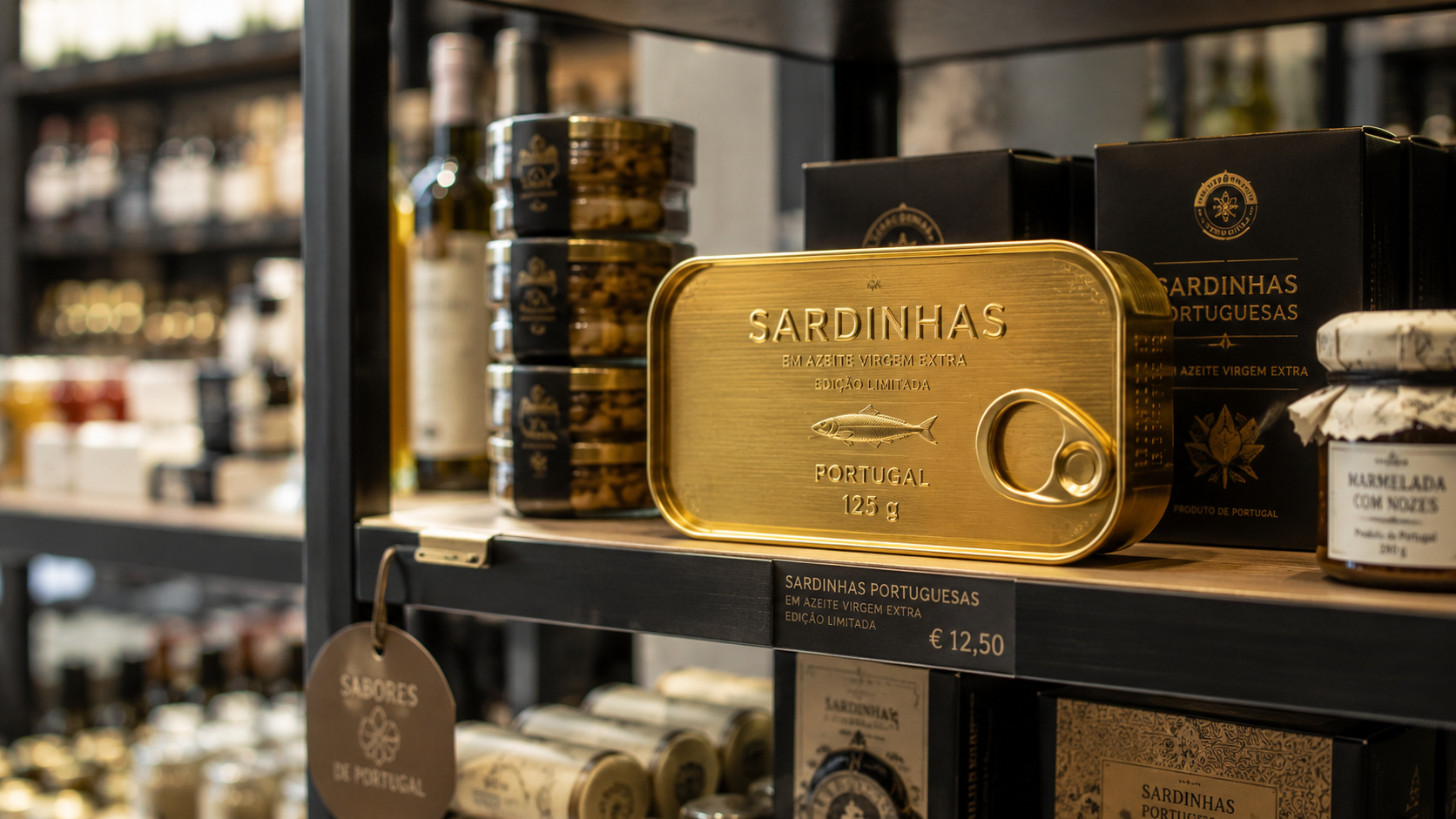
International award highlights how a simple package can transcend consumption and become a cultural object, valuing tradition, identity, and sophistication in the global market
A simple Portuguese sardine can achieved something rare in the design world: it left ordinary shelves and earned a prominent place among the world’s most awarded projects. The information was disclosed by “SAPO”, in a report detailing how the traditional Portuguese packaging was reinvented and internationally recognized, reinforcing the power of packaging design as a tool for cultural valorization and brand positioning.
Initially seen only as a typical product of Portuguese popular culture, the sardine can underwent a strategic transformation. Thus, it ceased to be merely a functional item and began to represent an object of desire within the premium universe. Consequently, the project “Fantastic World of Portuguese Sardine” elevated the product’s concept to a new level.
Furthermore, this movement follows an important global trend: the valorization of cultural identity through design. In other words, brands that can tell authentic stories are increasingly relevant in the international market.
-
Brazil to Allocate 3% of Affordable Housing Program in 38 Cities for Homeless, Paving Way for First Property Transfers to Formerly Unhoused Residents

-
Man Builds Handcrafted Wooden Cabin in Canadian Forest Using Only Trees and No Construction Crew

-
Maria Marli, a 15-Year Veteran Bricklayer, Helps Build Bahia’s Tallest Building and Realizes Her Own Dreams
-
Mayan Dogs Traveled Between Cities, Accompanied Leaders, and Were Used in Sacrifices: New Discoveries Uncover Complex Relationships




How packaging design took Portuguese sardines to the world’s top

The recognition came through the DIELINE Awards, one of the world’s most respected awards in the packaging design segment. The event took place in New York, during the Luxe Pack fair, bringing together specialists, brands, and innovative projects from various countries.
In 2026, the competition featured over 1,500 entries from approximately 40 countries, distributed across 15 categories. This number reinforces not only the level of competition but also the global relevance of the award.
In this highly competitive context, the “Ouro Português” can won the award in the Food Packaging category. Therefore, it is not just an aesthetic victory, but also a strategic one, as the design was crucial for repositioning the product in the international market.
The packaging stands out for its monochromatic gold aluminum finish, which directly resembles a gold bar. Furthermore, the project uses advanced techniques, such as tactile embossing and lithography applied directly to the metal.
Consequently, the consumer’s sensory experience is enhanced. In other words, contact with the packaging goes beyond sight, also involving touch and reinforcing the perception of value.
The historical inspiration that transformed tradition into contemporary luxury
Despite recent recognition, the origin of the concept is deeply historical. The inspiration for the design of the “Ouro Português” can came from the work “The Golden Book of Portuguese Canned Goods”, written by Leitão de Barros, a filmmaker and writer who played a fundamental role in building the cultural narrative of the Portuguese canning industry in the 20th century.
This book documents the entire production chain of canned goods, from fishing to the final product. Furthermore, it positions this sector as one of the great symbols of Portugal’s export capacity.
Based on this reference, the project creators sought to visually translate the historical prestige of Portuguese canned goods. In this way, the book’s golden, embossed cover served as the conceptual basis for the creation of the award-winning packaging.
Consequently, the design not only modernizes the product’s presentation but also rescues its cultural importance. In other words, the can now functions as a link between past and present.
Furthermore, this strategic repositioning has a clear objective: to insert Portuguese sardines into an international premium segment. Therefore, the packaging ceases to be merely a container and transforms into a symbol of exclusivity, tradition, and sophistication.
Design, culture, and consumption: a new way of looking at traditional products
The success of the “Ouro Português” can shows how design can completely alter the perception of a product. Initially seen as something simple and everyday, it now occupies a prominent place in the global market.
Furthermore, this case highlights an important change in consumer behavior. Today, it’s not enough to just offer quality; it’s necessary to tell a story and create an emotional connection.
In this sense, the Portuguese project stands out by uniting tradition, innovation, and cultural identity. Consequently, it creates a strong narrative that resonates with consumers from different parts of the world.
Therefore, more than an award-winning packaging, the Portuguese sardine can becomes a clear example of how strategic design can transform common products into unique experiences.
Do you believe that design can truly transform a simple product into something luxurious, or is that just perception?






Be the first to react!