Portuguese
  Spanish


It Moves Billions and Almost No One Knows: The Largest Port in Brazil Breaks Records, Sustains Exports, and is Key to the National Port Economy and Foreign Trade.
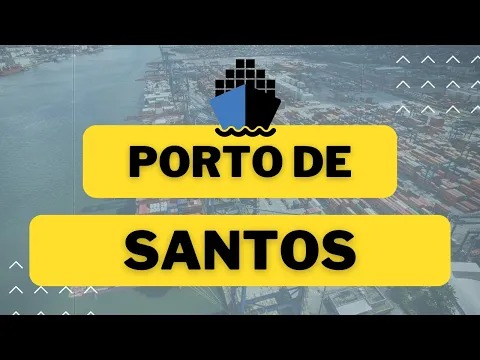
Responsible for nearly a third of all Brazilian exports, the port of Santos, located on the coast of São Paulo, is the largest port complex in Latin America. In 2023, the port reached a mark of 173.3 million tons handled, consolidating itself as the largest port in Brazil in volume and logistical importance. Little known outside the sector, it is a central piece of the national and international port economy.
Operating 24 hours a day, the port connects Brazil to more than 600 ports on all continents and handles cargo of various natures: soybeans, sugar, corn, coffee, fertilizers, containers, oil, and industrialized products. The structure is strategic for agribusiness, industry, and the national supply chain.
Port of Santos: The Country’s Logistics Center
The port of Santos is located between the municipalities of Santos and Guarujá. With more than 55 terminals installed along 15 kilometers of pier, its infrastructure is designed to accommodate large vessels, with dredging systems that allow for deep drafts and large-scale operations.
-
The U.S. Navy Conducts Submarine Tests in Idaho Lake to Detect Underwater Noises Hidden by the Ocean

-
Nuclear Submarine USS Alexandria Retired After 35 Years, Having Completed Over 1 Million Miles in Missions

-
MODEC Introduces New Hull Design for FPSO Gato do Mato to Produce Up to 120,000 Barrels of Oil Per Day in Brazil’s Pre-Salt Region
-
This Massive 12-Meter, 21-Ton Underwater Drone Can Operate Autonomously for Up to Five Days


Its area of influence encompasses primarily the states of São Paulo, Minas Gerais, Goiás, Mato Grosso, and Mato Grosso do Sul — central regions in the production of grains, sugar, meat, and minerals. This connection makes the port the main channel for commodity export in the country.

Movement Records Year After Year
In recent years, the largest port in Brazil has been breaking consecutive records in cargo handling. In 2023, soybean exports grew by 428% compared to December of the previous year. Sugar also saw a significant increase of 70.5% during the same period.
Container handling surpassed 4.7 million TEUs, positioning the port of Santos among the largest logistical hubs in the southern hemisphere. These numbers reinforce the port’s role as a protagonist in Brazilian exports and international trade.
Strategic Role in the Port Economy
The port’s performance directly impacts the country’s trade balance. A large part of foreign exchange revenue, infrastructure investment, and job creation linked to the productive chain of foreign trade passes through Brazilian ports — and Santos leads this system.
It is estimated that the port generates around 100,000 direct and indirect jobs, with activities ranging from port operations to road, rail, and maritime logistics. Furthermore, the growth of the port economy boosts businesses in interior regions, such as agricultural and industrial hubs that depend on exports via Santos.
Investments and Continuous Modernization of the Port of Santos
The Port Authority of Santos (APS) has been promoting modernization programs focusing on technology, efficiency, and sustainability. The projects include improvements in dredging, terminal expansions, and integration with transportation modes — especially rail, considered essential for increasing transported volume with lower environmental cost.
There are also plans for initiatives to digitalize operations, automate logistic processes, and encourage emission reductions. The goal is to maintain the port of Santos as a reference in productivity and global competitiveness.
International Recognition and Future Prospects
The performance of the largest port in Brazil has been recognized internationally. The port ranks among the 50 largest in the world in container handling and stands out in global logistics efficiency rankings.
For the coming years, projections indicate continued growth, with a focus on new private partnerships and operational capacity expansion. The port is also considered strategic in environmental and energy transition agendas, with potential to host terminals dedicated to the export of green hydrogen and biofuels.