Portuguese
  Spanish


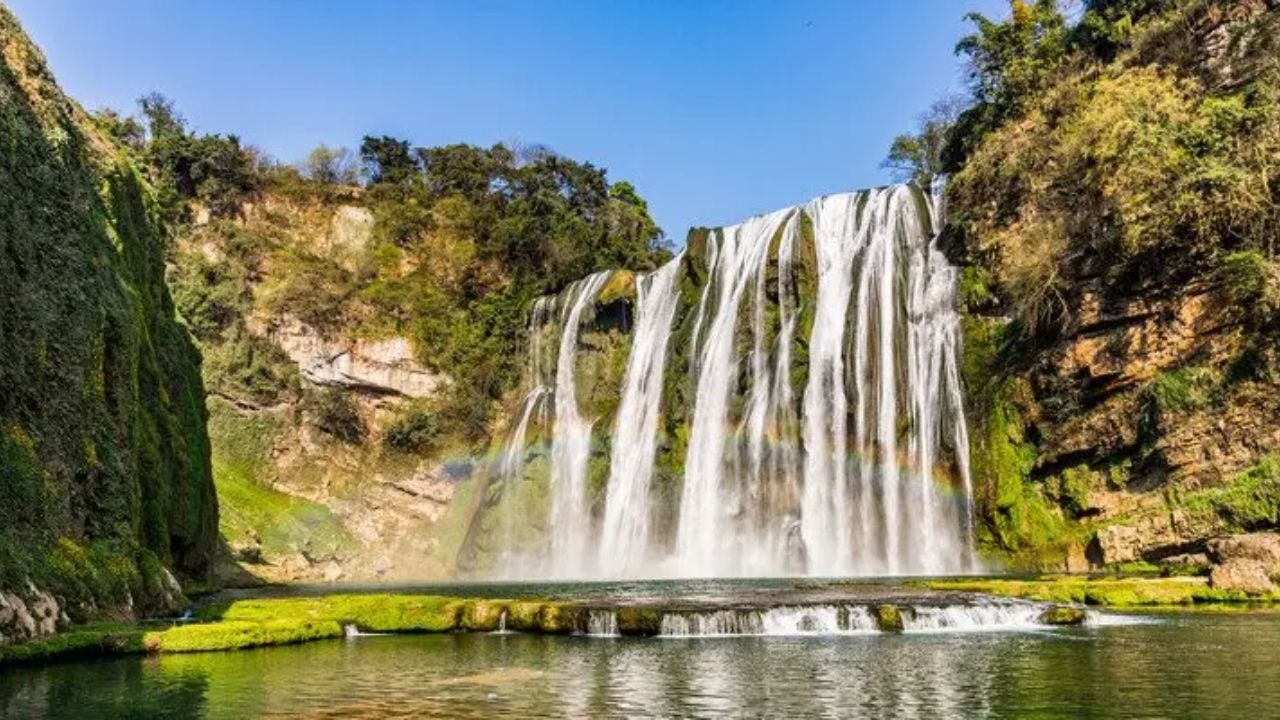


Residents of Guizhou Province Adapted Their Lives to the Mist of Huangguoshu Waterfall, but Now Face an Uncertain Future
The province of Guizhou, in China, boasts a natural spectacle and a unique way of life: the Huangguoshu Waterfall, the largest in the country. Nearby, nestled between mountains and the constant roar of water, there are communities that have built their routine in an extreme environment. The image of “living behind the waterfall,” popularized by the mythical Water Curtain Cave, is not literal, but the reality of the residents is even more fascinating.
Sources describing the “Stone Village” (Shitou Zhai), home to the Buyi people, reveal a robust architecture made entirely of local stone. These residents have transformed their culture into a model of successful tourism. However, this new economy collides with modern precariousness: government conservation plans now threaten to displace these very communities to protect the landscape they helped to make famous.
The Myth of Living Behind the Waterfall
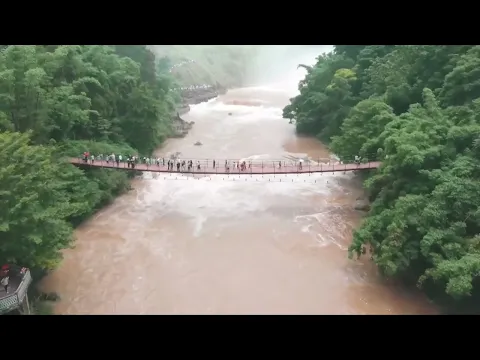

The fame of the Huangguoshu region is linked to Shuiliandong, the “Water Curtain Cave”. This real cave of 134 meters, located literally behind the waterfall, is celebrated in Chinese mythology as the home of the Monkey King from the work Journey to the West. Tourists can indeed walk through it and observe the world through a curtain of water.
-
11-Year-Old Entrepreneur Turns Fear of Bees into Honey Lemonade, Wins $60,000 on Shark Tank, Secures Whole Foods Deal, and Expands Brand Across U.S. Stores

-
9-Year-Old in Brazil Sells Homemade Sweets to Support Grandfather with Parkinson’s, Family Dreams of Buying Candy-Making Machine

-
Man Disguises as His Own Mother to Collect €3,000 Monthly Pension, but Makeup and Beard Stubble Raise Suspicions at Registry Office

-
Brazilian Airport to Receive $2.8 Million Investment, Completion Expected Within a Year





However, sources analyzing the “Stone Village” (Shitou Zhai) are clear in detailing that the cave is a tourist attraction, and not a residential area. The real life happens just a few kilometers away. The cave is the magnet that attracts visitors, but the routine of the residents takes place in the shadow of this icon, in settlements adapted to an environment of constant mist and humidity.
Shitou Zhai: The Stone Architecture of the Buyi People
About six to seven kilometers from the main waterfall, lies the “Stone Village” (Shitou Zhai). As described by sources detailing this specific village of the Buyi people, this settlement is a marvel of vernacular architecture. The name is literal: houses, walls, roofs, roads, and even utensils are made of local stone.
This technique is a direct response to the climate. The constant mist from the waterfall and high humidity would make materials like wood or adobe unviable. Sources highlight that the houses are built without the use of bricks or tiles, using irregular stone blocks skillfully combined. The tradition even uses sticky rice mortar, an ancient engineering technique that ensures the durability of the structures, keeping the interior “cool in summer and warm in winter.”
The “Paradox of Guizhou” and the New Routine of Tourism
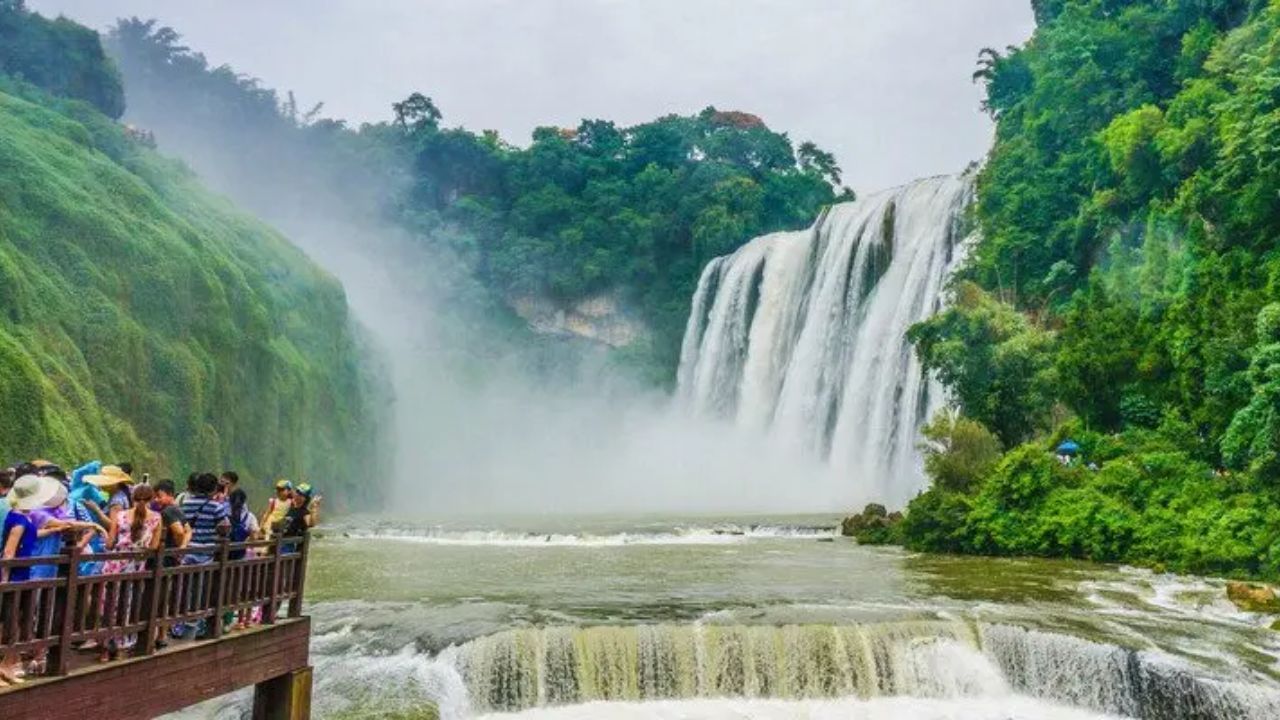
The routine of these residents, once focused on subsistence agriculture and handicrafts, has been transformed by tourism. An analysis of the local economy details what has come to be known as the “Paradox of Guizhou”. Unlike other Chinese regions, where tourism enriched external investors without significantly reducing rural poverty, the model in Guizhou was structured differently.
The strategy was focused on the “direct participation” of poor rural residents. This was accomplished through the nongjiale (agrotourism) model, where residents host groups of tourists in their homes, prepare traditional meals, and share their ethnic culture. Sources on this unique socioeconomic model point out that it has proven highly effective in reducing poverty, with a large percentage of tourism fees being distributed directly to participating villagers.
The Threat of Preservation and the Routine of Uncertainty
Ironically, the success of this cultural tourism model is now the greatest threat to the residents’ permanence. The delicate balance between authenticity and environmental conservation has created a new existential conflict that defines the modern precariousness of the village.
Sources reporting on local government plans for the area reveal the central tension. To ensure the “better protection of the waterfall areas,” a decision was made to “move the towns” (settlements) to higher river courses. The stated goal is to “make way for forests,” which, in practice, means displacing the communities that are the foundation of local tourism.
The “new routine” of the residents of the Stone Village, therefore, has become a routine of impermanence. A local resident summarized the situation: “I’m not sure how long I will stay here”. The people who built their lives with the stones of the landscape of Guizhou now face the possibility of being removed in the name of preserving that same landscape.
The dilemma in Guizhou is complex: should the preservation of nature outweigh the right to permanence of traditional communities that have lived there for generations? What is the limit between protecting a natural heritage and displacing the living culture that is part of it?
We want to hear your opinion: Do you believe that the removal of residents is justified to protect the waterfall, or should the local culture be preserved on-site as part of the landscape? Leave your viewpoint in the comments.