





 Portuguese
  English
  Spanish
  4 min of reading
  0 comments


Fossil analyzed in the United Kingdom confirms the identity of Praearcturus gigas and reveals how a giant predator lived when the mainland was still dominated by few species
A paleontological discovery of great scientific impact was recently confirmed in the United Kingdom, attracting international attention to an animal that lived long before the dinosaurs.
Fossils of Praearcturus gigas, a species that existed about 415 million years ago, were reanalyzed by researchers and confirmed the existence of the largest scorpion ever identified by science.
The animal inhabited regions that today correspond to England and Wales, during a period when terrestrial life was still taking its first steps and few predators reached large sizes.
-
Gessel Treasure places Germany at the center of a Bronze Age mystery with 117 gold artifacts, solar symbols, and an origin still unknown

-
Fluorescent spider appears in a nearly untouched area of Africa and reveals dozens of species that science did not yet know.
-
Mr. Severino started working at the age of 6, became an orphan without knowing his parents, and spent 9 decades without studying; he went on stage, received his diploma, and starred in one of the most emotional graduation ceremonies in Brazil in 2026.

-
China built a 300-meter, 40,000-ton horizontal building, hoisted it to a height of 250 meters, and impresses with a suspended building that features a panoramic viewpoint, gardens, restaurants, and an infinity pool in Chongqing.


The new analysis was published on June 2, in the scientific journal Palaeontology, and ended a long-standing debate about the true identity of this prehistoric predator.
Technical investigation confirms identity of the giant scorpion
The fossils of Praearcturus gigas have been known to scientists for more than a century.
However, its classification remained uncertain for decades, as the available fragments did not allow a definitive conclusion about its origin.
The answer gained strength after the description of Eramoscorpius, made in 2015, based on a well-preserved fossil found in Canada.
According to the researchers, this ancient scorpion had an anatomical structure called sternum, formed by an elongated triangular piece with a central groove.
The same characteristic also appears in the fossils of P. gigas, allowing scientists to confirm that the species indeed belonged to the group of scorpions.
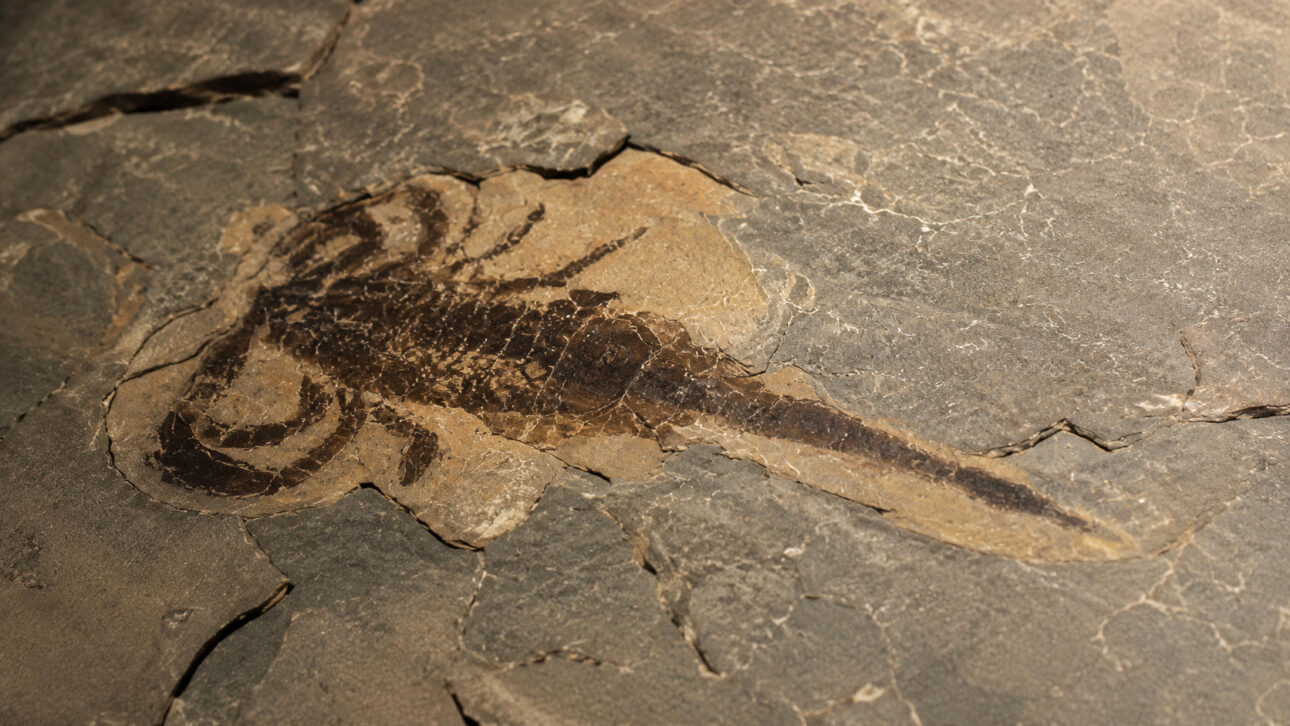
Predator over one meter dominated transitional environments
The Praearcturus gigas had an impressive size for its time.
According to the study authors, the animal could exceed one meter in length and had claws up to 16 centimeters.
This size placed the species among the first large predators to occupy terrestrial environments in the Devonian period.
At that moment in Earth’s history, few animals had reached such significant dimensions outside of water.
The giant scorpion likely had an advantage over many prey living in flooded plains.
Robust body enhanced hunting capacity
The animal’s strong body indicated a great hunting capacity in different environments.
On land, the Praearcturus gigas could capture small arthropods that already occupied wet and shallow areas.
Researchers also suggest that it could act as an aquatic predator, expanding its presence in flooded regions.
In this scenario, the scorpion could feed on fish and other larger animals.
According to Richie Howard, curator of fossil arthropods at the Natural History Museum of London and lead author of the study, the species lived at a decisive moment in evolution.
At that time, the ancestors of reptiles, mammals, and birds had not yet left the water.
The absence of large competitors may explain why the animal grew so much and dominated its environment.
Discovery reveals clues about life on land
The identification of Praearcturus gigas offers new clues about the colonization of terrestrial environments by complex life forms.
During the Devonian, small plants began to spread across the continents.
Over time, these adaptations would help form the first forests.
Meanwhile, fungi and small arthropods also occupied these spaces, creating increasingly complex ecosystems.
The presence of a predator of this size shows that the transition of life from water to land may have been more dynamic than scientists imagined.
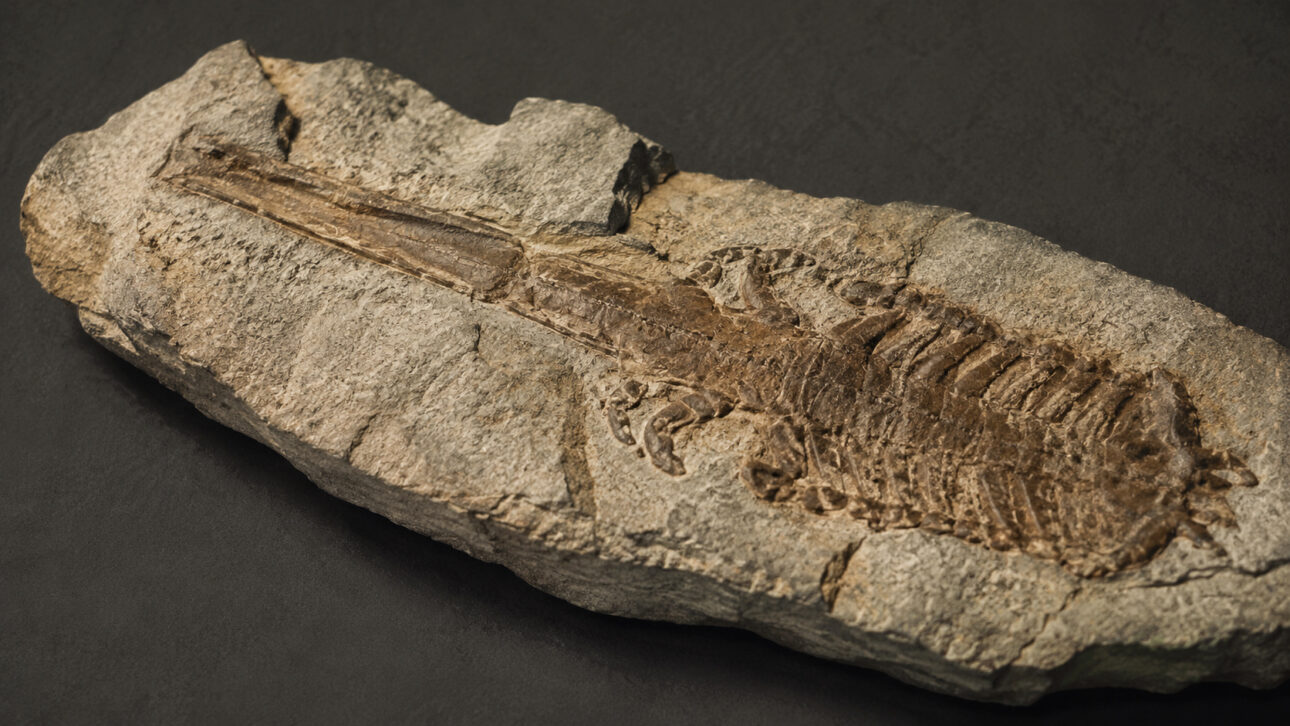
New fossils may change what science knows about the species
Many questions remain unanswered, despite scientific advancement.
Fossil fragments found in Portishead, England, indicate that the species may have survived for at least another 40 million years.
This association, however, has not yet been confirmed by researchers.
New discoveries will be necessary to clarify whether these remains truly belong to Praearcturus gigas.
These studies may also reveal more details about its biology, evolution, and disappearance.
After all, how many clues about the first terrestrial predators are still hidden in fossils forgotten for millions of years?




Be the first to react!