






 Portuguese
  Spanish
  5 min of reading
  0 comments


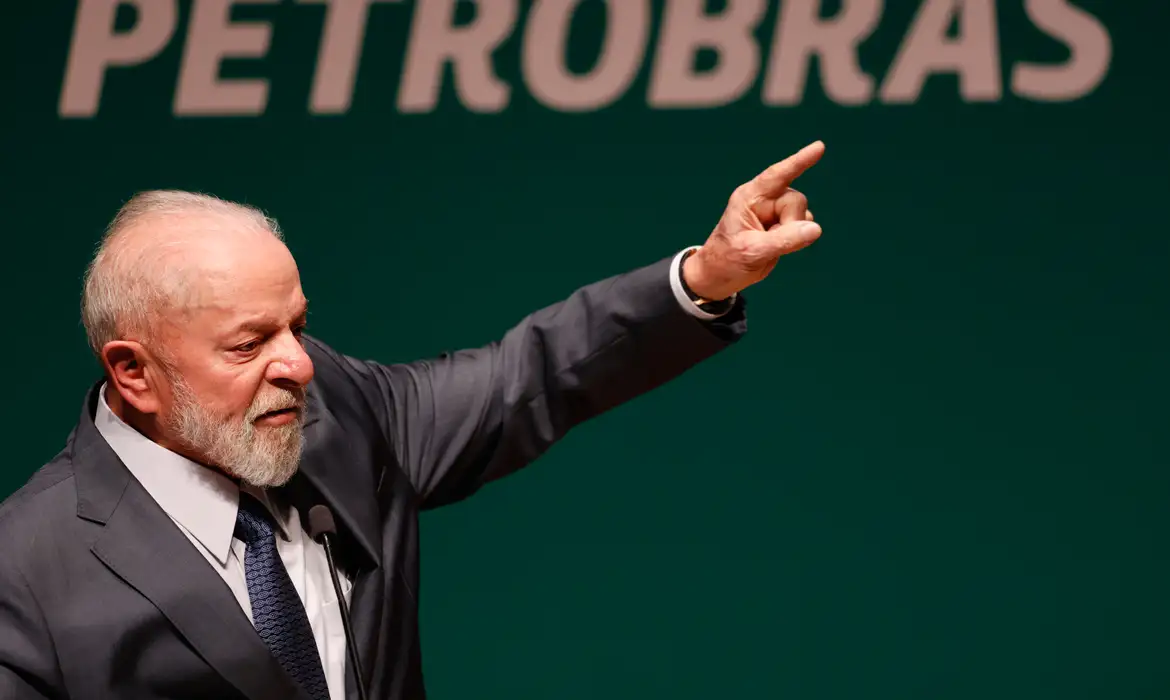
The Market Panic Struck, Stocks Plummeted, But The President Of Petrobras Assures: There Is No Interference From Lula In The State-Owned Company! Magda Chambriard Defends Billion-Dollar Investments And Responds To Criticism About Dividends. Is Petrobras Really Free From Politics? Check Out This Controversial Statement That Promises To Shake The Economic Scenario!
Behind the scenes of the largest state-owned company in Brazil, Petrobras, a series of movements and decisions have caught the attention of investors, economic analysts, and even the general public.
Amidst the market turbulence and political issues, the figure of Magda Chambriard, the company’s president, emerges with a crucial role in trying to stabilize the company’s situation, while asserting that there is no government interference from Lula in the directives of the state-owned company.
Petrobras Stock Crisis: How Do Decisions Influence The Market?
In February 2024, a series of events involving Petrobras led to a drop of up to 9% in its shares on the B3, Brazil’s main stock exchange.
-
Brazilian Joins Homeownership Consortium, Faces Decade of Dual Payments Totaling $141,000, Surpassing Traditional Mortgage

-
Land Rover to Halt Production in July, Putting 371 Jobs at Risk, as Chinese Automaker Negotiates to Convert Factory to 100,000 Vehicles Annually by 2027

-
Mexican Pest Threatens U.S. Cattle Herds at Historic Lows, Potentially Boosting Brazilian Beef Exports as Burger Prices Soar

-
Brazilian Freight Bill Progresses in Congress with $5,000 Minimum Wage, 70% Advance Payment, and Fines Up to $1 Million, as Agriculture and Industry Warn of Rising Costs and Legal Uncertainty


The main reason for this fall was the market’s shock with a 31% increase in the company’s investments, which generated uncertainties about the dividends paid to shareholders.
The increase in investments was seen as a risk to the profitability of the state-owned company, leading many to question the motivations behind these decisions.
According to Magda Chambriard, the investments were a strategic choice to ensure the company’s future, focusing on generating real value with returns above the cost of capital.
She emphasized that the anticipation of payments was a necessary measure to correct a mismatch between the execution of works and the financial flow of the platforms.
The president assured that, although the company made a financial adjustment in 2024, it does not intend to repeat this move in 2025, maintaining discipline in strategic planning.
The Relationship With The Government: Intervention Or Partnership?
During this turbulent period, the federal government’s presence, especially that of President Luiz Inácio Lula da Silva, was frequently associated with Petrobras.
On several occasions, the state-owned company sponsored events with the president, who advocates for a more active role of Petrobras in the country’s development.
However, Magda Chambriard made it clear that there was no interference from the government in the company’s decisions.
“Since I took over Petrobras in May 2024, the board has full freedom to manage the company according to what we consider most effective for its financial health”, said Magda in an interview with Folha.
For her, the company’s strategy and the government’s public policies, such as the incentives for the shipbuilding and offshore industries, are complementary and bring mutual benefits.
The president highlighted that the government has an interest in reactivating the shipbuilding industry, a sector that suffered from the crisis caused by Operation Lava Jato, but that, according to her, Petrobras has benefited by establishing partnerships with local suppliers.
“Petrobras has access to nearby suppliers, which facilitates logistics and reduces costs, in addition to being a more advantageous strategy for operations”, she stated.
Pricing Policy: A New Approach For Fuels
Another controversial topic regarding Petrobras was the change in fuel pricing policy, which, according to Magda, was one of the promises of the Lula government.
The previous policy, which tied prices in Brazil to international oil fluctuations and exchange rates, has been replaced by a model more focused on production costs and internal factors.
This change aimed to protect the Brazilian consumer from price fluctuations, especially during periods of crisis in the global market.
“We managed to Brazilianize fuel prices. The goal was not to pass international volatility onto the consumer while simultaneously practicing competitive prices”, explained Magda.
This approach was successful in 2024 when Petrobras made no adjustments to diesel prices, and gasoline had only one adjustment.
However, with the rise of the dollar at the beginning of 2025, the company was pressured to adjust the diesel price, which generated criticism about the loss of profitability in the refining business.
Even so, Magda defended the strategy and emphasized that Petrobras has a vast fuel transportation structure in Brazil, which gives the company a advantageous position in the market.
Energy Diversification: The Future Of Petrobras
In addition to maintaining a focus on oil, Petrobras has been exploring new energy sources to ensure its long-term survival.
The company’s strategy includes developing alternatives such as ethanol, green and blue hydrogen, and even solar and wind energy.
Magda Chambriard reinforced that the transition to a more diversified energy matrix is a necessity for the future, but for her, oil will continue to play an important role for many years.
“We are moving towards a future of energy diversity, but without giving up oil, which will still have a relevant role until 2050”, stated the president.
According to her, the demand for oil globally will remain significant, with the International Energy Agency projecting around 20 million barrels per day by 2050.
Petrobras, with its low-cost and low-carbon oil, will be well positioned to meet this global demand.
Environmental Challenges And The Future Of Petrobras
Currently, Petrobras finds itself in a dispute with Ibama (Brazilian Institute of Environment) regarding the drilling of an exploratory well in the Amazon River Basin.
The area is seen as one of the main bets of the sector to ensure the replenishment of oil reserves in the coming years.
The president of Petrobras believes that the environmental license will be granted soon, as the company has met all the requirements of the environmental agency.
“We are in constant dialogue with Ibama and meeting all the requirements, as we have always done”, Magda stated.
She also emphasized the importance of preventive actions and preparation for any emergencies, highlighting that the company will invest in one of the largest emergency response structures in the world.
Petrobras Amid Challenges And Strategies For The Future
Petrobras, under the leadership of Magda Chambriard, continues with the mission of balancing value generation for its shareholders and the sustainability of its operations.
Despite economic challenges and political pressures, the president reiterates that the company is committed to its growth strategy, energy diversification, and transparency in its relationship with the government.
With heavy investments, a new pricing policy, and the exploration of renewable energy sources, Petrobras is preparing for the coming years, navigating between the challenges of the global market and internal expectations for sustainability and profitability.





-

1 person reacted to this.