






 Portuguese
  Spanish


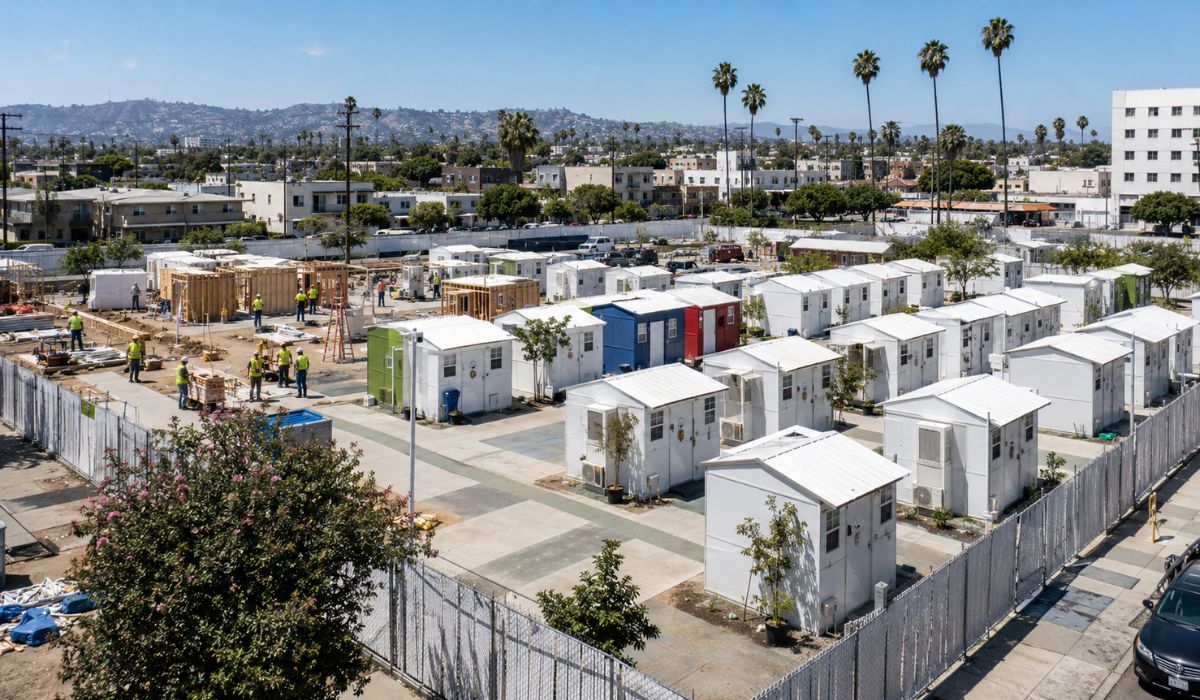

The initiative in East Hollywood brings together temporary housing, security, and social services on an urban site, while reigniting the debate on emergency solutions for homeless people in Los Angeles.
Los Angeles has begun construction of a village with 51 temporary housing units in East Hollywood, on a site on Sierra Vista Avenue, to serve homeless people and residents who lived in camps in the area.
The project is part of the city’s policy to expand the supply of interim shelters and provides for 10 slots for youth in transition age, according to information released by the Los Angeles City Hall.
The groundbreaking ceremony took place on May 14, 2026 and brought together Mayor Karen Bass, Councilman Hugo Soto-Martínez, and partner organizations.
-
June 2026 Heatwave in France Depletes “Blanc de Meudon” as Residents Use Chalk Powder to Cool Homes by 3 to 7°C Without Air Conditioning

-
Frustrated by delays, Brazilian entrepreneur builds toll road in 3 days to avoid 23 km detour.

-
Pomodoro Technique: World’s Most Popular Study Method Boosts Focus and Learning with 25-Minute Sessions and Short Breaks

-
World’s Oldest Liquid Wine Found in 2,000-Year-Old Roman Tomb in Spain, Contained in a 5-Liter Glass Urn with Submerged Human Bones





According to the municipal administration, the village is expected to offer temporary housing for over 50 homeless people and is scheduled to open in early 2027.
The chosen site is in an area that had already concentrated tents and makeshift structures on the sidewalks.
According to City Hall, an action from the Inside Safe program moved more than 20 people indoors the previous year, in a camp located near the new development.
The proposal transforms an empty urban lot into an emergency village, a model adopted in different cities in the United States to offer an alternative to traditional collective shelters.
In these structures, the units are smaller and individual, while social support services are concentrated in the same space.
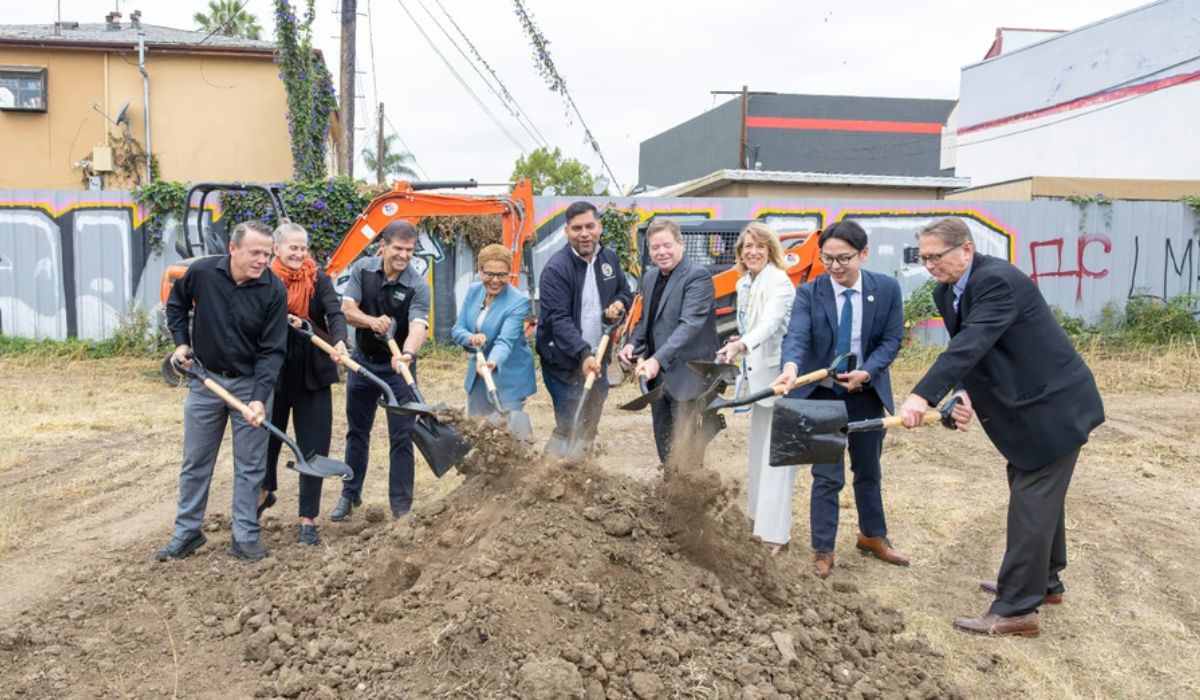
Tiny homes in Los Angeles and temporary housing
The tiny homes, known in the United States as “tiny homes,” are presented by the city as intermediate housing, not as a definitive solution to the lack of housing.
In practice, they function as a step between life on the streets and the transition to permanent housing.
This difference is central to understanding the project.
The immediate goal of the City Hall is to remove people from encampments, reduce their stay on sidewalks, and create a fixed point for assistance by social service, health, and housing referral teams.
The housing crisis in Los Angeles continues at a high scale.
Data finalized by the Los Angeles Homeless Services Authority indicated 43,695 people experiencing homelessness in the city of Los Angeles in the 2025 survey, after a review conducted following analysis by the United States Department of Housing and Urban Development.
In the broader scope of the Los Angeles Continuum of Care, the adjusted total was 67,777 people.
This context helps explain the use of vacant or underutilized urban land in emergency shelter policies.
In a city marked by high land costs and long timelines for constructing permanent housing, modular structures have become a short-term response by local and state governments.
The City Hall links the project to an investment of $33 million from Governor Gavin Newsom and the State of California to expand the supply of small homes in Los Angeles.
In 2023, the state government announced the mobilization of 1,200 units for Los Angeles, Sacramento, San Jose, and San Diego County, prioritizing people living in encampments.


Housing, Public Health, and Social Assistance
The debate about microhouse villages involves housing, social assistance, and public health.
For agencies working on the issue, homelessness is not limited to the absence of an address, as it also affects regular access to medical care, documentation, food, and protection services.
The United States Interagency Council on Homelessness classifies homelessness as a public health issue and humanitarian crisis.
The agency also states that housing is a social determinant of health, as it directly affects living conditions and access to care.
Within this approach, microhouses are used as a temporary stabilization structure.
The person no longer depends on the sidewalk or an improvised tent and instead has a defined space to sleep, store belongings, and be accompanied by service teams.
Karen Bass defended this point during the project’s presentation.
The mayor stated that, in her previous experience in the emergency room, she saw patients coming from the streets suffer from treatable diseases that worsened due to the lack of a safe place for recovery.
“This is more than four walls and a roof,” said Bass, presenting the village as part of the city’s response to the housing crisis.
Residents demand safety in the surroundings
The construction provoked different reactions among residents near the site.
A report from ABC7 Los Angeles showed that part of the neighborhood fears the return of problems associated with the old camp, such as insecurity, invasions, and conflicts in the surroundings.

The new community is being built in the region of Sierra Vista Avenue with Oxford Avenue, according to the broadcaster.
Luis Aguilar, owner of two rental units near the location, told the report that he preferred the tiny homes to be built at another address.
He reported that people from the old camp had invaded his house and stolen items from tenants.
The accusation was presented as the resident’s account, without indication, in the available text, of a specific response from those mentioned.
Keith Johnson, identified as an advocate for residents bothered by the neighborhood’s situation, also questioned the choice of area.
According to him, the region had improved after the tents were removed.
Although he declared support for the provision of shelter, Johnson stated that the chosen location should be debated more carefully as it is a residential area.
Soto-Martínez responded to the criticisms by saying that his office knocked on more than 700 doors and held dozens, or even hundreds, of conversations with residents.
According to the councilman, 80% of the people heard supported the installation of the village at the location.
He also stated that part of the neighborhood recognizes that the camps already existed in the area and requested more public resources to deal with the situation.
Safety rules in the tiny home village
The City Hall informed that the project will have security.
A flyer from Soto-Martínez’s office cited by ABC7 states that the location will have staff 24 hours a day and that the internal area will be drug-free.
These rules are part of the official response to one of the main concerns reported by residents: the possibility of concentrating problems around the village.
By gathering temporary units, support staff, and operating rules, the public authority seeks to replace the improvised occupation of sidewalks with a managed structure.
In the same project, the city brings together the State, City Hall, non-profit organizations, and technical partners.
Among those involved are the California Department of Housing and Community Development, Hope the Mission, BOSS, Lehrer Architects, and the Zegar Family Foundation, according to the Los Angeles City Hall.
The execution of the state micro-house program also started to be monitored due to the delivery pace.
Spectrum News reported in May 2026 that 544 beds had been completed in three cities.
In Los Angeles, the initial plan provided for 500 units, but only 33 beds were ready

The East Hollywood village enters this scenario as part of the attempt to expand emergency responses in areas where camps already existed.
For the city, the project should offer shelter, security, and social referral.
For some residents, the implementation still depends on the public authority’s ability to maintain rules, supervision, and permanent monitoring.


