Portuguese
  Spanish


Women’s microhouse community in Texas combines affordable housing, retirement, and coexistence among older women, in a project created with personal resources and high demand for spots.
In Cumby, Texas, a microhouse community aimed at older women has been cited as a shared housing alternative for retirement.
The project, called The Bird’s Nest, was created by Robyn Yerian, 70, who used about $150,000 of her retirement savings to establish a women’s village on a five-acre area.
According to a report by People magazine, rent starts at $450 per month, and the waiting list has already exceeded 500 interested parties.
-
Stingless Bee Honey from Brazil Can Cost Up to $120 a Liter, Surprises with Flavors of Wood, Citrus, and Even Cheese

-
Woman Claims to Have Spotted a Technical Pattern in Recent FIFA Tournaments, Predicts Possible World Cup Winner
-
Chevrolet Offers Chance to Win a 2026 Sonic RS for Free via WhatsApp
-
Earthquake vs. Tsunami: Which Causes More Destruction and Why One Can Be Even More Dangerous


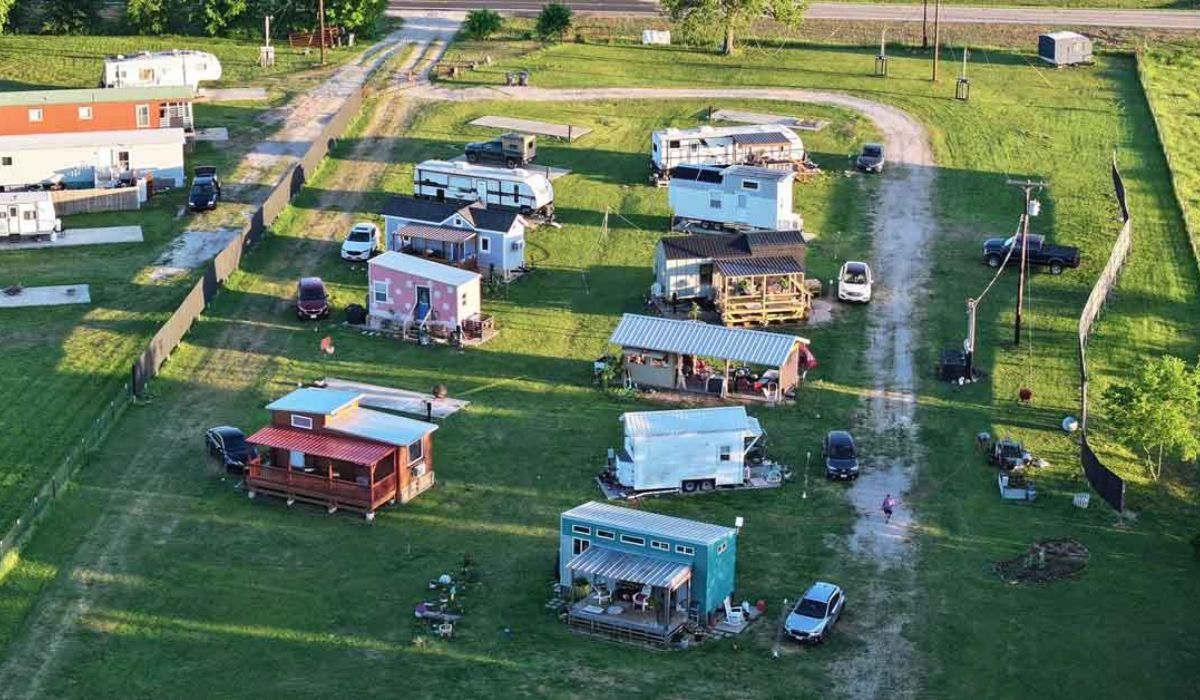
The initiative brings together women between 60 and 80 years old in a rural area in northeast Texas.
The space has 14 microhouse housing structures and accommodates 11 residents, most of whom are single, divorced, or widowed, according to data released by People.
Besides the lower monthly cost compared to many conventional rents in the United States, the model relies on daily coexistence and the sharing of common tasks.
Women’s microhouse community in Texas
The Bird’s Nest was born after Robyn lived in a microhouse and began to see this type of housing as a possibility for income and coexistence.
In an interview with People, she stated: “I bought a microhouse and lived in a microhouse community, and then I decided: hey, I could have some passive income with my 401(k).”
The 401(k) is a retirement plan used in the United States.
In Robyn’s case, part of these resources was allocated to the purchase and preparation of the land, with infrastructure for water, electricity, and sewage.
The choice involved a significant investment for someone already at retirement age, but she reported to the article that she doesn’t usually focus on hypothetical scenarios.
According to Robyn, the search for the land was one of the most difficult stages.
Microhouses are not allowed in several areas of the United States, especially when used as permanent housing.
Therefore, she looked for an unincorporated region with local rules that allowed this type of occupancy.
The land ended up being classified as a recreational vehicle park, a classification that enabled the installation of the units.
The location was also part of the decision.
The space needed to be financially feasible, but not so remote as to make it difficult for the residents to access basic services.
Robyn said she expanded the search to areas outside of Dallas until she found a location compatible with the project.
Robyn Y’s tiny house community in Texas.
Credit: Robyn Y.
Residents’ Routine at The Bird’s Nest
Each resident lives in their own unit, but the village organization includes common areas.
One of the main shared spaces is a pavilion used as a community kitchen, where residents have coffee, meals, and meet throughout the day.
The routine described by Robyn to People includes tasks such as land maintenance, animal care, grass cutting, and organizing collective spaces.
At the end of the day, the residents usually gather to chat and catch up on how each one spent the last few hours.
This closeness led to the creation of an informal support network.
When a neighbor underwent knee surgery, for example, the others took turns taking her to physical therapy, preparing meals, and shopping.
The founder also reported that the residents notice when someone is different and usually ask if everything is okay.
However, coexistence depends on internal rules.
Robyn stated that the community follows a guideline summarized by her as “no drama”.
The phrase, in the context of the interview, refers to the obligation to discuss discomforts directly, instead of letting conflicts accumulate.
According to the founder, conversations should end with the idea that no one intended to hurt feelings and that each person only presented their perspective.
This format was described by her as a way to preserve respect among the residents.
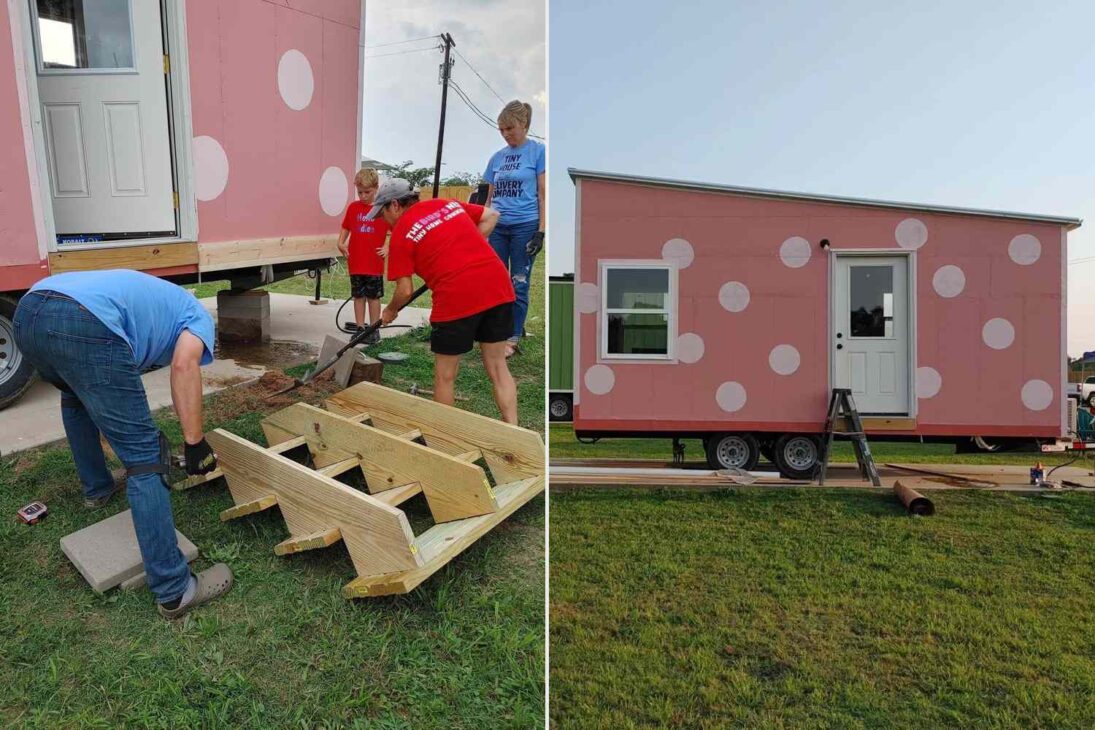
Affordable Housing and Women’s Retirement
The case gained attention because it is linked to a broader theme: aging with limited resources.
A 2024 AARP survey revealed that 20% of American adults aged 50 and over had no retirement savings.
The same survey reported that 61% were worried about not having enough money to sustain themselves in this stage of life.
Among women, the discussion often involves factors accumulated over their professional lives.
AARP itself points out that wage differences, career interruptions, and family responsibilities can affect the formation of financial reserves for retirement.
These elements help contextualize the search for lower-cost residential alternatives with some type of community support.
At The Bird’s Nest, the model is not that of a long-term care institution.
The residents maintain their own homes, manage their individual routines, and participate in collective life according to the group’s rules.
The proposal, according to Robyn, is to cater to self-sufficient women who seek to stay out of nursing homes for as long as possible.
The selection of new residents includes face-to-face contact with the founder and current residents.
According to the People report, the waiting list of over 500 women forced Robyn to organize criteria to evaluate who fits best with the village’s functioning.


Waiting list and demand for micro-houses
The high demand is not limited to the rental price, although the initial price of $450 plays a role in the interest.
The interest is also related to the possibility of living in an environment where tasks, conversations, and daily care are shared among people in similar life stages.
The micro-house format reduces individual space but increases the frequency of meetings in common areas.
In communities of this type, the architecture favors more constant contact between neighbors.
In the case of The Bird’s Nest, the routine of coffee, meals, and evening conversations has become part of the dynamic reported by the residents.
Robyn said she believes the model could be replicated for other groups, but assessed that the current composition of the village influences the outcome.
In her view, retired women or those close to retirement have more availability to participate in community living.
Younger people, according to the founder, tend to have work and commuting routines that may reduce this daily presence.
The statement represents Robyn’s personal assessment of the community’s functioning, not a general rule about age groups.
Even so, it helps explain why the project was specifically designed for older women.
Collaborative Housing for Older Women
Cumby’s experience began to circulate in reports and social media for bringing together three frequent themes in aging debates: housing cost, loneliness, and autonomy.
The Bird’s Nest does not solve these problems on a large scale, as it has a limited number of spots, but it offers a concrete example of residential organization based on small units and neighborly support.
Female leadership is another point highlighted by the founder.
In an interview, Robyn stated: “We are a community. It’s all about women empowering women. We cannot bring women down. We have to embrace each other and take a step further to be kind.”
The community also maintains a personal component linked to the creator.
The name The Bird’s Nest, which can be translated as “bird’s nest,” refers to the name Robyn, similar to the word “robin,” used in English for a type of bird.
Explaining the choice, she summarized: “Because of my name. I am Robyn. What else could it be?”.
Despite the repercussion, Robyn acknowledges uncertainties about the future of the project.

She said she hopes that others observe the experience and try to create similar initiatives, but also stated she does not know if the community will maintain the same dynamic when the original residents are no longer present.
The Bird’s Nest remains, therefore, as a localized shared housing experience, with a small scale and high demand.