






 Portuguese
  Spanish
  2 min of reading


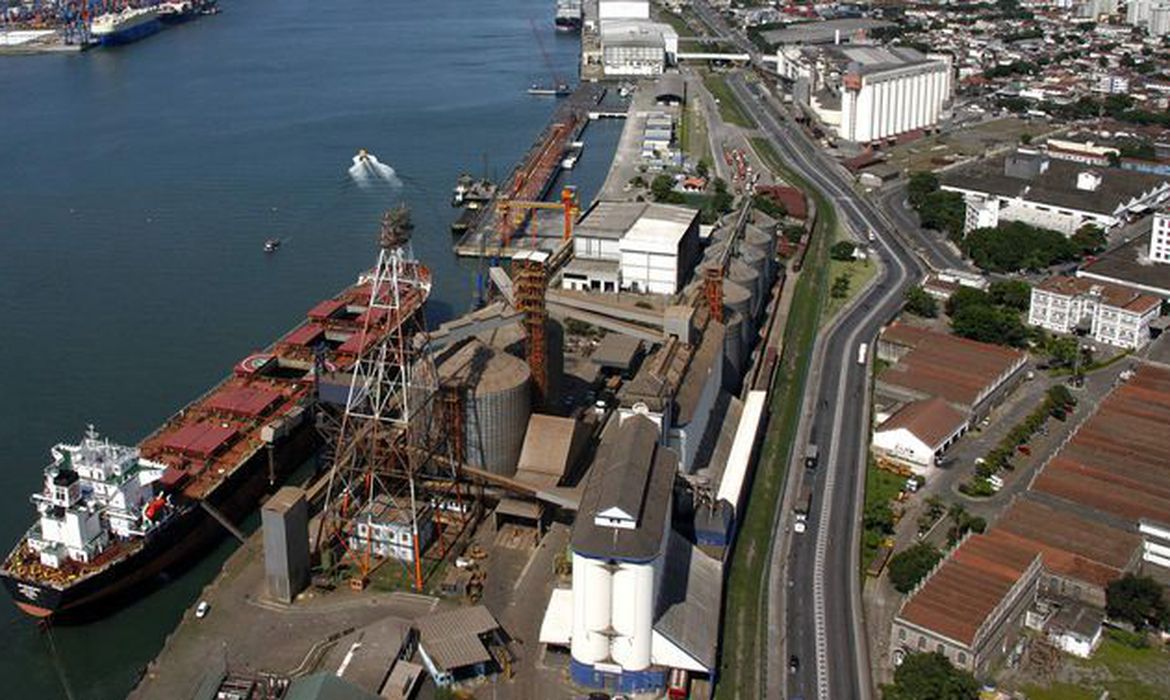
During FGV Event, Experts Discussed Why the Privatizations of Brazilian Ports and the Transition of the Naval Industry Are Positive for the Economy
On July 21 of this year, FGV held a live event on its YouTube channel, focusing on the privatizations of ports and the transition of the naval industry, featuring the participation of Fábio Abrahão (Director of Infrastructure, Concessions and PPPs at BNDES), Patrícia Lascosque (Superintendent of Ports at Suzano and President of the Association of Private Port Terminals – ATP), and Ricardo Arten (CEO of Brazil Terminal Portuário – BTP and Regular Advisor of the Brazilian Association of Container Terminals – ABRATEC).
Also Read
Privatizations of Ports and the Transition of the Naval Industry
As previously stated by the Ministry of Infrastructure, the next frontier for the port sector is seeking a more effective model through Privatizations, with flexibility and increasing the capacity for investments through private resources for the logistics of Brazilian ports and preparing the ground for the transition of the naval industry.
Thus, Privatizations would be a definitive turning point in this process, which includes the initiation of studies for the privatizations of ports, one example being the port of Santos, which is responsible for 28% of Brazil’s trade flow.
-
Bothered by millions of bricks discarded every year in Norway, a company cuts old pieces into thin slices, secures them with a metal system, and transforms demolition into a new 1,800 m² facade.

-
While cigarette butts appear on sidewalks, beaches, and sewers, researchers tested the waste in clay bricks and calculated a 10% savings in burning with just 1% in the mixture.
-
Mother of two who couldn’t leave her village in India takes a 20-day masonry course, starts a company with other women, receives a large production order, and changes her financial situation.
-
Instead of plastering the wall, Argentine architects left ordinary bricks exposed, without traditional mortar, without finishes, without paint, and created a perforated pavilion that looks like an art installation.




Development and Modernization of the Naval Industry and Brazilian Ports
The development and modernization of Brazilian ports and the naval industry are of utmost importance for the country’s economic growth, considering that the demand for maritime trade is expected to triple between 2015 and 2050, according to projections from the Organization for Economic Cooperation and Development (OECD), and ships will account for more than 75% of global cargo transportation.
Currently, the waterway mode is responsible for more than 13% of the cargo transportation matrix in Brazil, according to the National Land Transportation Confederation (CNT) – with about 9% of cabotage and 5% of river transport.
A simulation for the year 2025, from the National Logistics Plan (PNL) of the federal government, indicates that there will be a recovery in the balance of cargo transportation matrix, particularly with strong investments in railways; however, waterway transport, cabotage, and river transport will remain at their current level, potentially boosted by privatizations.




Be the first to react!