






 Portuguese
  Spanish
  3 min of reading


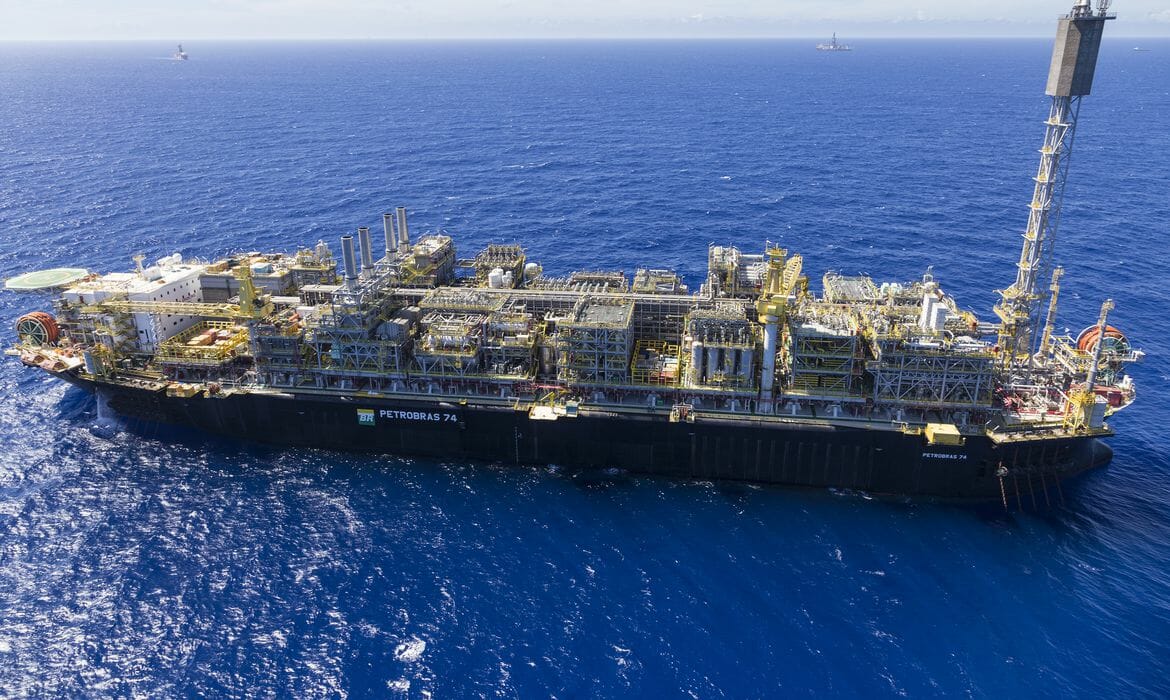
In The First Half Of This Year, The Union Accumulated 7.27 Million Barrels Of Oil Under The Production Sharing Regime, More Than Double Compared To Last Year.
The Union, represented by the federal government, recorded a remarkable increase in its accumulated share of oil, reaching 7.27 million barrels during the first half of the year. This stunning number represents more than double the volume obtained in the same period last year, when the share reached 3.6 million barrels. The revealing data was announced last Thursday (18) by Pré-Sal Petróleo (PPSA), the state-owned company responsible for managing the contracts under the sharing regime.
Pré-Sal Petróleo (PPSA) Reveals Significant Increase In The Oil Share Destined For The Union
According to PPSA, this exponential growth is a result of the boost provided by the production of three key fields: Mero, Búzios, and Sapinhoá.
The Mero field, in particular, stood out by contributing an impressive production of 5 million barrels.
-
Oil production grows in Rio, but reserve replacement raises a warning sign

-
Petrobras is expected to complete the drilling of the Morpho well in the Foz do Amazonas in August 2026, the first well in the Equatorial Margin, an oil frontier that the ANP estimates at more than 30 billion barrels and could redraw the map of Brazil.

-
Oil returns to the center of concerns with tension between the US and Iran

-
IEA reduces forecast for global oil demand in 2026 after impacts of the Middle East crisis



Búzios and Sapinhoá also played significant roles, with 1 million and 490 thousand barrels, respectively.
The prominent performance of these fields is also reflected in the record established by the FPSO Guanabara, located in the Mero field.
In February of this year, this production vessel achieved a remarkable mark of 179 thousand barrels of oil produced per day.
The contribution from the sharing fields is not the only factor responsible for this substantial increase.
The combined production from the seven contracts under this regime reached a total of 147 million barrels in the first half, an increase of 50.4% compared to the same period last year, which recorded 97.7 million barrels.
Among these fields, Búzios is the production champion, contributing more than half of the total volume.
The production of natural gas also showed notable growth for export, totaling 363 million cubic meters in this first half, almost double the value recorded in 2022, which was 193 million cubic meters.
Production Records And Performance Of The Fields Of Mero, Búzios, And Sapinhoá Drive Results
In June, the daily average production from the seven contracts reached 881 thousand barrels per day, marking an increase of 8% compared to the previous month.
This increase can be attributed to the return to operation of the Mero and Búzios fields, which underwent a maintenance shutdown.
Búzios continues to lead production, also standing out when it comes to the oil surplus belonging to the Union among the seven production sharing contracts.
The daily average stood at 42.18 thousand barrels, with contracts such as Libra, Búzios, and Sépia standing out as the main contributors.
Regarding the total production of natural gas for commercial utilization, the average reached 2.69 million cubic meters per day, which represents a 1% increase compared to the previous month (May).
These numbers highlight the promising landscape of the oil and gas sector under the production sharing regime in Brazil.







Be the first to react!