






 Portuguese
  Spanish
  3 min of reading


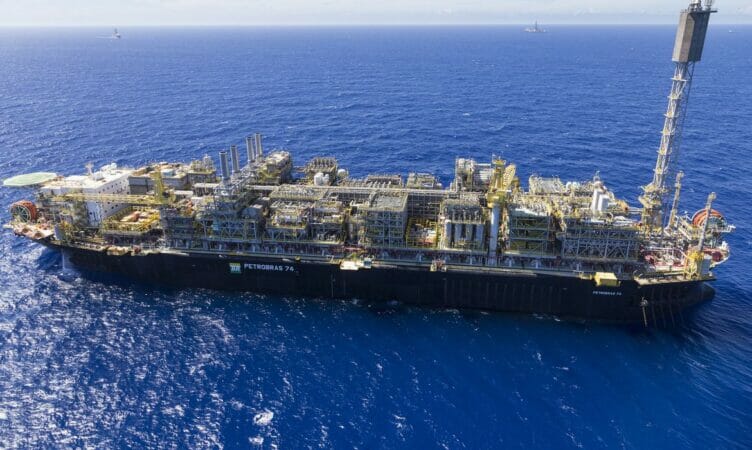
In Light of These Expressive Numbers Released by ANP, the Oil and Natural Gas Industry in Brazil Reaffirms Its Prominent Role in the International Scene, Demonstrating Its Potential Amidst a Globally Evolving Market.
This Wednesday, (30/08), the National Agency of Petroleum, Natural Gas and Biofuels (ANP) released impressive data regarding oil and natural gas production in Brazil. According to the Monthly Bulletin of Oil and Natural Gas Production, July 2023 will be marked as the month the country achieved new records in both total production (oil + natural gas) and individual oil and natural gas production. These figures also include production in the pre-salt.
Combined Oil and Natural Gas Production Surpasses Expectations and Boosts Brazilian Industry
The consolidated figures indicate a total of 4.482 million barrels of oil equivalent per day (MMboe/d).
A milestone that considerably surpassed the previous record set in June 2023, with 4.324 million MMboe/d.
-
Oil production grows in Rio, but reserve replacement raises a warning sign

-
Petrobras is expected to complete the drilling of the Morpho well in the Foz do Amazonas in August 2026, the first well in the Equatorial Margin, an oil frontier that the ANP estimates at more than 30 billion barrels and could redraw the map of Brazil.

-
Oil returns to the center of concerns with tension between the US and Iran

-
IEA reduces forecast for global oil demand in 2026 after impacts of the Middle East crisis



Thus, Brazilian production reaches a new height in its energy history.
Oil production alone also achieved remarkable levels, totaling 3.513 million barrels per day (MMbbl/d).
Compared to the previous month, this figure represents an increase of 4.3%, while compared to July 2022, the growth is even more significant, with an increase of 18.6%.
The previous record belonged to June 2023, with 3.367 MMbbl/d.
In the natural gas segment, July recorded a production of 154.076 million cubic meters per day (MMm³/d).
This represents an increase of 1.2% compared to June 2023 and a notable growth of 13.6% compared to July 2022.
This figure also exceeds the previous record set in June 2023, with a production of 152.258 MMm³/d.
The highlight goes to production in the pre-salt, which reached a new record of 3.359 million barrels of oil equivalent per day (boe/d), representing an impressive 74.9% of total Brazilian production.
This figure surpasses the previous record from February 2023, which was 3.268 million boe/d.
This achievement reflects an increase of 3.5% compared to the previous month and a notable growth of 16.6% compared to July 2022.
Pre-Salt Stands Out as a Protagonist, with a High Natural Gas Utilization Rate
Efficiency was also evident in the utilization of natural gas, which reached 97.2% in July.
The market received 55.41 million m³/d, while only 4.27 million m³/d were flared.
These figures represent declines of 6.7% and 5.0%, respectively, compared to the previous month and July 2022.
Offshore fields reinforced their role in the country’s energy production, accounting for 97.6% of oil and 85.8% of natural gas extracted.
Petrobras stood out as a driving force in this scenario, operating 88.47% of total production, either individually or in partnership with other companies.
The results were obtained from 6,424 wells, of which 515 are located in offshore waters and 5,909 on land.
In the pre-salt of the Santos Basin, the Tupi field showed its leadership, registering a production of 865.71 thousand bbl/d of oil and 41.63 million m³/d of natural gas.
The most productive installation in terms of oil and natural gas was the FPSO Guanabara, in the shared area of Mero, with impressive figures: 176.186 thousand bbl/d of oil and 11.25 million m³/d of gas.
With the numbers revealed in the ANP Monthly Bulletin, Brazil reaffirms its position as a significant player in the global oil and natural gas production landscape. The continuous expansion and optimization of these energy resources are crucial to driving the country’s economic development.








Be the first to react!