Portuguese
  Spanish


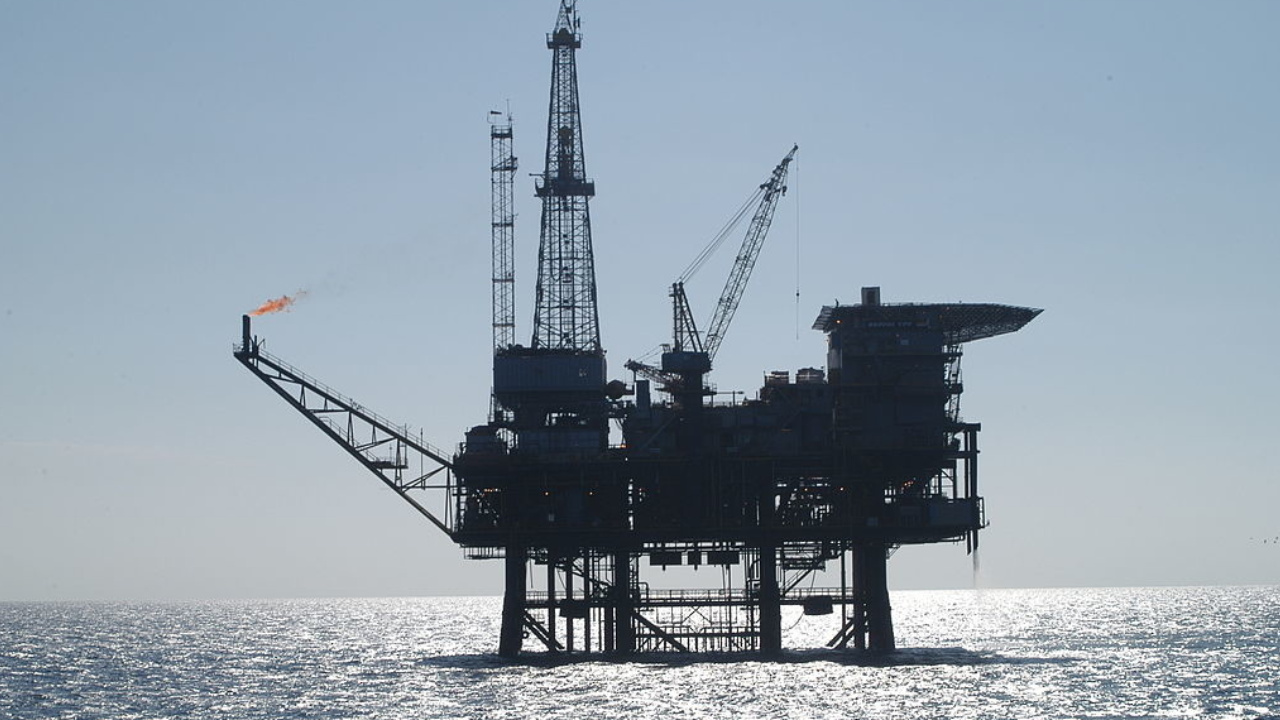

Oil And Natural Gas Production In Pre-Salt Hits New Record In September, With Increase Of More Than 12% Compared To 2024. ANP Data Reveals Continuous Growth In Offshore Exploration And High Efficiency In Natural Gas Flaring Reduction.
The Brazilian oil industry continues to expand at a rapid pace. In September 2025, the country recorded another historic milestone: the combined production of oil and natural gas from the pre-salt reached 4.143 million barrels of oil equivalent per day (boe/d). The data, released by the National Agency of Petroleum (ANP) in the Monthly Bulletin of Oil and Natural Gas Production, confirms the strength of the national energy sector and Brazil’s strategic role in the global scenario.
This figure represents an increase of 2.7% compared to the previous month and 12.5% in comparison to September 2024, consolidating technological and operational advancements in offshore platforms. In total, national oil and natural gas production, including pre-salt, post-salt, and onshore areas, reached 5.114 million boe/d. Although the absolute record was set in July (5.160 million boe/d), September maintained the sustained upward trend.
Pre-Salt: Absolute Protagonist In The Brazilian Energy Matrix
Pre-salt production was responsible for 81.1% of the entire national volume, reinforcing its importance for the country’s supply and trade balance. The operation of 169 active wells resulted in 3.209 million barrels of oil per day (bbl/d) and 148.37 million cubic meters of natural gas per day (m³/d).
-
It’s official: Petrobras takes 75% of block 3 in São Tomé and Príncipe and debuts as an offshore operator outside South America.

-
With a record production of nearly 3 million barrels per day, Petrobras resumes importing diesel in July, highlighting the bottleneck in Brazilian refining.
-
Qantas and Airbus Invest in Company Aiming to Convert Unsorted Household Trash into Jet Fuel

-
Brazil’s ANP Opens 86 New Oil Blocks in the Equatorial Margin, Expanding the Amazon River Mouth Frontier


Offshore fields continue to be the heart of national exploration, accounting for 97.6% of oil production and 85.7% of natural gas. Petrobras maintains its significant leadership, responsible for 91.29% of total production, whether directly or through consortia.
According to experts, this performance highlights the efficiency of new technologies applied to offshore exploration, especially in the pre-salt basins, where extraction volumes are sustainably and continuously growing.
Natural Gas Utilization Advances With Significant Reduction In Flaring
Another highlight was the increase in efficiency in natural gas utilization, which reached 97.9% in September. In total, 66.24 million cubic meters per day were made available to the market, while flaring was reduced to 4.10 million m³/d — a substantial decrease of 16.1% compared to August.
Although there are still challenges for the total utilization of gas associated with oil extraction, the figures reflect the sector’s commitment to cleaner practices aligned with energy sustainability goals. Even with the 12.8% growth compared to September 2024, gas flaring has been progressively controlled.
This improvement is the result of continuous investments in transportation, compression, and reinjection infrastructure for natural gas, which also enhances the efficiency of oil production.
Highlighted Fields: Tupi And Búzios Lead National Production
Among the fields that stood out in September, the Tupi Field, located in the Santos Basin, remained the largest producer in the country. There were 818.08 thousand barrels of oil per day and 40.48 million cubic meters of natural gas, reinforcing its strategic relevance to the sector.
The installation with the highest individual oil production was the FPSO Almirante Tamandaré, responsible for 222,160 bbl/d and operating in the Búzios and Tambuatá fields. In natural gas, the leadership belonged to the FPSO Guanabara, in the shared field of Mero, which produced 12.13 million m³/d.
These floating production, storage, and offloading units (FPSOs) are key players in deep and ultra-deep water exploration, representing the most advanced technology in the offshore oil sector.
Variations And Stability In National Production
The variations observed month to month are part of the operational routine of the oil industry. Changes such as scheduled maintenance shutdowns, new wells coming online, and the commissioning of platforms impact monthly results, but aim primarily to ensure stability and safety of operations in the long term.
According to the ANP, production behavior is carefully monitored to ensure that sector growth occurs sustainably, without compromising the technical performance of extraction units.
In addition to the traditional PDF version, the Monthly Bulletin of Oil and Natural Gas Production can now be accessed interactively through a Business Intelligence (BI) platform. Access here.
This technology allows users to explore detailed production data, with filters for fields, states, and basins, in addition to tracking monthly and annual variations. The initiative reinforces the ANP’s commitment to transparency and public access to national energy information.
The advancement in the use of digital data also facilitates trend analysis and monitoring of each production facility’s performance, strengthening governance over the sector and allowing for more accurate decisions regarding investments and regulation.
Oil Sector Maintains Strategic Role In Energy Transition
Even in the face of the growth of renewable sources, such as solar and wind energy, oil remains essential for energy security and the balance of the national matrix. The record production from the pre-salt, combined with more sustainable and efficient practices, shows that it is possible to reconcile economic expansion and environmental responsibility.
The performance in September reinforces that Brazil is established among the world’s major producers, with an exploration model that combines innovation, governance, and sustainability, key pillars for the future of energy in the country.