






 Portuguese
  Spanish
  3 min of reading
  0 comments


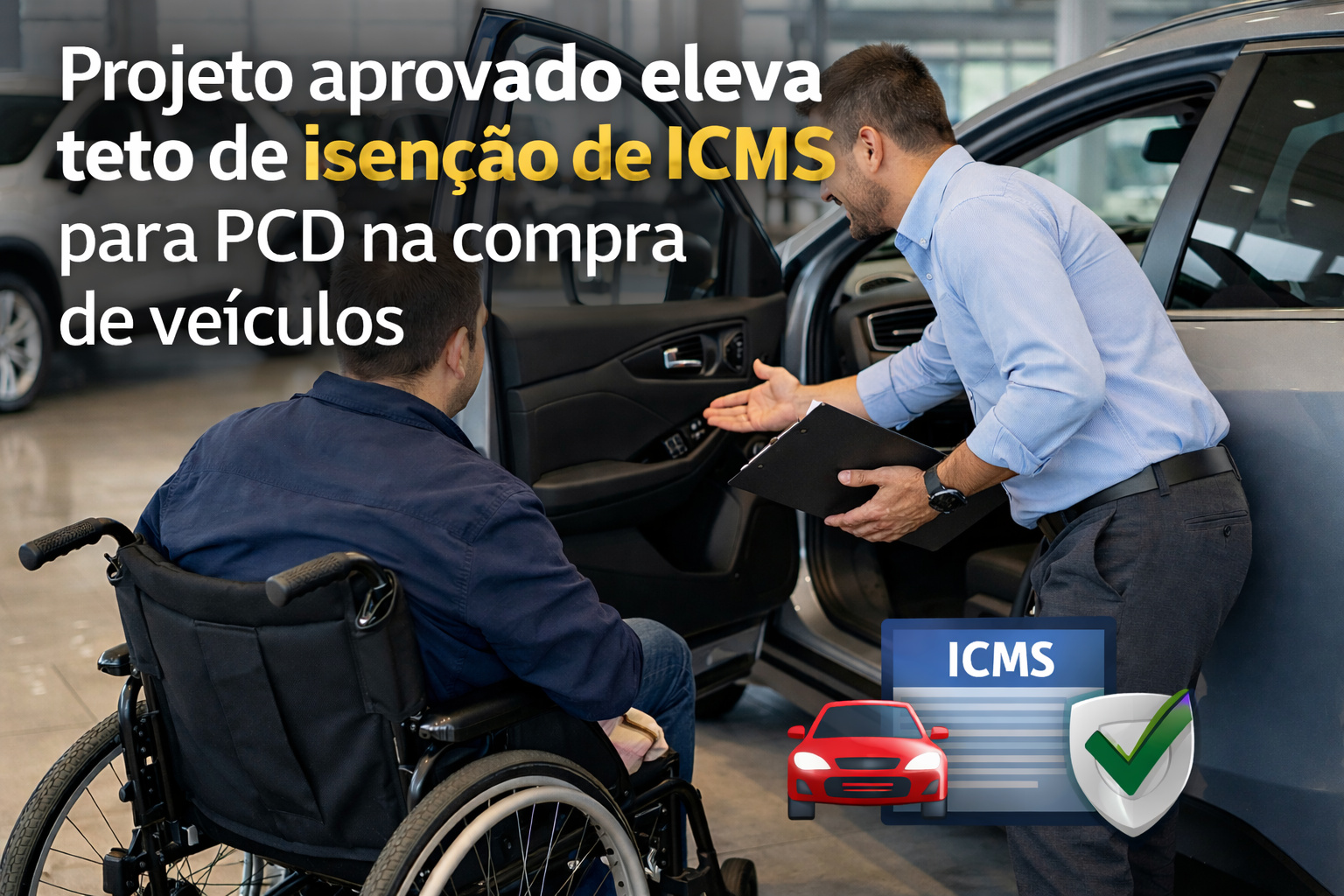
Approved Project Raises The ICMS Exemption Ceiling For PWD, Impacting The Automotive Sector And Expanding Access To New Vehicles.
Approved Project Corrects Historical Distortion In ICMS For PWD
The approval of the project is seen as a necessary adjustment to the reality of the Brazilian automotive market. The previous ceiling of R$ 70 thousand did not keep pace with price increases and effectively excluded, in practice, most models currently available.
With the new limit of R$ 100 thousand, vehicles within this value can benefit from full ICMS exemption. Models above this threshold remain subject to the current rule, with tax discounts only on the value that exceeds the established ceiling.
This logic preserves fiscal balance while expanding the reach of the benefit for the PWD audience, especially in categories like automatic vehicles, which typically have higher prices.
-
Detran RJ starts requiring a toxicological test for those obtaining their first driver’s license in the car and motorcycle category starting June 29; see who will be affected.

-
Florida takes TikTok to court and accuses the Chinese giant ByteDance of ignoring the law that bars minors under 14, while parents and authorities demand more protection for children on social networks.
-
Chamber approves constitutional amendment reducing the age of criminal responsibility from 18 to 16 years; what now?

-
Justice confirms that old debts in tax executions that have been stalled for more than 15 years can no longer be collected through judicial or administrative means.


Direct Impact On The Automotive Sector
In the automotive sector, the change is likely to stimulate sales of new vehicles aimed at the PWD audience. Manufacturers and dealerships believe that raising the ICMS exemption ceiling can unlock a market that has been stalled due to outdated rules.
Additionally, the measure favors the acquisition of vehicles with essential comfort and safety features, increasingly present even in entry-level versions. Therefore, updating the ceiling represents not only a tax benefit but also an improvement in mobility conditions.
ICMS And IPI: Understand The Differences
Although often confused, ICMS and IPI are distinct taxes, with their own rules under the PWD regime. The ICMS is a state tax that applies to the circulation of goods and represents a significant portion of the final price of vehicles.
On the other hand, IPI (Tax on Industrialized Products) is federal and follows different rules. For the PWD audience, the IPI exemption ceiling remains at R$ 200 thousand, a value set since 2022 that has not been changed by the project approved in the Chamber.
This difference is crucial to understand the real impact of the proposal, which deals exclusively with ICMS within the new Goods and Services Tax (IBS) model created by the tax reform.
More Options For PWD Consumers
With the maintenance of the IPI exemption up to R$ 200 thousand and the increase of the ICMS ceiling to R$ 100 thousand, the PWD consumer now has access to a wider range of new vehicles.
This includes hatchbacks, sedans, and some entry-level SUVs, as well as more complete automatic versions. In some cases, hybrid and electric models also fall within the scope, provided they meet the legal criteria of the regime.
Thus, the new scenario broadens the selection possibilities and reduces the gap between the tax benefit and the reality of prices practiced in the Brazilian automotive market.
What Changes In Practice With The ICMS Exemption
In practice, the new ICMS exemption ceiling can represent a significant reduction in the final price of the vehicle for the PWD audience. Since the state tax varies by region, the financial impact may be even more relevant in some areas.
Moreover, the measure is likely to bring more predictability to the market, facilitating purchase planning and stimulating the offer of models compatible with the new limit.
Next Steps After The Project’s Approval
The text is now awaiting presidential sanction. If sanctioned without vetoes, the new ICMS exemption ceiling for PWD will come into effect after regulation, within the new framework of the tax reform.
In the meantime, the automotive sector is closely monitoring developments, considering the change a significant advance after years of lag. The expectation is that the update will contribute to a more inclusive market aligned with the country’s economic reality.





-

-

2 people reacted to this.