






 Portuguese
  Spanish


Senate Approves Bill Creating Special Retirement for Community Health Agents and Endemic Combatants. Measure Recognizes Job Risks and Ensures Full Pay Equality
The Senate has taken an important step for one of the most prevalent categories in Brazilian public health. The Committee on Social Affairs (CAS) approved the Complementary Law Project (PLP) 185/2024, which establishes rules for special retirement for community health agents and endemic combatants.
The proposal, authored by Senator Veneziano Vital do Rêgo (MDB-PB), now moves on for urgent voting in the Plenary.
Recognition for an Essential Category
Present in practically every municipality in the country, community health agents and endemic combatants serve as the link between the public system and Brazilian families. They monitor outbreaks, educate the population, and directly confront diseases such as dengue, chikungunya, and zika. Despite this, they have endured a common pension system for years, without recognition of the physical wear and risks associated with the job.
-
Dismissing a retired worker or one eligible for retirement constitutes ageism and creates a duty to compensate: a unanimous decision by the TRT mandates reinstatement to employment, payment of back wages, and upholds compensation of R$ 15,000 for discrimination.

-
Work less and produce more? Nobel Prize in Economics explains why shorter workdays can increase productivity

-
Unions are growing again in Brazil after more than a decade, but they face an urgent challenge to win back digital workers and maintain relevance.
-
From the typewriter to the home office: how work has changed and why new generations think differently


The new project aims to correct this distortion. Approved on October 1, 2025, the text was celebrated by unions and associations within the category, which have been advocating for over a decade for the right to differentiated retirement. According to the rapporteur, the measure “is a recognition of the indispensable role that these professionals play in Brazil’s public health.”
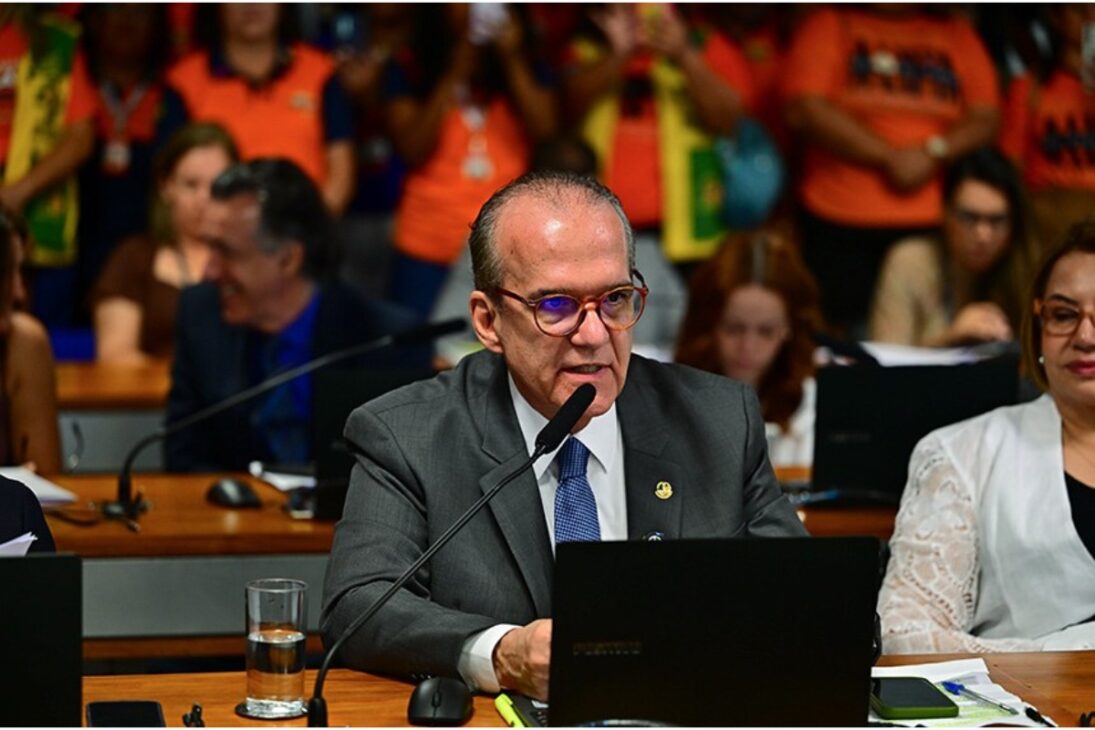
Source: Senate Agency
What Changes with PLP 185/2024
The proposal defines that agents can retire at 52 years old (men) and 50 years old (women), provided they have 20 years of effective service in the role. It also guarantees full pay equality, meaning the retired server will continue to receive the same amount as the active salary, with adjustments equal to those of colleagues still in service.
Full reading of the matter in the Senate
The time of functional readaptation — when the agent changes posts for health reasons — will be counted as service time. In addition, periods in union mandates or leaves for class functions will also be included in the retirement calculation. In case of death, the benefit ensures full pension for dependents.
Constitutional Basis and Social Importance
The initiative is based on the 120th Constitutional Amendment, which recognizes the right to special treatment for these categories. The differentiated retirement aims to compensate for continuous exposure to harmful agents and the precarious working conditions encountered in health risk areas.
For specialists, the impact is twofold: social and structural. The project not only improves the quality of life for these professionals but also helps to <strong$retain experienced labor in vulnerable regions, where turnover is high. The measure could strengthen the SUS at the grassroots level, reducing gaps in primary care and in control of endemic diseases.
Differences Compared to the Chamber Proposal
While PLP 185/2024 is being processed in the Senate, the Chamber of Deputies is discussing the PEC 14/2021, which also addresses the hiring and retirement of community agents. This proposal sets higher minimum ages — 57 years for women and 60 for men — in addition to requiring 25 years of contributions.
The version approved by CAS is considered more favorable to the category, as it provides more accessible retirement conditions and ensures pay equality. Therefore, there is an expectation that the Senate text will serve as a basis for unifying discussions and accelerating the promulgation of the law.
Challenges and Criticism of the Project
Not everything is consensus. Economists and municipal managers warn about the fiscal impact of the measure. Granting full pensions can strain local budgets, especially in small cities where health payroll already consumes a large part of revenues. There are also concerns about pension sustainability if the Union does not increase the transfer of resources.
Nevertheless, the rapporteur maintains that the benefit is fair: “This is a matter of dignity and professional appreciation. These servers face sun, rain, and biological risks daily to protect our families,” stated Veneziano Vital do Rêgo during the CAS session.
Next Steps and Expectations
With the approval in the Committee, PLP 185/2024 enters into urgent regime and is expected to be reviewed by the Plenary in the coming weeks. If approved, it will move on to the Chamber of Deputies.
The National Confederation of Community Health Agents (Conacs) is monitoring the proceedings and promises mobilizations in Brasília to ensure final approval. If it becomes law, the measure could benefit more than 400 thousand professionals across the country, according to estimates from the Ministry of Health.
An Advancement That Still Requires Vigilance
The recognition of special retirement is a milestone for the category, but specialists remind us that its implementation depends on clear regulation. States and municipalities will need to adapt their local laws and provide funding sources to ensure the payment of the new benefits.
Meanwhile, community agents continue working in the field — often in hard-to-reach areas — maintaining direct contact with families and facing risks that few public servants experience. The proposal approved by CAS, although symbolic, represents a concrete step towards valuing those on the front lines of Brazilian health.








