Portuguese
  Spanish


Unionization recovery halts years of decline, but reveals challenges related to leadership renewal, communication, and connection with new generations of workers
Brazilian unions received a positive news after more than a decade marked by consecutive losses in representativeness. Data released by the Brazilian Institute of Geography and Statistics (IBGE) at the end of 2025 showed that unionization grew again in 2024, interrupting a long period of decline.
The information was released by IBGE. According to the analysis, although the growth represents an important sign for the union movement, it still does not resolve structural challenges that have accumulated over the years.
Moreover, the current scenario shows that the real challenge for unions is not just increasing the number of members. In practice, the entities need to regain relevance in the face of a labor market that has changed profoundly in recent decades.
-
Dismissing a retired worker or one eligible for retirement constitutes ageism and creates a duty to compensate: a unanimous decision by the TRT mandates reinstatement to employment, payment of back wages, and upholds compensation of R$ 15,000 for discrimination.

-
Work less and produce more? Nobel Prize in Economics explains why shorter workdays can increase productivity

-
From the typewriter to the home office: how work has changed and why new generations think differently
-
Work on holidays changes in Brazilian commerce and new rule targets supermarkets, pharmacies, retailers, and companies under mandatory collective bargaining agreement.

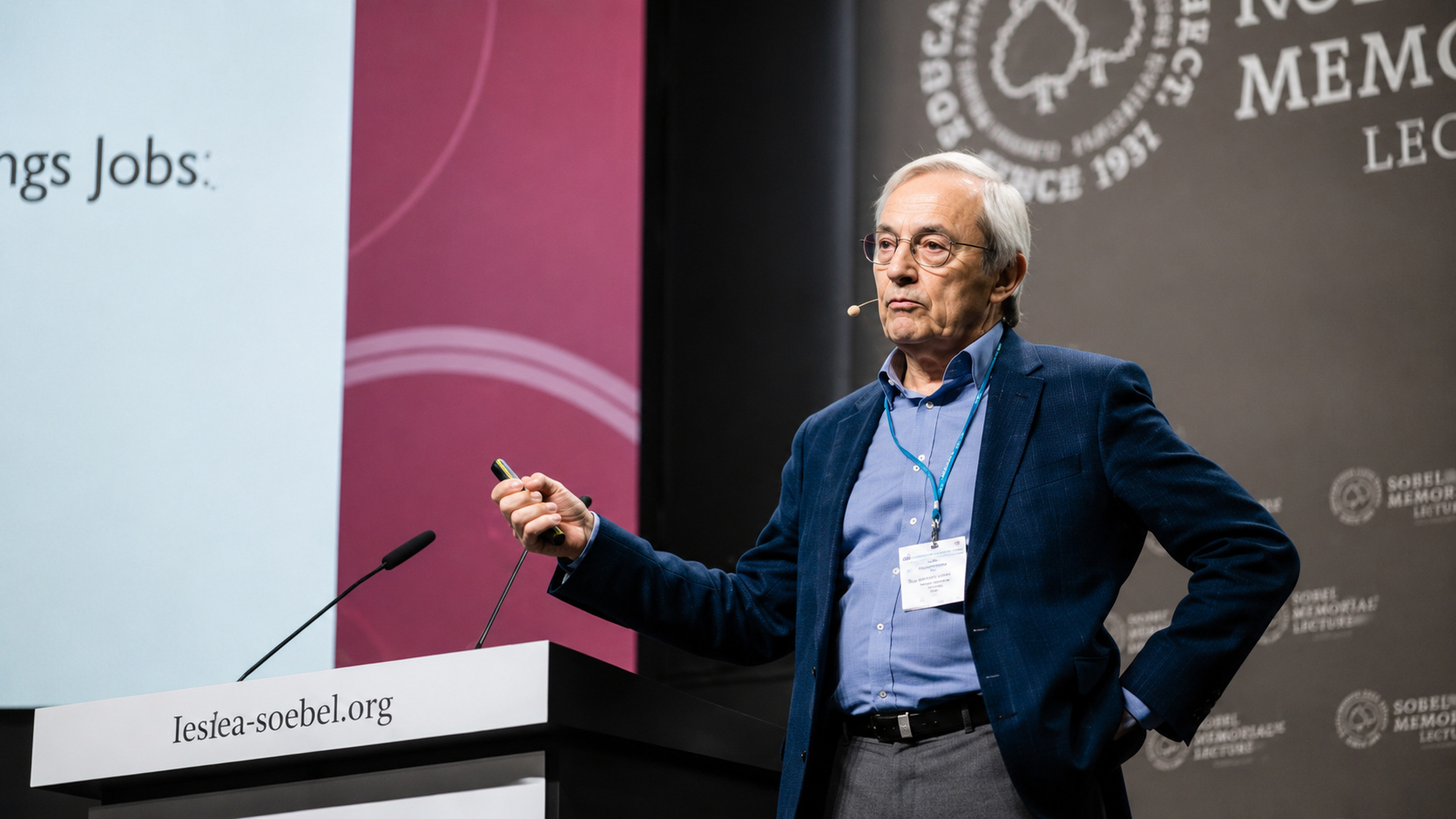


Unionization growth halts decline trajectory
The numbers released by the IBGE indicate that 8.9% of Brazilian workers were unionized in 2024. This percentage represents approximately 9.1 million people associated with unions across the country.
Additionally, the survey revealed the entry of 812 thousand new union members in just one year. As a result, the unionization rate recorded a growth of 9.8%.
However, the data also shows that the sector is still far from the levels observed in the past.
In 2012, for example, the unionization rate reached 16.1% of Brazilian workers. Currently, even after the recovery recorded in 2024, the index remains practically half of what was observed just over a decade ago.
Therefore, experts assess that the growth does not represent a consolidated recovery. In fact, the movement indicates a possible change in trend after consecutive years of decline.
Furthermore, part of this recovery is directly related to the strengthening of formal employment in more structured sectors of the economy.
Formal employment drives new union members
According to the analysis presented by Paulo Cezar da Rosa, sectors such as industry and public administration have led the recent growth in unionization.
This happens because these areas traditionally maintain closer relationships with representative entities and have more consolidated organizational structures.
At the same time, the data show that the historical base of Brazilian unionism is still present. However, it is increasingly concentrated in certain segments of the economy.
Additionally, another data point draws attention: more than half of unionized workers are over 40 years old.
Consequently, an important challenge arises related to the renewal of union bases.
While more experienced workers continue to participate in the entities, the new generations show less interest in traditional structures of collective representation.
For this reason, unions face difficulties in attracting young professionals who enter the labor market in a completely different scenario from that encountered by previous generations.
Labor market has changed and demands new strategies
In recent decades, the profile of the Brazilian worker has undergone significant changes.
Today, many professionals work in more flexible formats. Additionally, the growth of individual entrepreneurship and informality has changed the way millions of people relate to work.
As a consequence, traditional ties between workers and unions have become more fragile.
At the same time, digital transformation has expanded access to information and created new forms of social and professional interaction.
In this context, workers are more independent, more connected to the digital environment, and often more distrustful of traditional institutions.
Therefore, simply maintaining historical structures no longer guarantees relevance.
On the contrary, unions need to understand the new demands of the market to continue playing a relevant role in defending workers.
Moreover, they need to adapt their language to communicate with increasingly diverse audiences.
Communication takes on a strategic role
Among all the challenges pointed out by the article, communication appears as one of the most decisive factors for the future of unionism.
According to Paulo Cezar da Rosa, many entities still treat communication as a secondary aspect. However, this view no longer corresponds to the current reality.
Today, it is not enough to exist. It is also not enough to represent a certain professional category.
First and foremost, it is necessary for the worker to understand the role of the union and perceive value in its actions.
Moreover, the entities need to demonstrate practical utility in people’s daily lives.
In this sense, aspects such as language, frequency of communication, channels used, clarity of messages, and institutional positioning have gained strategic importance.
Meanwhile, the digital environment continues to expand the competition for workers’ attention.
As a result, unions compete daily with social networks, digital platforms, influencers, apps, and countless sources of information.
Therefore, gaining space requires increasingly efficient communication and relationship strategies.
Relevance will be the main challenge of the coming years
Data from IBGE shows that there is still a social base capable of sustaining the growth of unionization in Brazil.
However, the future of the union movement will depend less on the number of members and more on the ability to establish meaningful connections with workers.
Furthermore, the growth recorded in 2024 does not eliminate historical problems related to renewal, modernization, and adaptation to new forms of work.
On the other hand, the increase of 812,000 union members in just one year demonstrates that there is still room for reconstruction.
In this scenario, the competition shifts to the field of relevance.
Unions that can understand the transformations of the labor market, adapt their strategies, and strengthen their communication will have greater conditions to expand their representativeness.
Finally, the analysis suggests that the recent growth represents only the beginning of a new cycle. From now on, the challenge will be to transform this advance into a lasting and sustainable recovery for Brazilian unionism.
Do you believe that unions still play an important role in defending workers or do they need to completely reinvent themselves to keep up with market changes?