






 Portuguese
  Spanish
  2 min of reading
  0 comments


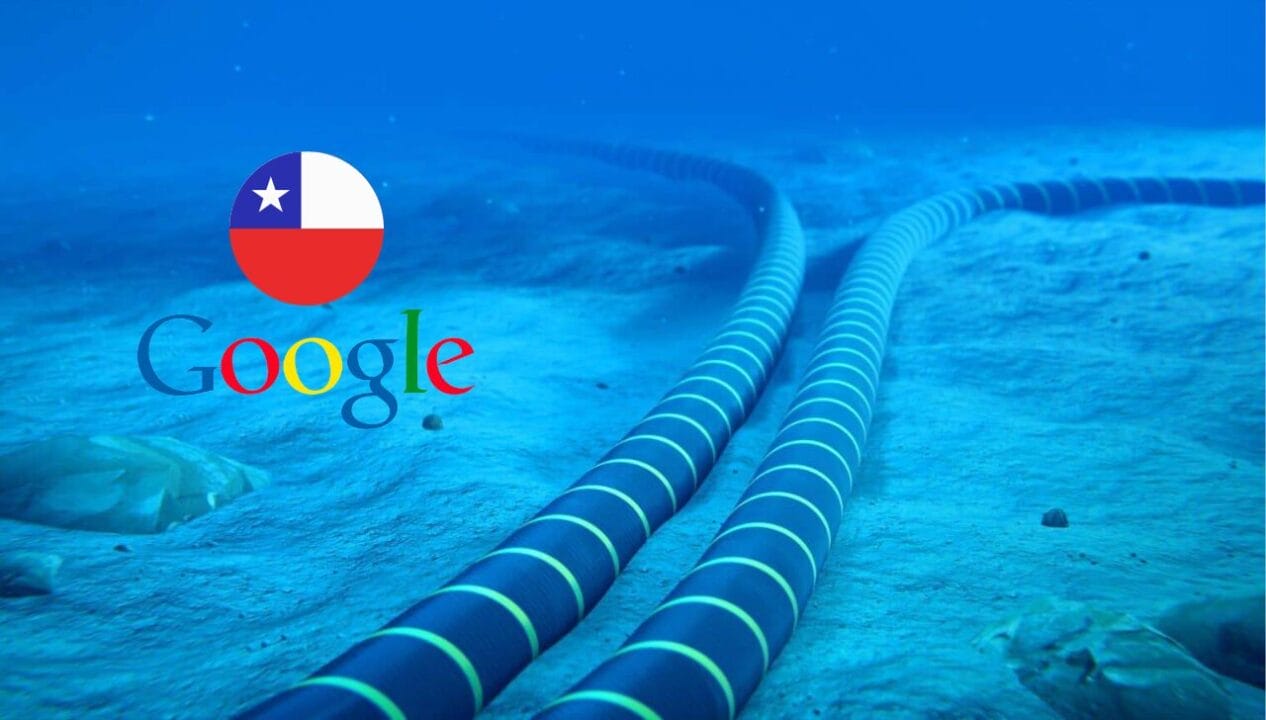
The Government of Chile and Google Have Formed a Partnership to Build the “Humboldt Project,” a Submarine Fiber Optic Cable That Promises to Revolutionize Connectivity in South America, Consolidating Chile as a Digital Center.
Last Thursday, (01/11), the government of Chile and the technology giant Google formalized a historic partnership for the construction of the “Humboldt Project,” the 1st submarine fiber optic cable that will connect South America, Asia, and Oceania. This venture aims to substantially improve data transmission, reduce latency, and boost technological development in the region.
Discover the Installations of Fiber Optic Submarine Cables


Submarine Fiber Optic Cable with 144 Terabytes per Second
The submarine cable, with an impressive length of 14,800 kilometers, will depart from Valparaíso, Chile, cross the Pacific Ocean, and reach Sydney, Australia, passing through strategic points in Asia.
Equipped with a capacity of 144 terabytes per second, the project represents an initial investment of US$ 55 million (approximately R$ 268 million).
-
Helicopter Drops 180 Tons of Sand and Gravel on Swedish River to Revive Ecosystem Damaged by Decades of Exploitation

-
Brazilian Company Launches Retro Smartphone with 48 MP Camera, T9 Keyboard, and Privacy Features for Social Media-Free Use

-
Self-Taught Chinese Farmer Builds 5-Ton Submarine from Scrap, Launches It in Anhui River
-
Invisible Induction Technology Enables Wireless Power for Blenders, Coffee Makers, and Air Fryers, Reducing Countertop Cables





Construction is scheduled to begin in 2025, with completion planned for the following year, and the operation set to extend over 25 years.
In Partnership with Google, Chile Aims to Become a Digital Hub in South America
Chilean President Gabriel Boric emphasized that the “Humboldt Project” solidifies Chile’s position as a digital hub in South America, opening doors for new industries, jobs, and better living conditions. For him, this initiative represents a milestone for the South American country.
Karan Bhatia, Google’s Global Vice President for Government Affairs and Public Policy, highlighted the relevance of the cable as a “physical connection to Asia and a trade route of the 21st century.”
The initiative received recognition from the United States, through the State Department, which praised the boost for “the global economic integration of South America and the Pacific island nations through advances in digital connectivity.”
The Beginning of the Digital Era in South America
Named in honor of the renowned German geographer and astronomer Alexander von Humboldt (1769–1859), the project also pays tribute to the Humboldt Current, which runs along the coasts of Chile and Peru.
The “Humboldt Project” promises a revolution in connectivity, positioning Chile as an essential player in the digital era of Latin America and Google as its supporter on this journey.
Source: TecMundo





Be the first to react!