






 Portuguese
  Spanish
  2 min of reading
  0 comments


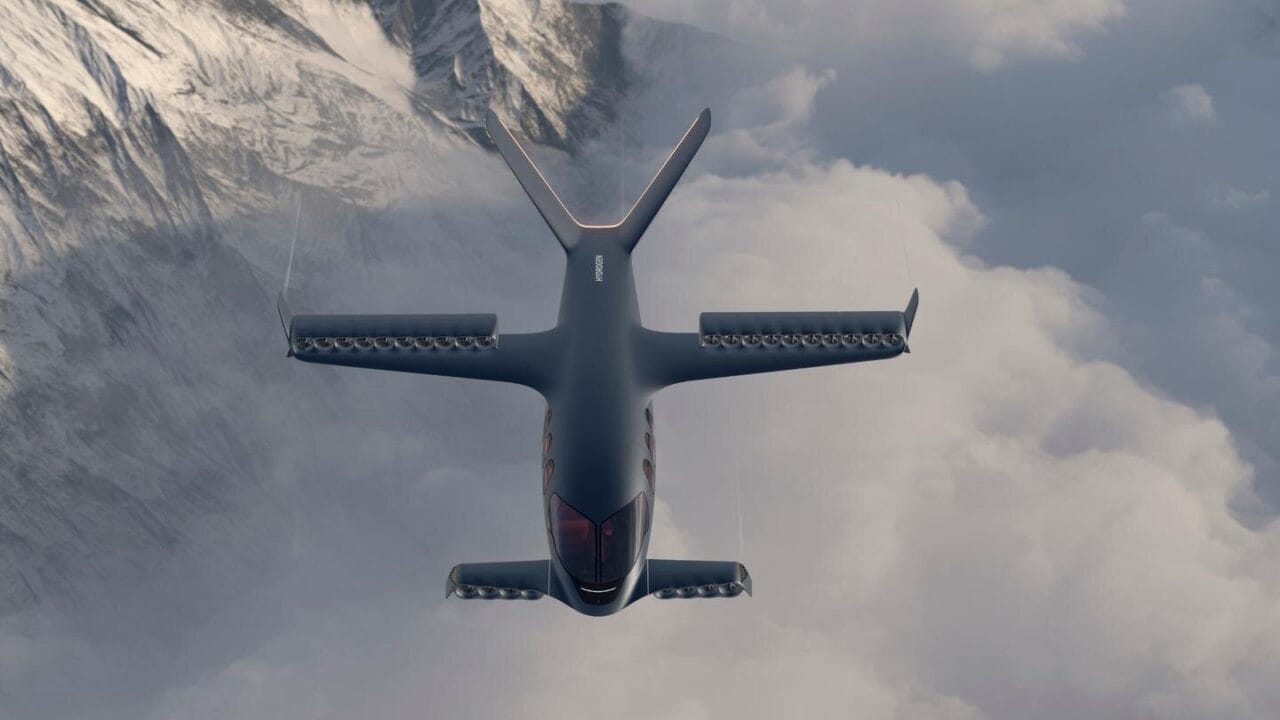
Sirius Aviation AG Revealed the Sirius Jet, a Liquid Hydrogen eVTOL. Forecasting Demonstration Flights in 2025, the Company Faces Challenges with Its Vector Thrust System and the Logistical Complexity of Liquid Hydrogen, Seeking Certification by 2028.
The Swiss startup Sirius Aviation AG is about to revolutionize the aviation sector with the launch of the Sirius Jet, a liquid hydrogen-powered electric vertical takeoff and landing (eVTOL) vehicle. Promising to fly at impressive speeds of up to 520 km/h, the jet features a deviated thrust vector system powered by 20 electric fans and boasts a range capacity of 1,800 kilometers.
State of the Art: How More Than 100 Engineers Turn Ideas into Reality
According to information released by the company, a team of over 100 engineers has been intensely dedicated to the project since 2021.
With the first demonstration flights scheduled for 2025.
-
Brazil Welcomes Spanish Wamos Air and Nigerian Air Peace, Potentially Transforming International Routes and Increasing Competition

-
Why can the crane operator only obey the correct signalman on the construction site: among dozens of workers, a hand raised by the wrong person can confuse the maneuver and turn a load of tons into an immediate risk.
-
What changes with the new public transportation rules that can reduce pressure on fares and pave the way for zero fare in Brazil?
-
Offshore air transport soars in Brazil, surpasses 2.5 million passengers, and reveals how oil has transformed Rio’s airports into key pieces of national logistics.




Sirius Aviation AG has already begun the certification process with the Federal Aviation Administration (FAA) of the United States, anticipating the completion of this phase, as well as commercial deliveries and shuttle flights, by 2028.
The unique feature of the Sirius Jet lies in the use of liquid hydrogen as a power source.
With 20 fans distributed along its lateral wings and canards, each measuring 30 centimeters in diameter, the jet has two distinct versions.
The business version, with a capacity for three passengers and a range of nearly two thousand kilometers.
Meanwhile, the Millennium version is designed for commercial transport, with a capacity for five passengers and a reduced range of 1,046 km due to the relocation of hydrogen tank space to the seats.
The Crucial Step for the Commercial Success of the Sirius Jet
The planned routes for the Sirius Jet include routes such as from Los Angeles to San Francisco (USA), from London (England) to Berlin (Germany), from Melbourne to Sydney (Australia), and from Beijing (China) to Seoul (South Korea).
However, innovation brings significant challenges.
The deviated thrust system, composed of modest-sized fans, could result in lower operational efficiency during takeoffs and landings compared to models using larger propellers and rotors.
Moreover, Sirius faces additional complications due to the use of liquid hydrogen as a power source.
Although it is a promising alternative for clean aviation in short and regional distances, liquid hydrogen is a cutting-edge technology that has yet to be certified for commercial use.
Sirius’ proposal to maintain liquid hydrogen at extremely low temperatures, below -250º C, during all phases of distribution, refueling, and flight, adds a significant logistical challenge to the project.
Source: Olhar Digital and New Atlas







Be the first to react!