






 Portuguese
  Spanish
  4 min of reading
  0 comments


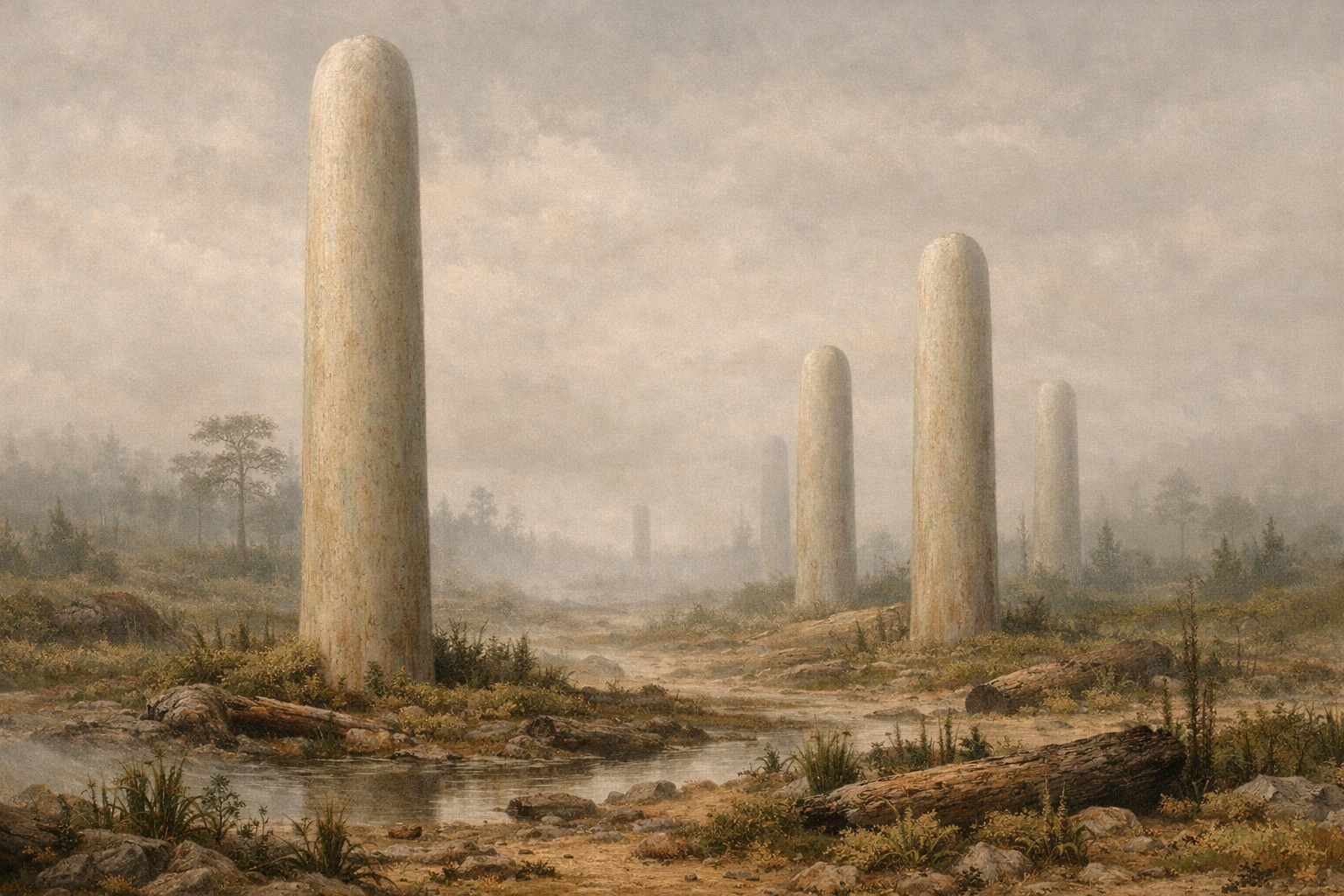
Scientists Analyze Fossils Found in Scotland, Discard Old Hypotheses About Giant Plants and Fungi, Identify an Extinct Eukaryotic Lineage and Raise New Questions About the First Terrestrial Ecosystems
For almost two centuries, an enigma has loomed over paleontology. Giant, smooth, vertical fossil structures found in Devonian rocks have defied successive attempts at scientific classification. Now, new research suggests that these life forms did not belong to any currently known group — and may represent an evolutionary experiment that has completely vanished from Earth’s history.
The information was disclosed by Science Advances, following a study published this Wednesday (21), and reinforced by analyses reported in international scientific outlets. According to the authors, the enigmatic prototaxites were neither plants, nor algae, nor giant fungi. They belonged to a completely extinct eukaryotic branch, with no living representatives.
This finding not only ends an old debate but also expands the understanding of how life conquered terrestrial environments about 400 million years ago.
-
Colorectal cancer advances worldwide, but most cases can be prevented.

-
NASA takes another look at the M87* black hole and finds details in the cosmic jet in X-rays that seem to reveal a much more unsettling universe than previously imagined.

-
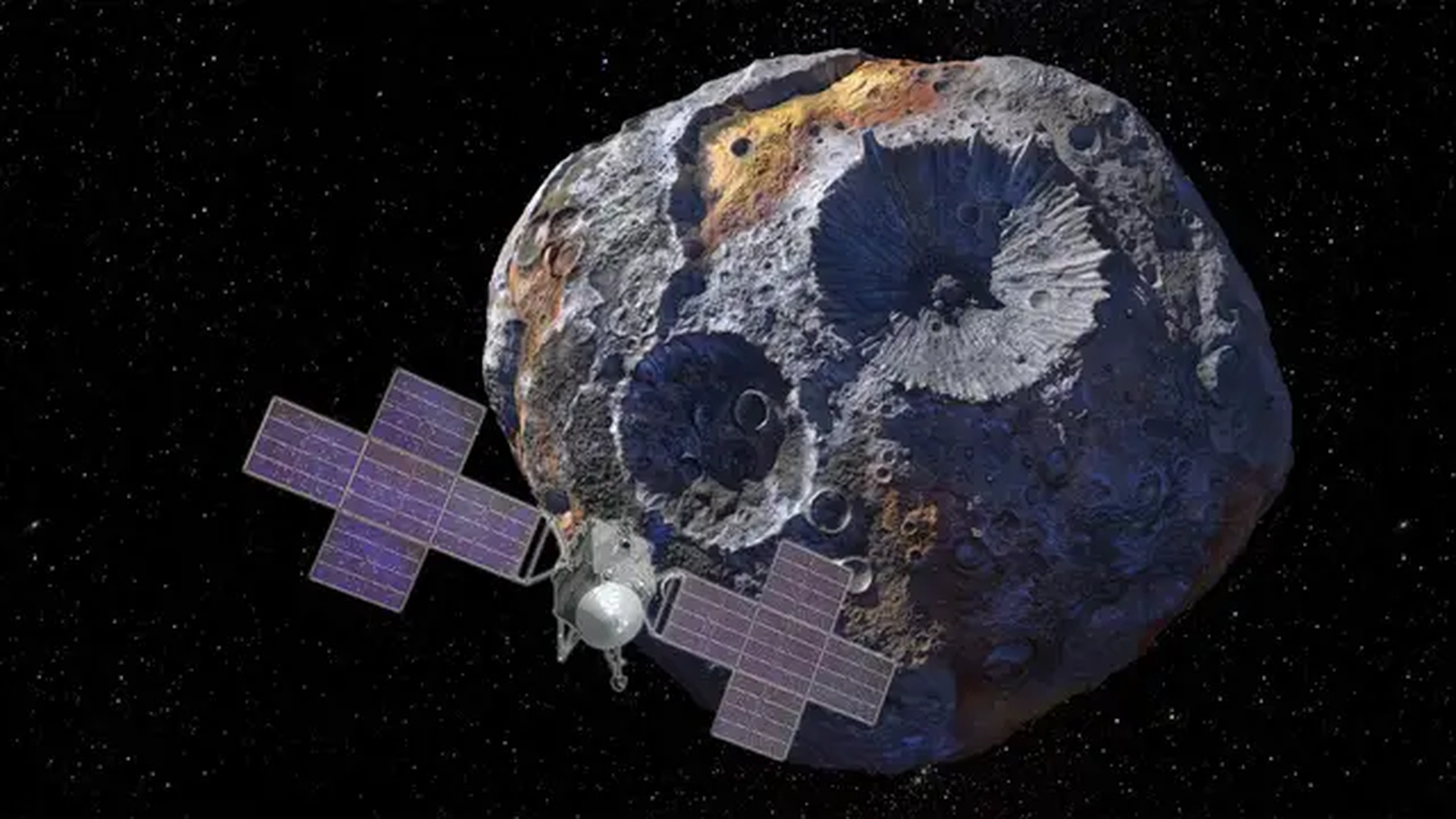
NASA’s space probe passes just 4,609 km from Mars, receives a boost of 1,600 km/h, and continues towards the asteroid 16 Psyche, a body valued at up to $10,000,000,000,000,000.

-
5,500-year-old DNA found in Stone Age bones reveals that the plague was already haunting prehistoric communities long before the medieval Black Death.



The Enigma of Prototaxites in the Early Terrestrial Life
The prototaxites appeared during the Devonian period, often referred to as the “Age of Fishes,” but also marked by the definitive colonization of land. In that scenario, vegetation was still low and limited, and terrestrial animals were taking their first evolutionary steps.
For this reason, the presence of these colossal structures has always intrigued scientists. Some fossils indicate columns reaching up to eight meters in height, without branches, leaves, flowers, or true roots. For decades, researchers have tried to fit these organisms into the recognized kingdoms of biology.
The most accepted hypothesis stated that they were giant fungi. This idea even inspired reconstructions of a primitive planet dominated by monumental mushrooms. However, the theory never gained full consensus, as several anatomical features did not fit modern fungal patterns.
Still, the mystery persisted for almost 200 years.
The Scottish Fossil That Changed the Scientific Debate
The turning point occurred with the detailed analysis of a smaller species called Prototaxites taiti, discovered at the paleontological site of Rhynie Chert in northeastern Scotland. Dated at approximately 407 million years, the site is famous for its exceptional preservation of fossils, allowing for microscopic and chemical studies rarely possible in such ancient materials.
Researchers used confocal microscopy, 3D imaging, and high-precision lasers to examine the internal structure of the fossil. The results were surprising. Instead of simple filaments common in fungi, the organism presented three distinct types of interconnected tubes, linked by dense branching regions.
This complex three-dimensional architecture does not correspond to any known plant, fungus, or algae.
Furthermore, the scientists analyzed the so-called chemical fingerprint of the fossil using artificial intelligence. Essential compounds for the cell walls of fungi — such as chitin, chitosan, and beta-glucan — were completely absent. Classic fungal biomarkers, like perylene, also did not appear.
Since these same compounds were detected in fungi preserved in the same rock, the authors ruled out chemical degradation over time. Thus, they reinforced the definitive exclusion of the group from the kingdom Fungi.
An Extinct Lineage of Life
In light of this robust set of evidence, the authors concluded that the prototaxites belonged to an extinct eukaryotic lineage previously unknown. In other words, they were complex living organisms, but deeply different from anything that exists today.
Although the largest analyzed specimen of P. taiti measures just 5.6 centimeters in width, scientists claim it is closely related to the giant prototaxites found in later geological layers, whose bases reach up to one meter in diameter. If the smaller species was not a fungus, then the giants were not either.
Experts estimate that these organisms thrived for about 50 million years before disappearing. By the end of this period, terrestrial plants began to surpass them in size. It is still unclear whether the extinction occurred due to direct ecological competition or global environmental changes.
Nonetheless, the study reinforces a powerful idea: the history of life on Earth includes entire evolutionary experiments that arose, dominated environments, and disappeared without leaving descendants.
If entire forms of life arose and disappeared without leaving heirs, how many chapters of Earth’s history remain completely unknown?







-

-

-

-

-

-

63 people reacted to this.