Portuguese
  Spanish


Understand why the simpler neighborhoods of the Swiss city of Basel are attracting the attention of Brazilians and foreigners by combining safety, efficient transportation, universal sanitation, and a standard of living that challenges traditional concepts of urban poverty.
When talking about slums, the image that often immediately comes to mind for many Brazilians is associated with the absence of infrastructure, precarious housing, insufficient public services, and historical social difficulties. However, a comparison made by Brazilians living in Europe is drawing attention on social media by showing a completely different reality in one of the richest countries on the planet.
According to information presented by the channel Lima Experience on May 18, 2025, specialized in showing the daily life of Brazilians abroad, the most popular neighborhoods in the city of Basel, Switzerland, have a quality of life standard that, in many aspects, surpasses that found in upscale areas of various cities around the world.
The comparison sparked debates precisely because of the use of the word “slum,” used in quotes. This is because, although there are regions considered simpler or working-class within the Swiss context, the local reality is very different from that observed in developing countries.
-
After three years living in a van, a couple bought an abandoned historic house and had to deal with mold, damaged plumbing, raccoons, and heavy cleaning before moving in.

-
In the city that the market called “road cockroach,” between Balneário Camboriú and Florianópolis, he launched a planned neighborhood worth R$ 1 billion with a marina for 90 boats and sold 80% of the lots in the first phase in 1 week.

-
At a depth of 5,000 meters, where there is no sunlight, researchers found ancient DNA preserved in the mud of the South Atlantic and discovered signs of organisms that did not match known records.

-
At 77 years old, a retired woman who never tires of learning completes her second degree in design in Ceará and moves people by revealing the help of her 98-year-old mother in the final project.




Why do some Brazilians call Swiss neighborhoods “slums”?
The term emerged informally among Latin American immigrants living in Switzerland. The expression is used to highlight the contrast between what is considered a popular neighborhood in the European country and what would normally be classified as a periphery in much of Latin America.
In practice, the difference between an upscale area and a working-class area in Swiss cities is usually related mainly to the size of the properties, the architectural standard, and the socioeconomic profile of the residents.
Access to essential public services, however, remains practically the same.
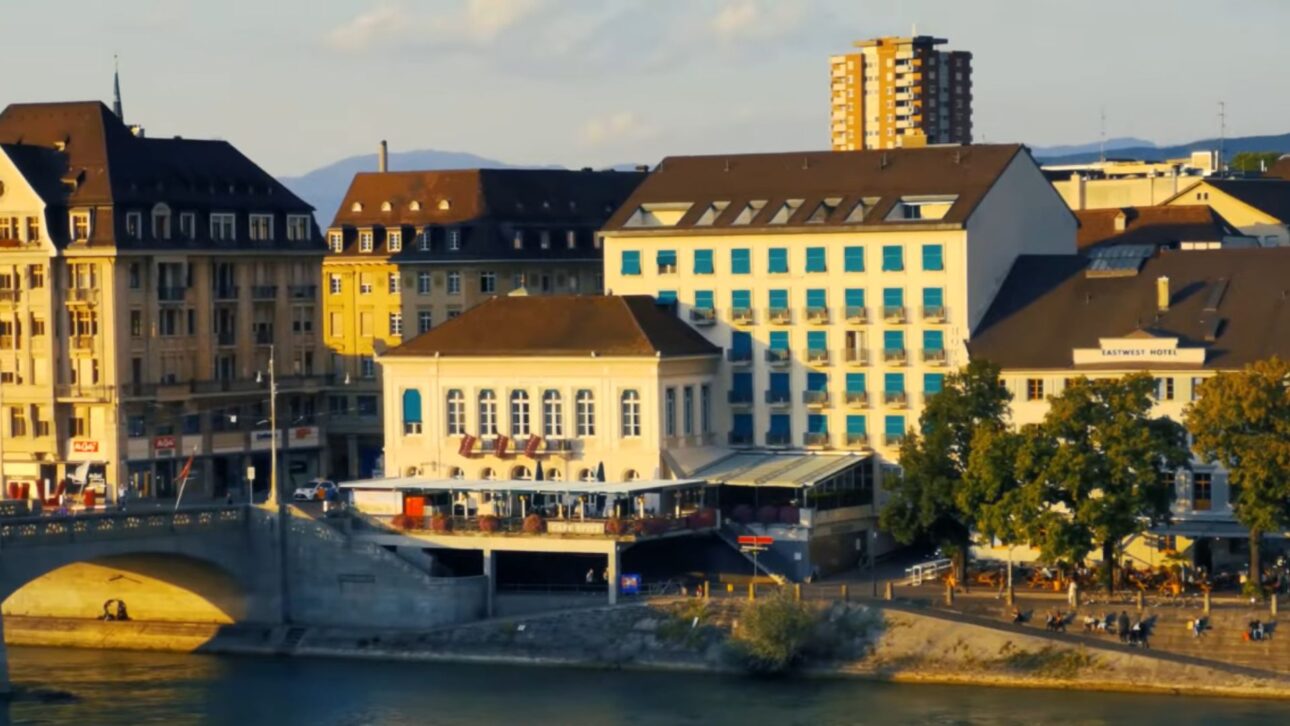
In Basel, a city located in the northwest of Switzerland and recognized for having one of the highest human development indices in the world, the simpler neighborhoods have complete infrastructure, well-maintained streets, efficient public lighting, universal sanitation, and high-quality transportation.
The presence of the State is perceived uniformly, regardless of the average income of the residents.
How do residents of Basel’s cheapest neighborhoods live?
Regions like Klybeck and Kleinbasel concentrate a great cultural diversity. In these areas live families originating from Turkey, the Balkans, Asia, Africa, and also Latin America.
Walking through the streets of these neighborhoods, it is common to find ethnic restaurants, small international markets, cafes, bakeries, and businesses that reflect this cultural diversity.
For many Brazilian visitors, the community atmosphere of these places resembles traditional neighborhoods in large cities like São Paulo. The difference lies in the available structure for the residents.
Even being considered popular neighborhoods by Swiss standards, these regions offer:
- Universal potable water and continuous supply;
- Complete sewage collection and treatment network;
- Stable electricity;
- Integrated public transport;
- Well-maintained green areas;
- Accessible public facilities;
- High urban security;
- Constant maintenance of public roads.
Another aspect that draws attention is the conservation of residential buildings.
Even older constructions undergo regular maintenance, renovations, and modernizations to ensure thermal comfort, energy efficiency, and structural safety.
The secret behind the quality of life in the Swiss periphery
Experts point out that the main differential lies in how urban infrastructure is treated by the public authorities.
In Switzerland, basic services are seen as universal rights, not as privileges linked to the address or income of the residents.
This means that sanitation, urban mobility, access to health, and public safety follow similar standards in practically all urban regions.
Among the pillars that support this model are:
- Social housing with strict quality standards;
- Widely integrated public transport;
- High investment in urban infrastructure;
- Strong oversight of public services;
- Long-term urban planning;
- Permanent housing policies.
Additionally, the Swiss labor market offers salaries considered high when compared to international standards.
Labor workers can receive wages close to 4,000 Swiss francs per month, an amount that helps maintain a decent standard of living even with the country’s high cost of living.


The border with Germany and France helps reduce expenses
Another important factor to understand the economic dynamics of Basel is its strategic location.
The city is positioned at the tri-border between Switzerland, Germany, and France.
Because of this, many residents frequently shop in neighboring countries, taking advantage of lower prices on food products, hygiene items, and consumer goods.
The practice has become so common that it is part of the routine for thousands of families in the region.
By shopping in euros and returning to Switzerland, many residents manage to significantly reduce their monthly expenses, increasing their purchasing power even in one of the most expensive countries in the world.
What does this reality reveal about public policies?
The Swiss experience shows that income inequality does not necessarily have to result in urban degradation or the absence of essential services.
Although there are economic differences between wealthy and popular neighborhoods, access to basic infrastructure remains guaranteed for the entire population.
In this context, the concept of “favela” used by Brazilians to describe certain areas of Switzerland ends up functioning more as a comparative provocation than as a real description of local conditions.
After all, while many cities around the world still face challenges related to sanitation, transportation, and security, the simpler neighborhoods of Basel offer a quality of life that many experts consider an international benchmark.
The discussion also raises an important reflection on urban development, public planning, and governmental priorities.
When basic services work adequately for all citizens, the difference between rich and poor neighborhoods ceases to be a matter of survival and becomes merely a matter of consumption standards.
And you, do you believe that urban models similar to Switzerland’s could be implemented in large Brazilian cities?