Portuguese
  Spanish


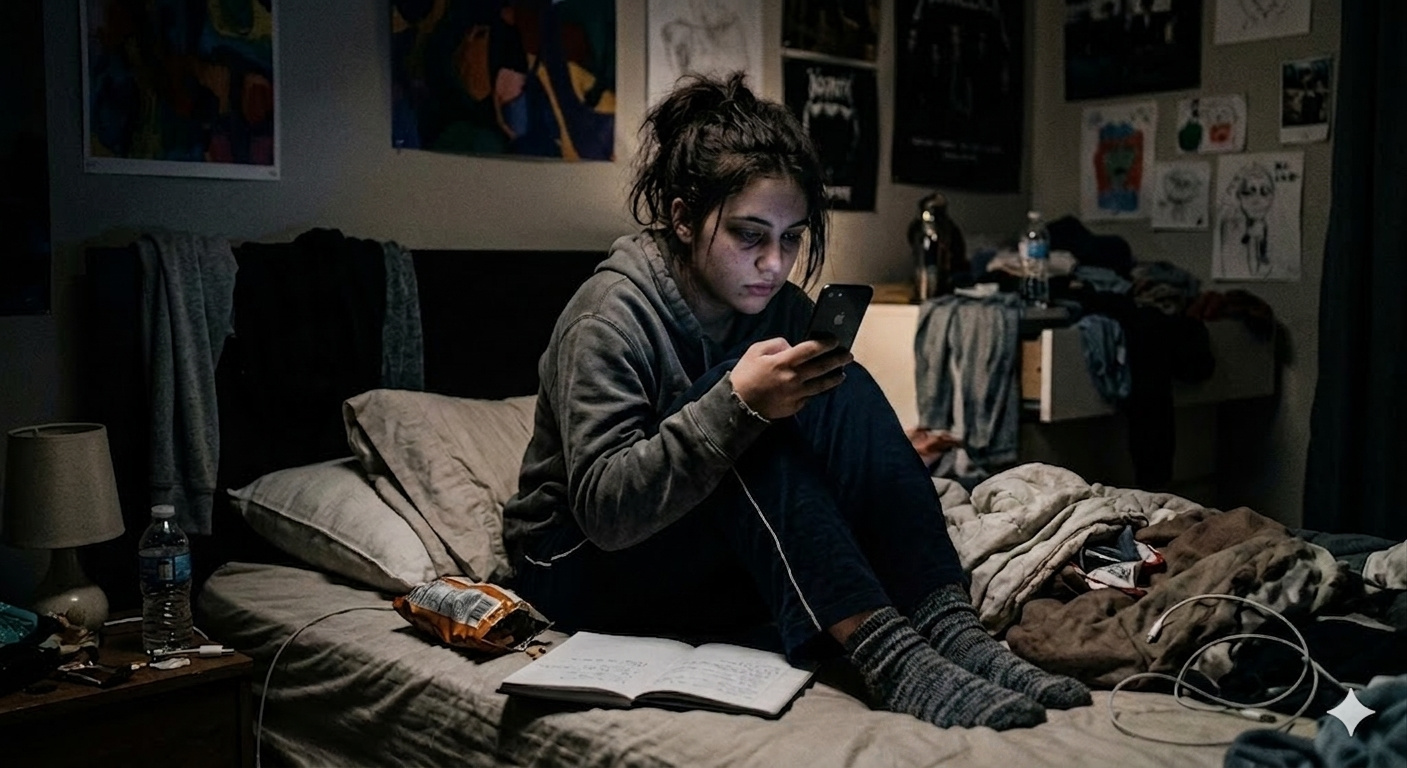

Experts warn that the true risk of social media lies in compulsive use among adolescents, altering daily habits, progressively and continuously harming mental health, sleep, self-esteem, and social relationships.
In 2025 and 2026, recent studies and mental health warnings began to shift the focus of the discussion about social media: the problem ceased to be just screen time and became the pattern of use. Scientific research indicates that adolescents are not only affected by how many hours they spend online, but mainly by how they use these platforms, especially when the behavior becomes compulsive and starts to interfere with sleep, mood, and routine.
A scientific review published in an international medical database identified consistent associations between intense social media use and symptoms of depression, anxiety, and poorer sleep quality, while European health authorities, such as the French agency ANSES, warned of additional impacts on body image, self-esteem, and exposure to harmful content. These evidences reinforce a central point: it’s not just being connected, it’s not being able to disconnect.
Continue reading below to understand what psychology and psychiatry explain about this behavior, why it affects adolescents so much, and what the real observed effects are.
-
Brazilian Senate Approves Bill to Automate Child Support Payments Directly from Debtors’ Accounts

-
Brazilian Student in the U.S. Helps Provide Clean Water to 50 Families in São Paulo Slum, Launches Year-Long Volunteer Project with National Expansion Plans
-
Daughter of Farmers from Brazil Uses Social Media to Highlight Rural Life and Promote Agriculture
-
Free Willy’s Orca, Captured as a Calf, Became a Global Star in a Mexican Tank and Was Part of the Most Controversial Attempt to Return a Captive Whale to the Wild


Psychology shows that compulsive use is more determining than isolated screen time
For years, the debate about social media was reduced to a simple question: how many hours a day does an adolescent spend on their phone. Today, science points out that this metric is limited. Compulsive use involves a pattern where the person feels a constant need to check notifications, respond to messages immediately, or scroll through content non-stop, even when it interferes with other activities.


This behavior is linked to the brain’s reward mechanisms, which respond to rapid stimuli such as likes, comments, and new content. Each interaction generates small dopamine releases, creating a cycle of repetition. Over time, the adolescent may not realize that use has ceased to be a choice and has become an impulse.
Studies associate social media with increased anxiety and depressive symptoms
Several recent studies have identified an association between intense social media use and poorer mental health. The data show that adolescents who use these platforms more frequently have a higher incidence of: anxiety symptoms, persistent sadness, feelings of inadequacy, and decreased self-esteem.
Important: these studies show association, not necessarily direct causation. This means that social media can contribute to the problem, but it can also be used more by people who are already emotionally vulnerable. Nevertheless, the observed pattern is consistent enough to raise alarms in psychology and psychiatry.
Sleep is one of the first systems affected by nighttime social media use
One of the most direct impacts is on sleep. Nighttime social media use interferes with the body’s natural cycle due to two main factors: exposure to blue light from screens and constant mental stimulation.
The consequence is delayed bedtime, reduced sleep quality, and difficulty in mental recovery. Sleep deprivation, by itself, is already associated with a higher risk of anxiety and depression, which creates a chain effect.
Constant social comparison affects self-esteem and identity perception
Another important factor is comparison. Social media exposes adolescents to edited versions of other people’s lives, focusing on success, appearance, and positive moments. This can lead to a distortion in the perception of reality. Adolescents begin to compare their real lives with filtered versions of other people, which can lead to feelings of inadequacy and low self-esteem. This process is especially intense during adolescence, a phase in which identity is still under construction.
Platforms use algorithms that identify preferences and keep the user engaged. This means that the displayed content is adjusted to increase time spent. The more the teenager interacts, the more the system learns and offers similar content. This mechanism can intensify compulsive use, as the user receives constant stimuli aligned with their interests.
Social media can amplify existing emotional vulnerabilities
An important point highlighted by psychiatry is that networks do not create all problems, but they can amplify them. Adolescents with anxiety, low self-esteem, or social difficulties may use platforms as a form of escape.
However, the digital environment can reinforce these feelings. Exposure to criticism, constant comparison, and the need for validation can intensify already present vulnerabilities.
Excessive use can affect routine, concentration, and school performance
When use becomes compulsive, it begins to interfere with other areas of life. This includes: decreased concentration, difficulty maintaining attention, reduced school performance, and constant interruptions during tasks. The brain becomes accustomed to rapid and constant stimuli, making activities that require prolonged focus difficult.

Adolescence is a period of intense development. The brain is still forming, especially in areas related to impulse control and decision-making. At the same time, there is greater sensitivity to social rewards, such as approval and recognition. This makes adolescents more susceptible to the impact of social media, especially when use is not regulated.
Not all social media use is negative, but balance is the central point
Scientific literature itself recognizes that social media also has positive aspects. They can facilitate connections, allow personal expression, and provide access to information. The problem arises when use ceases to be balanced and begins to dominate daily life. The critical factor is not the existence of networks, but how they are used.
Psychiatry treats the topic as a growing public health issue
Health organizations have been treating the impact of social media as a relevant public health issue. This includes not only adolescents, but also adults. The growth of digital use, combined with compulsive behavior patterns, creates a scenario where mental health problems can become more frequent.
The difference between healthy and problematic use lies in control and impact
The main difference between healthy and problematic use is not in the exact number of hours, but in two factors: control over use and impact on real life. When a person can stop, maintain a routine, and not compromise other areas of life, use tends to be considered balanced. When there is loss of control and functional impairment, the pattern begins to be seen as problematic. This is the central point of the current discussion in psychology and psychiatry.
The question remains: if the problem is not just screen time, but how the brain becomes dependent on social media, to what extent are adolescents and adults truly in control of their use, or are they already being shaped by it without realizing it? Leave your opinion in the comments.