Portuguese
  Spanish


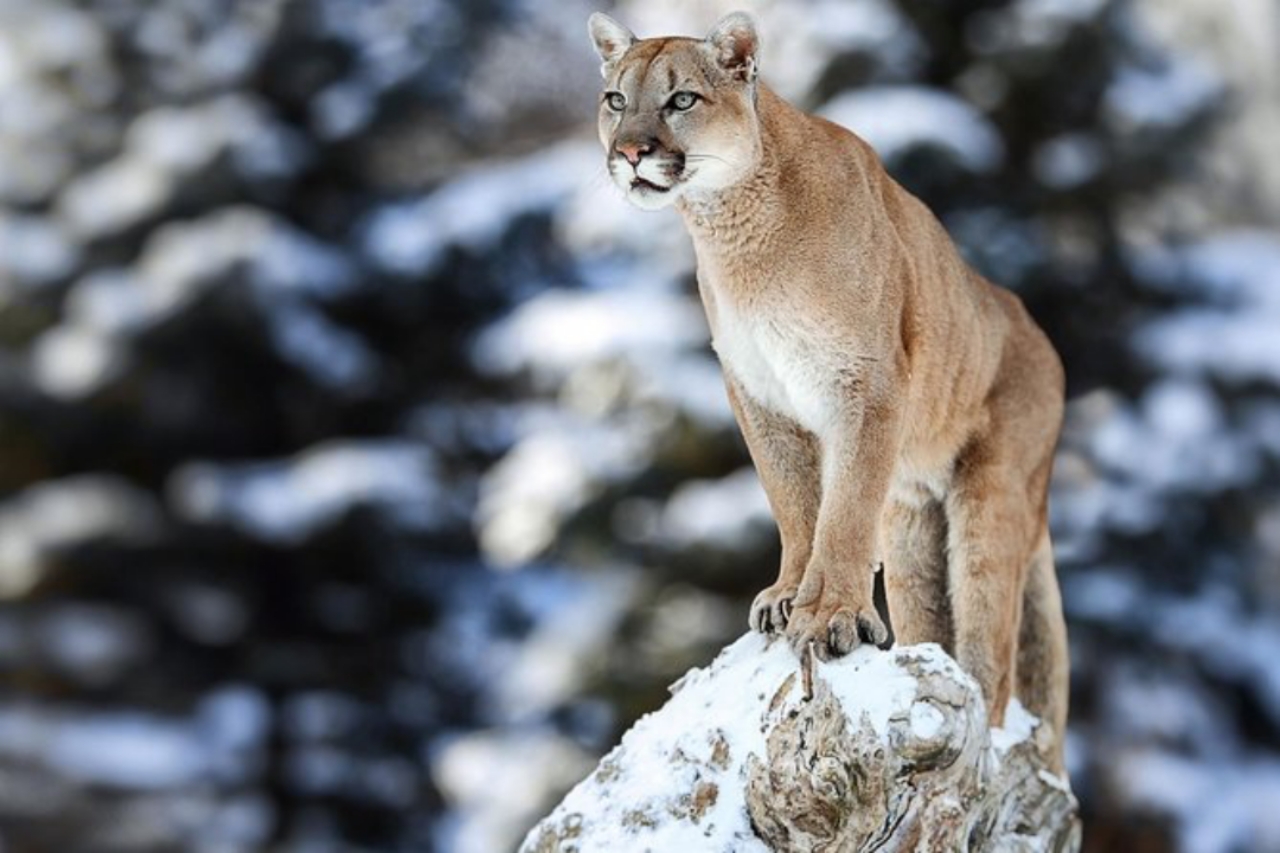

Pumas in Patagonia Are Dining on Penguins Inside an Argentinian National Park — and the Unexpected Menu Choice Appears to Be Reshaping How These Typically Solitary Big Cats Share Space.
According to new research published Wednesday (Dec. 17) in Proceedings of the Royal Society B, pumas that hunt penguins are encountering each other far more often than pumas that do not — and, unusually, they seem to tolerate those meetings.
The work highlights a broader lesson for conservation: restoring a predator doesn’t simply “reset” an ecosystem to an earlier baseline. “Restoring wildlife in today’s changed landscapes doesn’t simply rewind ecosystems to the past,” said study co-author Mitchell Serota, an ecologist at Duke Farms in New Jersey. “It can create entirely new interactions that reshape animal behavior and populations in unexpected ways.”
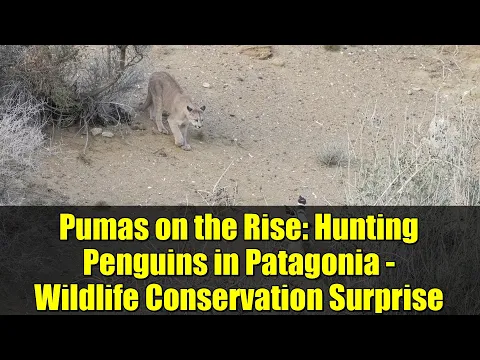

Rewilding Can Spark Brand-New Predator–Prey Relationships — and Those Ripple Effects May Alter Animal Behavior in Ways Conservationists Don’t Anticipate.
Historically, sheep ranching pressure in Patagonia pushed pumas out across parts of the region during the 20th century.
-
In Andradina, in the interior of SP, a tannery transformed tilapia skin that slaughterhouses used to throw away into exotic leather for bags, shoes, and even wedding dresses, producing about 2,000 pieces per month and exporting to seven countries, proving that fish waste has become high-value fashion.

-
The industrial waste that even recyclers didn’t want has gained value in the interior of Bahia: two entrepreneurs invested R$ 2.8 million to transform 350 tons per year of foam, rubber, and plastic into boards that can replace wood and MDF.

-
What is a red flashlight used for, after all? See why it is so commonly used at night.

-
He has never read a line of code, but he already knows how to work: the French company UMA presented in Paris the Northstar, its first AI-powered humanoid robot designed for factories and warehouses, capable of copying tasks just by observing an employee in action.



After Monte León National Park was established in 2004, pumas began moving back into the area. But during the period when pumas were scarce, other species adjusted to the reduced hunting pressure.
One of the most striking examples came from Magellanic penguins (Spheniscus magellanicus), a species more commonly associated with offshore islands: a mainland breeding colony took hold, eventually reaching roughly 40,000 breeding pairs.
Not long after the park’s creation, researchers started finding penguin remains in puma scat. The cats, it became clear, were exploiting a landscape that no longer looked like the one their ancestors had known.
“We thought it was just a couple individuals that were doing this,” said Serota, who led the work as a doctoral student at the University of California, Berkeley. “But when we got there … we noticed a ton of puma detections near the penguin colony.”
A 40,000-Pair Penguin Colony on the Mainland Created a Rare, Concentrated Food Source — and Returning Pumas Appear to Have Capitalized Quickly.
To quantify what was happening, the team combined multiple field methods across several seasons from 2019 to 2023. They used camera traps to estimate how many pumas were using the coastline near the breeding colony — a 1.2-mile (2-kilometer) stretch of beach inside the park.
They also fitted 14 individual pumas with GPS collars and visited penguin kill sites to confirm predation patterns. Of the collared animals, nine hunted penguins and five did not.
Those two groups behaved differently. The penguin-hunting pumas showed greater seasonal swings in the size of their ranges.
When penguins were present in the park during breeding season, the cats stayed close to the colony. When the birds migrated offshore during the summer, the same pumas ranged roughly twice as far.
But the most surprising change involved puma-to-puma dynamics. The researchers documented 254 encounters between pairs of pumas when both individuals were penguin hunters.
By contrast, they recorded only four encounters between pairs in which neither puma hunted penguins. Most of the meetings occurred within 0.6 miles (1 kilometer) of the penguin colony — essentially where the buffet was.
GPS Collars and Camera Traps Revealed a Striking Contrast: Penguin-Hunting Pumas Crossed Paths Hundreds of Times, Suggesting the Colony May Be Relaxing the Cats’ Usual Intolerance of Rivals.

The pattern points to an intuitive mechanism: when food is unusually abundant and concentrated, competition may ease — and so might the need to defend huge exclusive territories.
The team also found that puma density within the park exceeded twice the highest previously recorded concentration in Argentina.
That matters because adult pumas are generally solitary, with large ranges that help them secure enough prey for themselves and their kittens.
For conservation planners, such behavioral shifts are not a footnote — they can change how ecosystems function in practice. Understanding how large carnivores behave when they return to human-altered habitats “is essential for conservation planning because it allows managers to … design management strategies that are grounded in how ecosystems actually function today, not how we assume they should function based on the past,” Juan Ignacio Zanon Martinez, a population ecologist at Argentina’s National Scientific and Technical Research Council (CONICET) who was not involved in the study, told Live Science via email.
The Study Suggests Predator Returns May Create “New Normal” Ecosystems — and Managers May Need Strategies Based on Modern Interactions, Not Historical Expectations.
The findings also raise practical questions for Monte León. Puma predation may not significantly dent a massive breeding colony, but it could influence the success of new, smaller colonies trying to establish themselves on the mainland.
That’s part of what makes the situation thorny, said Javier Ciancio, a biologist at CONICET who was not involved in the research: managers are watching two native species interact in a way that likely would not have occurred without earlier human-driven changes to the region.
Looking ahead, Serota and colleagues plan to explore how the puma–penguin dynamic reverberates through the rest of the food web — including effects on other puma prey such as the guanaco (Lama guanicoe), a wild camelid related to the llama.
Next, scientists will test whether penguins are reshaping the broader prey landscape — including impacts on guanacos and other species pumas hunt.
Sources: Proceedings of the Royal Society B (study published Dec. 17); quotes and additional context via Live Science.
What do you think about predators adapting to human-altered ecosystems in unexpected ways? Should conservation efforts prioritize historical balance or adapt to these new realities? Share your thoughts in the comments and join the discussion.