Portuguese
  Spanish


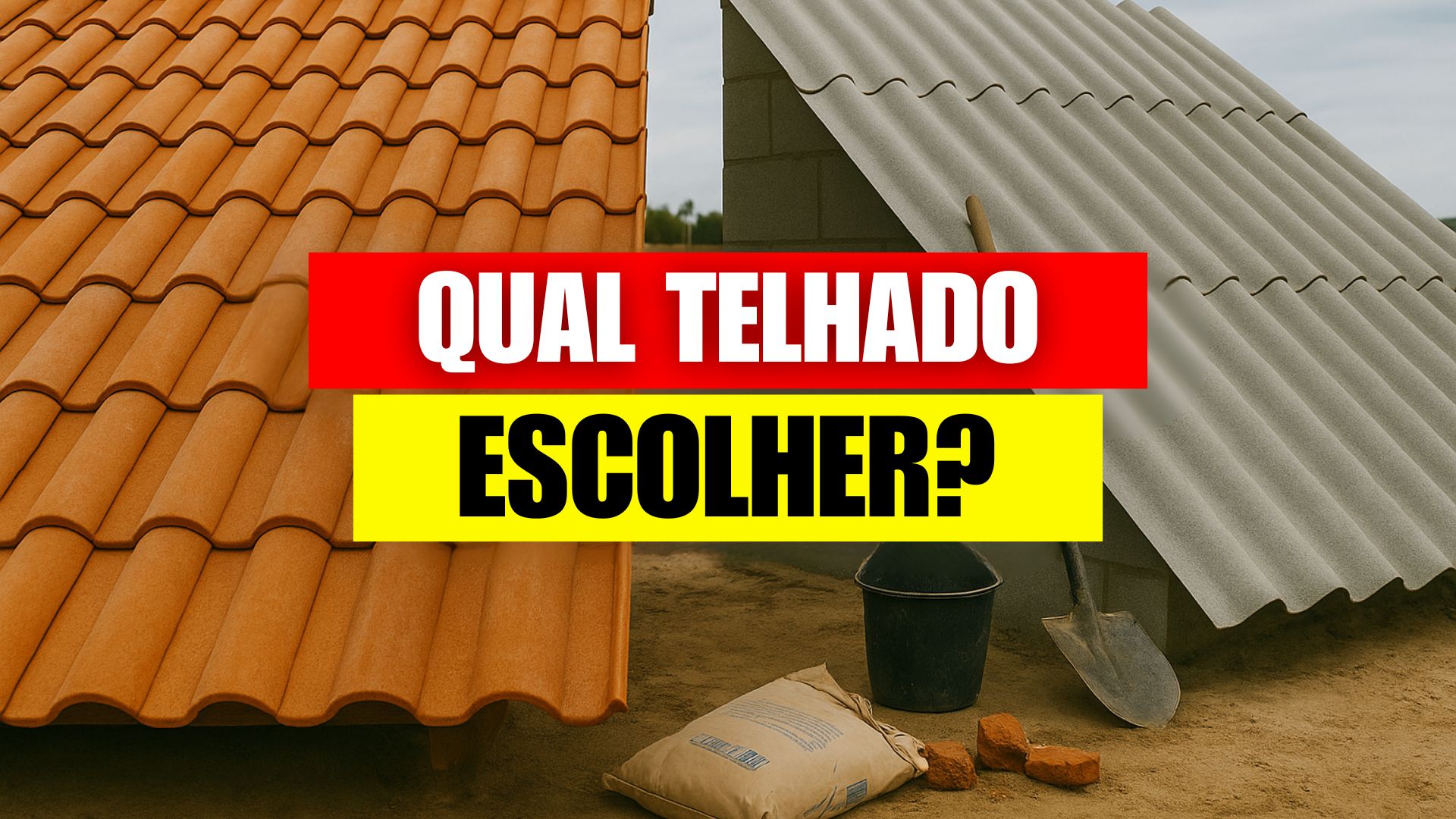


Tile Options Show Real Differences In Cost, Weight, And Structural Requirements, Directly Influencing The Budget, Thermal Comfort, And Final Performance Of An Affordable House.
The type of tile chosen for an affordable house in Brazil has a direct impact on the budget, the roof structure, and the thermal comfort of internal environments.
Recent surveys of construction prices published by service platforms and specialized outlets show that a simple roof with fiber cement tiles typically costs between 100 and 200 reais per square meter, already including materials and labor.
In another reference, specifically focused on the simple colonial ceramic roof, the average estimate provided by architects is approximately 160 reais per square meter, also considering the complete system.
-
China’s Engineered Bamboo: The “Material of the Future” Stronger Than Steel and a Sustainable Wood Alternative

-
Egypt’s “New Nile”: 170 km Artificial River Aims to Turn Desert into Farmland, but Water Supply Concerns Loom
-
Unable to secure a mortgage as a self-employed single mother, she designed her own floating home from a 20-meter boat and now lives “off-grid” with her two children and solar panels on an English canal.
-
Man Transforms Rusty Shipping Container into Luxury Home with Insulated Walls, Large Windows, and Drywall Finish, Surprising Onlookers


The two solutions analyzed come from different materials.
Clay tile, in practice, is the traditional ceramic tile, produced from molded clay and fired in kilns, with shapes such as colonial, Roman, and Portuguese.
Technical standards and project manuals describe these tiles as covering elements that must meet impermeability and water absorption requirements defined by ABNT standards, which contributes to their durability when correctly specified and installed.
On the other hand, fiber cement tile is manufactured with cement and synthetic fibers, in large format corrugated sheets, and currently does not use asbestos in its composition, following the prohibition of this material in the country.
Manufacturers present it as a practical and economical option for residential, commercial, and industrial roofing.
Price Differences And Materials Used

In a direct cost comparison of materials, budget studies that use the Basic Unit Cost of civil construction indicate that the square meter of 6 mm fiber cement tiles can be considered, for calculation purposes, around 21.84 reais per square meter of coverage, excluding supporting structure and labor.
In retail, a residential corrugated fiber cement tile measuring 2.44 m in length by 1.10 m in width, with a thickness of 8 mm, appears in large construction material chains priced close to 160 reais each, covering a useful area greater than 2 m² per piece.
For ceramic tiles, the price is usually presented per piece, not per sheet, varying according to model, region, and manufacturer, which explains the practice of working with cost ranges per square meter for the complete system.
Necessary Structure And Impact Of Roof Weight
The difference in weight between the tiles is one of the main factors influencing the final cost of the structure.
A reference table based on NBR 6120, which deals with loads in building structures, indicates that roofs with ceramic tiles generally, supported by a wooden structure, can be considered with a weight of about 0.7 kN/m², equivalent to approximately 70 kilograms per square meter on the horizontal surface.
In another practical source aimed at renovation professionals, the weight of a roof with ceramic tile is presented as 70 kgf/m², compared to 40 kgf/m² for coverage with fiber cement tile supported by a steel structure.
The information on the tiles themselves also confirms this contrast.
Technical catalogs from fiber cement manufacturers indicate calculated weights between 16 and 24 kilograms per square meter for corrugated tiles of 5 to 8 mm thickness, already considering overlap, water absorption, and fixings.
In product sheets for colonial ceramic tiles, a manufacturer from the Northeast reports an average weight of 2.6 kilograms per piece and a need for 33 units per square meter.
Adding this data together, the weight of ceramic tiles alone exceeds 80 kilograms per square meter.
This greater load requires a more robust framework, with rafters, purlins, and battens sized to support the whole system, which directly impacts the final cost of the ceramic roof.
Minimum Slope And Total Roof Area
The minimum slope recommended by manufacturers is another factor that interferes with the amount of material used in each type of covering.
Technical guides for fiber cement tiles indicate that corrugated sheets of 6 and 8 mm can be applied with a slope starting from 5 degrees, which corresponds to about 8.7% fall.

In contrast, technical texts and manuals for ceramic roofs cite usual minimum slopes in the range of 25% to 30% for colonial and other exposed models.
Practically speaking, this means that the same plant in horizontal projection will result in a larger sloped area when using ceramic tiles, increasing the quantity of tiles and structure needed for the covering.
Thermal Comfort And Behavior Of Roofs
Regarding thermal comfort, laboratory research with test cells indicates distinct results depending on the material and surface treatment.
A Brazilian study that evaluated surface temperatures of metal, fiber cement, and ceramic tiles concluded that ceramic and fiber cement tiles exhibited similar thermal behaviors, with differences mainly associated with color, solar absorption, and ventilation of the ceiling space.
In comparisons of conventional coverings, other analyses included ceramic, fiber cement, and ecological tiles, recording higher internal temperatures under ecological tiles, followed by fiber cement, and lastly, ceramic tiles.
From the industry’s side, fiber cement tile manufacturers recognize that the thermal performance of this material is limited in very hot regions, recommending the use of thermal blankets or additional insulation.
Technical content and interviews with architects regarding colonial roofs emphasize that clay tiles, when associated with good insulation and a ventilated ceiling space, contribute to maintaining a more stable internal temperature.
Durability, Maintenance, And Useful Life
In terms of durability and maintenance, ceramic tiles are described in standards and manuals as elements capable of remaining in service for many years, as long as the installation conditions are respected.
A study on school roofs, although focused on thermal-acoustic tiles, shows that ceramic coverings can incur relevant maintenance costs over time.
On the other hand, fiber cement tiles are presented by manufacturers as weather-resistant and with a long useful life when installed correctly, but with a need for attention to fixings and roof ventilation.
Labor And Regional Variations
From the perspective of labor cost, tables of masonry services indicate the placement of fiber cement and ceramic tiles as distinct items, both with negotiable prices, which shows that there is no single national price for installation per square meter.
What consistently appears is that the fiber cement system tends to require fewer pieces, lower slopes, and simplified structure, while the ceramic roof demands more wood and greater care with fitting.
Note: no consolidated public data was found that expresses the average percentage difference in total cost between ceramic tile and fiber cement roofs, only case studies and regional references.
Given this information about price, weight, necessary structure, and thermal performance, which of these two roofing systems seems to make more sense for your construction reality?