






 Portuguese
  Spanish


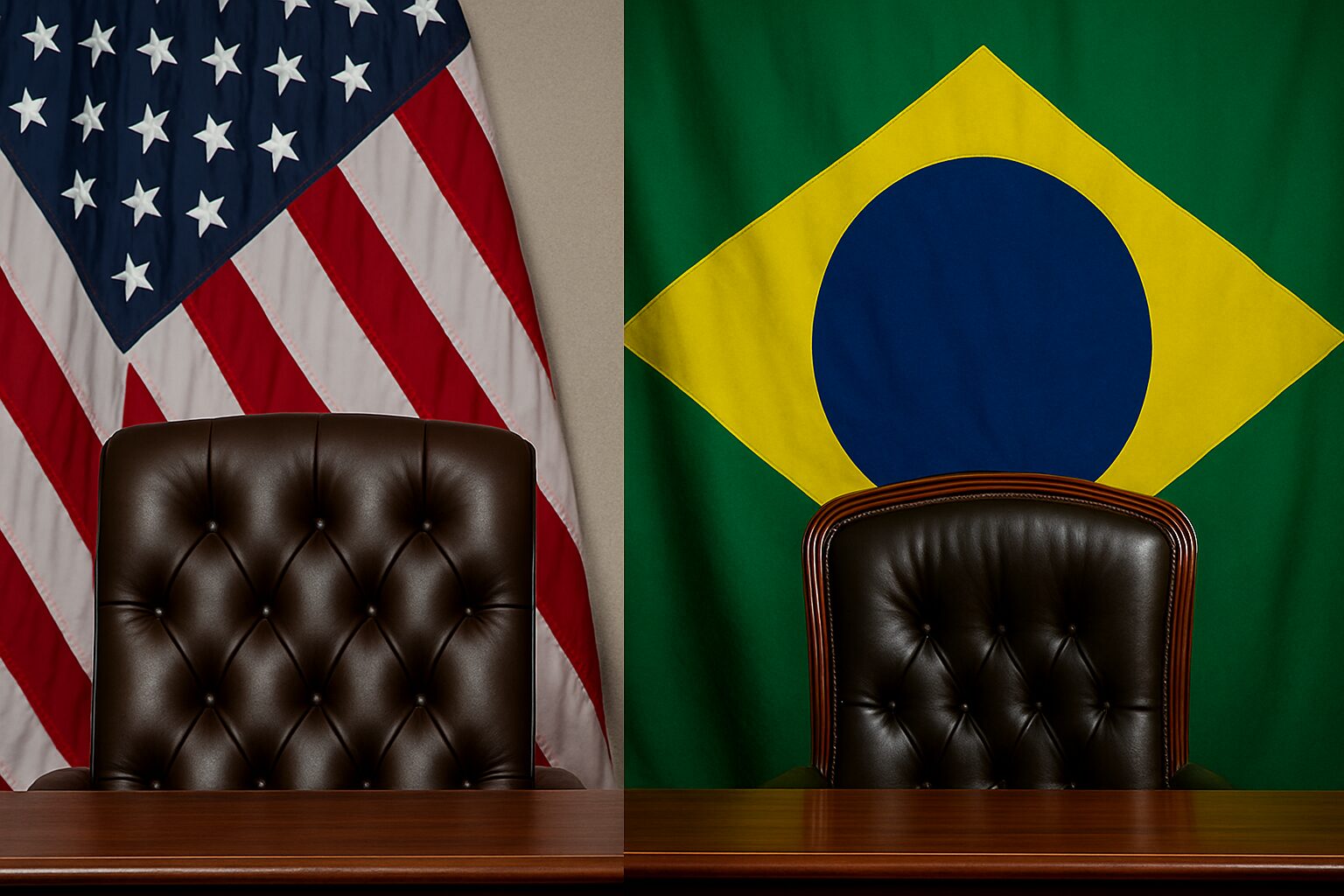

Salary, Official Residence, Transportation, and Extra Benefits: See What Differentiates the Earnings of the Presidents of Brazil and the United States in 2025
The position of president represents the top of the political hierarchy of a country. However, the salaries and benefits offered to those who hold this position vary from nation to nation. In this comparison, we show what the presidents of the United States and Brazil receive, based on official data updated until 2025.
How Much Does the President of the U.S. Earn
The salary of the U.S. President is set at US$ 400,000 (around R$ 2.3 million) per year since 2001. The amount is defined by law and does not receive automatic adjustments. In addition to the salary, the U.S. president receives allowances that assist in fulfilling the obligations of the position.
Among the main benefits, there is a budget of US$ 50,000, approximately R$ 283,000, for expenses directly related to the presidential function.
-
Entrepreneur Who Started at 13 Delivering Flyers by Bike in São Paulo Now Runs a 4,000 m² Culinary Complex in Brazil

-
In China, Workers Use VR Goggles and Body Sensors to Train Humanoid Robots for Tasks Like Folding Clothes and Stocking Stores
-
12-Year-Old Math Prodigy from Brazil Wins Two Gold Medals and Aims for Elite IMPA Tech
-
Magnet Weighing Over 360 Kilograms, Designed for Cardiac Surgery Machine and Valued at $100,000, Retrieves Sawed-Off Shotgun with Scratched Serial Number from Sea During Magnetic Fishing


There is also an amount of US$ 100,000 (approximately R$ 565,000) to cover official travel and an additional US$ 19,000 (R$ 107,534) allocated for entertainment events. All these resources are paid with public funds.
The U.S. president resides in the White House, the official residence where all expenses are covered by the government. In terms of transportation, the head of the U.S. Executive has access to Air Force One and Marine One helicopters, along with continuous security provided by the Secret Service.
After leaving office, former U.S. presidents continue to receive benefits. The lifetime pension is estimated at US$ 413,000 (R$ 2,337,400) per year. There is also security maintenance and other institutional supports even after the end of the term.
How Much Does the President of Brazil Earn
Here in Brazil, the salary of the president is set at R$ 46,366.19 per month, according to Legislative Decree No. 471/2022. This amount came into effect in February 2025. After deductions, the net monthly salary is around R$ 32,155.33. Thus, the estimated annual amount is about R$ 385,863.96.
The Brazilian president also has an official residence, the Palácio da Alvorada, with all maintenance costs covered by the government.
Other benefits include complete health insurance for the president and immediate family, official transportation with security, and access to corporate credit cards for work-related expenses, according to public budget rules.
Unlike the United States, Brazil does not guarantee by law a lifetime pension for former presidents. However, there is institutional structure, with security and advisors, that can be maintained after the end of the term, depending on administrative decisions.
Differences Between the Two Positions
The comparison highlights a significant contrast in values. In absolute numbers, the U.S. president receives, in dollars, more than five times the salary of the Brazilian president when converted to reais. Additionally, U.S. benefits are broader in terms of direct funds and guarantees after the term.
Even with the recent adjustment in Brazil, the net amount paid to the head of the Executive is still lower than that of developed nations. Nevertheless, the Brazilian president has access to a wide range of resources, including official residence, health insurance, transportation, and security.
The disparity in values reflects different public management models and government budgets. However, both countries ensure support for the exercise of the position and adequate conditions for the fulfillment of presidential functions.





Não se converte valores monetários, pois lá eles tem a realidade de custo deles, diferente da nossa, são mais valorizados em todas as áreas, setores e cargos ou profissões. Também produzem e consomem muito mais do que o Brasil. Por último, a gestão administrativa do governo, impostos e o tamanho do estado, do custo operacional da administração pública, em comparação com o Brasil, determina a capacidade da nação em transferir riqueza para os seus cidadãos.