Portuguese
  Spanish


In São Gonçalo, Rio de Janeiro, resident Lurdes Brasil transformed a degraded area into an ecomuseum: she gathered the women of the community, planted brazilwood and cedar in a battered fragment of the Atlantic Forest, and with female leadership, created the Atlantic Forest Ecomuseum, now a reference in environmental education.
Some people look at a devastated land and see only the end. Lurdes Brasil saw a beginning. When she arrived in the Água Mineral neighborhood in São Gonçalo, in the Metropolitan Region of Rio de Janeiro, in 1986, she found abandonment, violence, and degradation. What was a suffering piece of Atlantic Forest, threatened by garbage, fires, and hunting, turned in her and the community’s hands into one of the state’s most inspiring socio-environmental projects. This is how a resident transformed a degraded area into an ecomuseum.
The journey was told by CicloVivo and moves by the combination of stubbornness and care. Over decades, Lurdes Brasil not only planted trees but also planted belonging. With female leadership, she gathered the neighborhood women to recover the soil, restore the forest, and prove that environmental education can be born from the ground of a community, and not just from a classroom.
From abandoned area to living forest
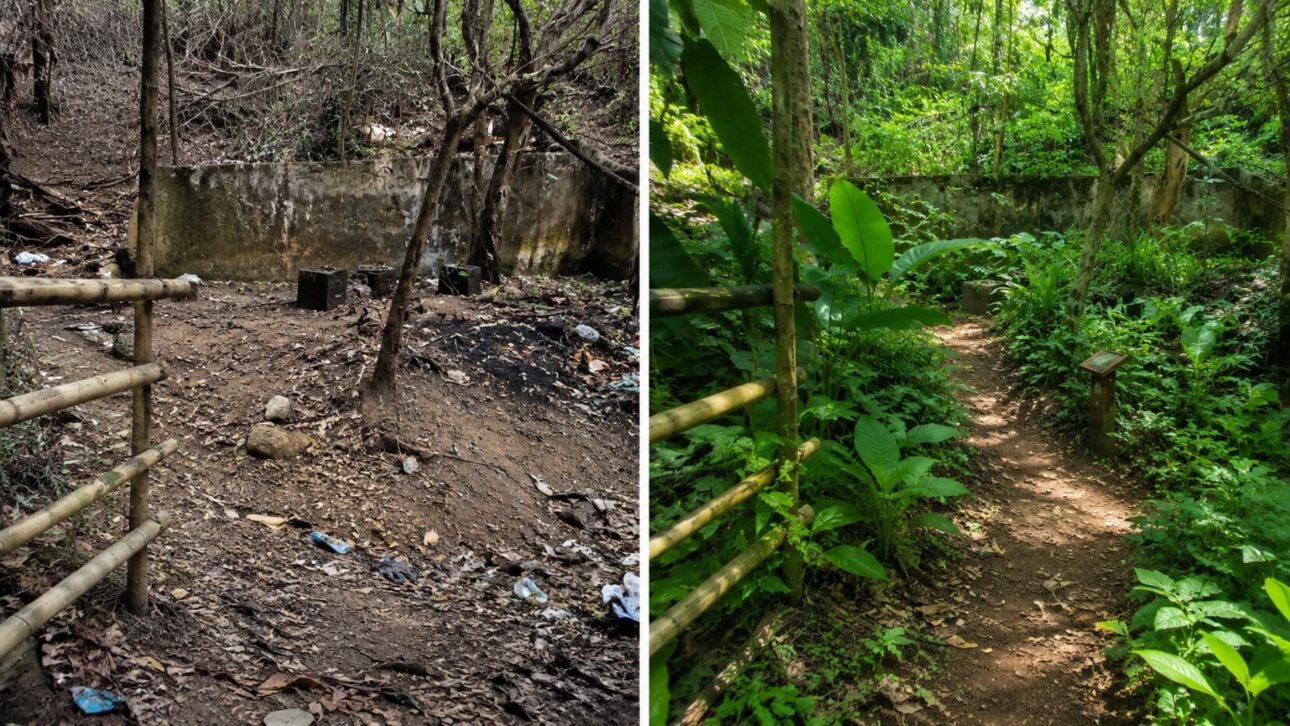
In the 1980s, the fragment of Atlantic Forest where Lurdes settled suffered from garbage dumping, fires, and hunting, in an environment marked by violence and neglect.
-
World’s First Lithium-Sulfur Battery Factory Launches, Promising to Double Range Without Relying on China

-
AI Data Centers Now Feature Built-In Nuclear Power Plants and Have Ordered Non-Existent Reactors
-
In India, thousands earn about $2.50 an hour cooking and cleaning with a phone strapped to their heads, as every move is recorded to train humanoid robots for jobs they might one day replace.

-
Nuclear Fusion Study Proposes Transforming Mercury into Gold Using Tokamak Neutrons, but Real-World Application Remains Uncertain



It was the kind of place most avoid, not the kind someone chooses to transform.
But it was exactly there that she decided to act.
The strength to start came from where few would expect: from the grandmothers.
Lurdes Brasil rescued ancestral knowledge of care and respect for the land learned from the older women in the family, and used this wisdom as the foundation of the work.
It wasn’t academic science, it was backyard knowledge applied with method.
This meeting between tradition and practical action set the tone for everything that followed.
Recovering the area was neither quick nor easy.
Transforming a degraded area into an ecomuseum required years of planting, vigilance against new fires, and, above all, convincing the neighborhood that it was worth it.
Gradually, the land stopped being a dumping ground and started becoming a forest again.
Nature responded, and so did the community.
The women who planted the forest
The heart of the project was always collective and feminine.
The big turning point came when Lurdes Brasil gathered the women of the community to undertake the reforestation together.
They were the ones who put their hands in the soil, planted seedlings, cared for the trees, and kept the dream alive when support was lacking.
The female leadership was not a detail of the story, it was its driving force.
This women’s protagonism gave the work a strength that goes beyond the environmental.
By getting the neighborhood to plant, Lurdes created a bond, a symbolic income of purpose, and local pride.
The forest returned, but so did the community’s self-esteem.
It is proof that environmental recovery and social transformation go hand in hand when there are people leading from within.
The choice of female leadership as a foundation also carries a bigger message.
In a country where women still fight for space in science and environmental management, seeing a reference project built by ordinary women from São Gonçalo is powerful.
They showed that caring for the Atlantic Forest is not the task of a distant specialist, but of those who love and inhabit the place.
Brazilwood, cedar, and islands of freshness
The species planted tell part of the story.
The reforestation focused on native and symbolic trees, such as brazilwood, which gives the country its name, and cedar, as well as fruit trees that attract animals and nourish the surrounding life.
Each seedling was a green brick in the reconstruction of the ecosystem, returning to the soil what neglect had taken away.
The ecological result is tangible and measurable.
The collective work restored the biodiversity and environmental services of the area, creating what researchers call “cooling islands,” patches of vegetation that lower the local temperature and improve the microclimate.
Where there was once heat, trash, and exposed soil, today there is shade, wildlife, and fresher air.
Planting brazilwood and cedar was, in practice, installing a natural air conditioner in the neighborhood.
This is the kind of impact that gives concrete meaning to the idea of transforming a degraded area into an ecomuseum.
It is not a decorative garden, but a functional forest that provides real services to those who live nearby.
The Atlantic Forest restored filters water, stabilizes slopes, shelters fauna, and cools the environment, all at the same time.
From the Genesis Project to the Atlantic Forest Ecomuseum
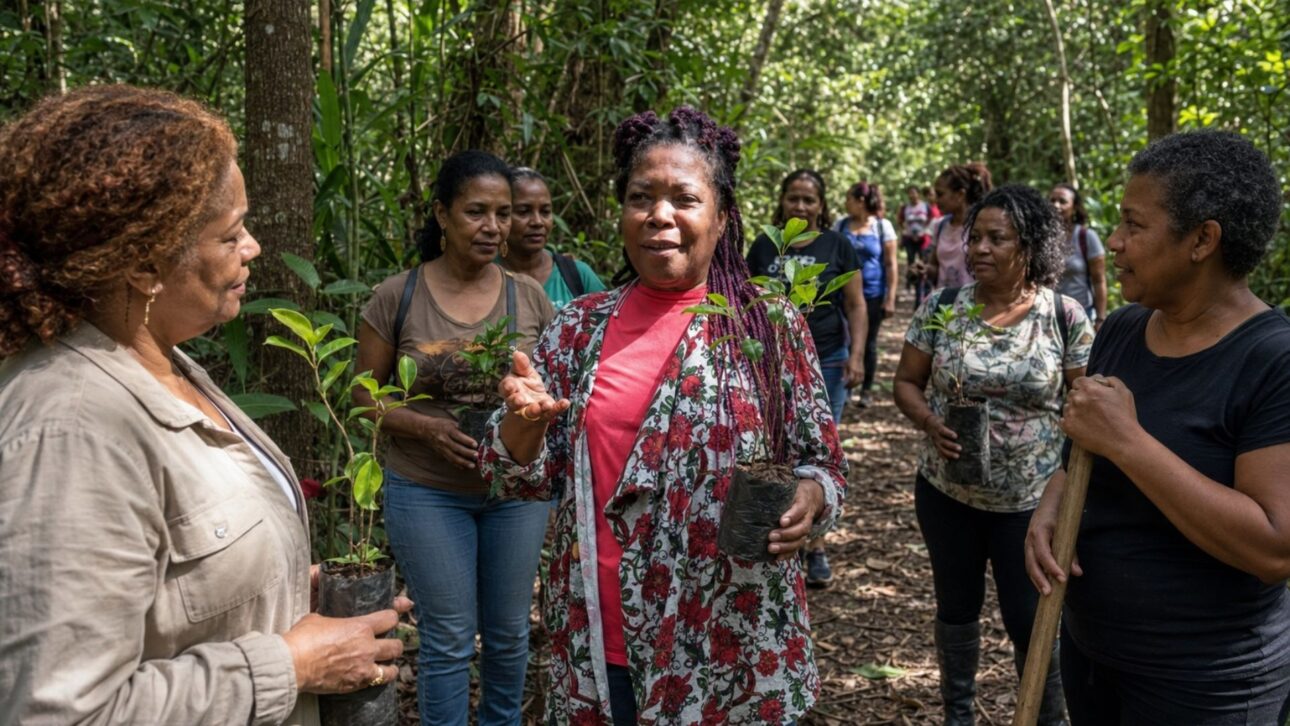
First came the Genesis Environmental Education Center, which consolidated the area as a space for learning and care.
The project became a reference to the point of being studied by universities, and the founder went further: Lurdes Brasil invested in her own education and became a doctor in Psychosociology of Communities and Social Ecology.
The most symbolic step came in 2024, when she founded the Atlantic Forest Ecomuseum.
The idea of an ecomuseum is powerful: instead of keeping objects behind glass, it preserves and displays a living territory, with its forest, its community, and its knowledge.
It is a museum you walk through, where the exhibits are trees and the visits become lessons.
Transforming a degraded area into an ecomuseum is, at its core, saying that place has history and future.
Today, this living field is studied by universities in Brazil and abroad, giving the work in São Gonçalo a reach that goes beyond the neighborhood’s boundaries.
The environmental education practiced there has ceased to be merely local and has become a case study.
What began as a reaction to neglect became a replicable model of environmental education based on experience.
The Strength of the Museum of Tomorrow and the Women’s Network
Lurdes’ journey gained even more momentum with a significant partnership.
She joined the Women in Science and Innovation program at the Museum of Tomorrow in Rio de Janeiro, which connects scientists from all over the country in a space for exchanging experiences, mentoring, and debates on innovation, entrepreneurship, and gender.
The initiative has already impacted over 500 researchers.
Being part of this network changed the scale of Lurdes Brasil‘s plans.
In contact with other women in science, she realized that the ecomuseum could be bigger than she imagined.
The female leadership that began in the backyard of São Gonçalo found resonance in a national community of scientists, strengthening both the project and the confidence of those leading it.
It was from there that she decided to expand the reach of the Atlantic Forest Ecomuseum.
The goal became to transform the area into a permanent research hub, aimed at training environmental leaders.
The seed planted in a degraded area of São Gonçalo began to aim far beyond the neighborhood.
Reference in environmental education and climate justice
The recognition of the work today is broad.
The Atlantic Forest Ecomuseum is cited as a reference in environmental education, climate justice, and female leadership, three fronts that intersect in Lurdes’ story.
It is uncommon for a community project to achieve this kind of prestige, and this says a lot about the consistency of what has been built.
The ambition of Lurdes Brasil is now international.
The dream is to transform the ecomuseum into a training center for environmental leaders in Latin America and Africa, spreading the method beyond Brazil.
“Our dream is to form a true international network of solutions for the forest and the climate,” she states.
It is the story of a degraded area into an ecomuseum wanting to become a school for the world.
This leap in ambition makes sense given the urgency of the topic.
The climate crisis and the devastation of the Atlantic Forest demand solutions that unite science, community, and care, exactly the tripod that sustains the project.
Taking environmental education from São Gonçalo to other countries is betting that the model born on the outskirts of Rio has something to teach.
Why stories like Lurdes’ matter
The context is important to gauge the achievement.
The Atlantic Forest is the most threatened biome in Brazil, reduced to a fraction of what it once was due to centuries of deforestation.
Every recovered fragment counts, and every person willing to replant makes a difference in a scenario of losses.
The work of Lurdes Brasil is a victory in a field full of defeats.
It is necessary, of course, to keep things in proportion.
A community ecomuseum alone does not solve the devastation of an entire biome, and it would be unfair to demand that of it.
The value of the project lies in being a model, a living proof that an organized community and female leadership can reverse degradation in a concrete piece of land.
Multiplied, this example becomes policy, becomes movement.
And that’s why the story sticks.
It has a face, it has a woman, it has forest returning, and it has numbers, from the degraded area that became a living museum to the more than 500 researchers connected by the network that propelled it.
In a world tired of bad environmental news, seeing a resident transform abandonment into a reference for environmental education is the kind of turnaround that renews hope.
And you, do you know any project like this, where a person or a community group transformed an abandoned land into something alive and useful for everyone? Share with us in the comments the story of environmental transformation that inspires you the most near where you live.