





 Portuguese
  English
  Spanish
  4 min of reading
  0 comments


Russia Unveils Nuclear Icebreaker With Thermal Capacity of 350 MW, the Most Powerful Ever Built
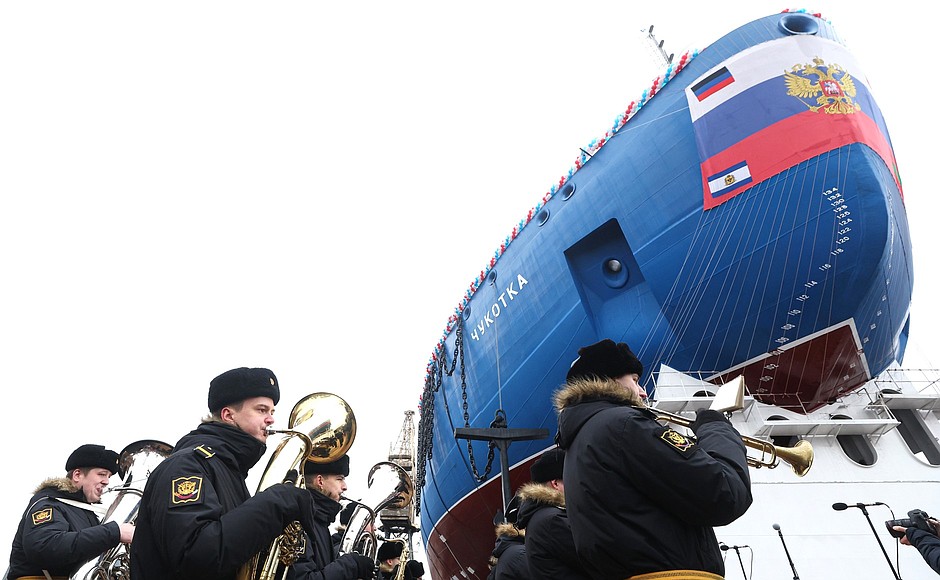
Recently, an impressive milestone was achieved in Russia with the launch of the nuclear icebreaker Chukotka, under the supervision of President Vladimir Putin. This vessel is part of the ambitious Project 22220, which aims to revolutionize traffic and the economy of the Northern Sea Route, an increasingly valuable maritime passage for global trade and transport, especially as climate change alters Arctic landscapes.
The Importance of the Northern Sea Route
The Arctic, once considered a hostile and isolated region, is becoming a focal point for strategic interest. With gradual melting, the Northern Sea Route emerges as a shorter alternative for trade between Europe and Asia, reducing travel time by up to 40% compared to traditional routes. However, this Arctic route still requires robust vessels to cope with thick ice, making nuclear icebreakers essential.
Putin emphasized this importance by stating that expanding the fleet of icebreakers is crucial for the development of the Arctic territories. According to him, “our plans to develop the Arctic territories and increase cargo traffic along the Northern Sea Route depend on the expansion of Russia’s icebreaker fleet.” This makes it clear that Russia is determined to dominate Arctic maritime traffic, potentially redefining global trade.
-
Around 7,000 jobs are expected to emerge in Navegantes with a new billion-dollar order from Petrobras, which closed R$ 11 billion in contracts to build four hybrid propulsion vessels equipped with underwater robots for the pre-salt layer at the Santa Catarina shipyard.

-
Uncrewed and over 1,000 tons, new warship targets future naval operations

-
Ship that departed from China on March 30 arrives in Salvador with 44 containers, 1,550 metal pieces, and over 800 tons of equipment, marking the beginning of the largest bridge over the sea in Latin America, a mega-project of 12.4 km that will use unprecedented technology on the continent.

-
While modern pilots respect a minimum altitude of 300 meters, a P-51 flew under the Eiffel Tower chasing a Bf 109 in 1944.


Project 22220: A Next-Generation Fleet
The Chukotka is the latest in a series of nuclear-powered ships launched by Russia in recent years. This fleet already includes three state-of-the-art vessels: the Arktika, the Sibir, and the Ural, all operating in the Northern Sea Route. Each of these ships is equipped to effectively navigate through Arctic ice, crossing layers up to 2.8 meters thick.
Soon, the Chukotka will be joined by the Yakutia, another icebreaker from the same series that is almost ready. These vessels represent a significant technological advancement, and the Kremlin views them as a crucial tool for consolidating Russia’s presence in the Arctic.
For Moscow, investing in icebreaker technology is not just a matter of logistics, but a strategy for sovereignty and economic development.
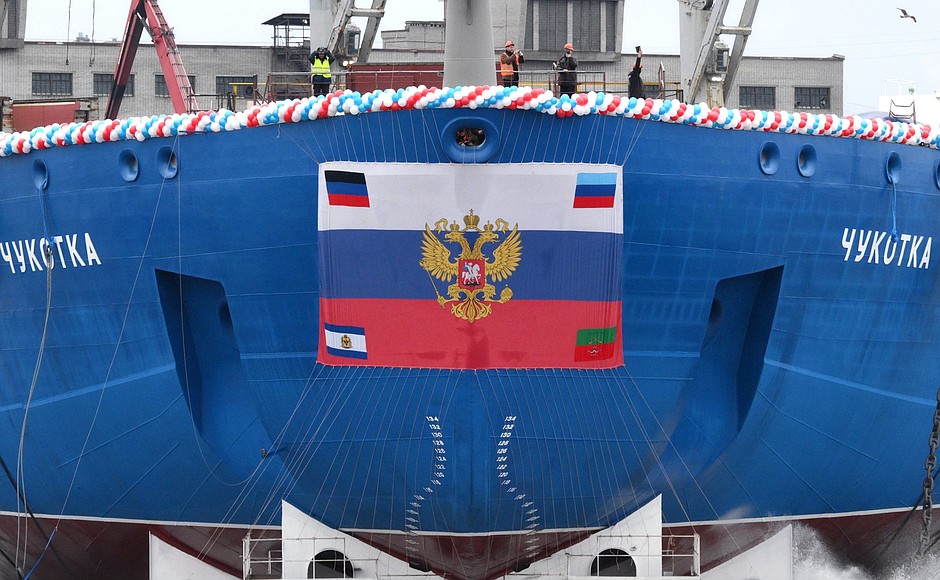
Chukotka: The Most Powerful Icebreaker
The Chukotka stands out not only for its size but also for its technology. Measuring 173 meters in length and 34 meters in width, this giant is powered by two RITM-200 nuclear reactors, each with a thermal capacity of 175 MW. These reactors are essential for ensuring the autonomy and power needed to navigate the frozen waters of the Arctic.
In addition, the Chukotka has a speed of 22 knots in open water and a displacement of 33.5 thousand tons. Its crew of 54 people is supported by a robust and efficient infrastructure, capable of withstanding the harsh Arctic conditions. The size and power of this vessel make it the largest and most powerful icebreaker in the world, reinforcing Russia’s ability to operate in the Arctic and expand its maritime boundaries.
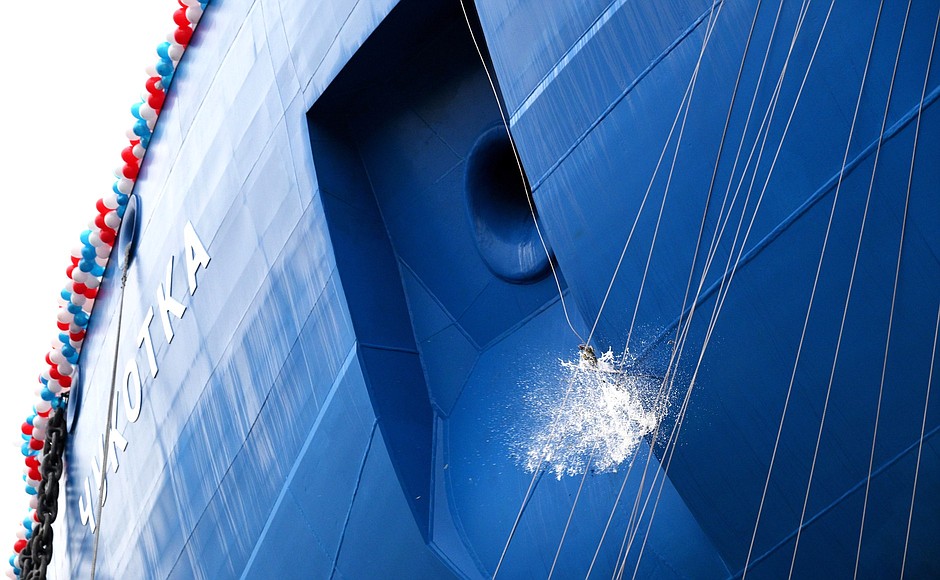
A Pricing Model to Attract International Partners
In addition to building a powerful fleet, Putin emphasized the need to create a more accessible pricing model to attract more companies to the Northern Sea Route. As the route becomes more feasible, Russian and foreign companies have shown increasing interest in using this passage for cargo transport.
Putin suggested that a special meeting be held to discuss ways to make cargo transit on the Northern Sea Route more competitive. This effort aims to attract new international partners and investors, who may see the Northern Sea Route as an economically advantageous alternative for global trade.
The Russian Vision for the Future of the Arctic
Russia plans to expand its fleet of icebreakers and heavy cargo ships in the coming years, with a backlog of orders that already includes 26 large-tonnage vessels.
The Zvezda Shipyard, located in the Far East, is responsible for constructing cargo ships such as oil tankers and gas tankers, essential to meet the demand of the Northern Sea Route.
In addition to the 22220 series icebreakers, Zvezda is building the “Leader,” a next-generation nuclear icebreaker designed to be the most powerful of all. This vessel represents the culmination of a Russian scientific and industrial effort, based on local technologies and innovative solutions that will allow Russia to strengthen its economy and expand its influence in the icy waters of the Arctic.
A Strategy for Nuclear Icebreaker Development
Russian investment in the Northern Sea Route and in nuclear icebreakers is a strategy that goes beyond immediate profit. It is a demonstration of sovereignty, an affirmation that the country has the capability and willingness to invest in extreme regions to expand its influence and strengthen its economy.
By prioritizing the construction of vessels with advanced technologies and domestic manufacturing, Moscow seeks to reduce its dependence on foreign technologies, especially at a time when international tensions are running high.
For the world, the expansion of Russia’s nuclear icebreaker fleet may signal a new era for global trade. As the Arctic becomes more accessible, the Northern Sea Route could transform maritime logistics and provide a viable alternative for companies looking to reduce costs and travel times.
Meanwhile, the Chukotka and its “brothers” from the 22220 series represent more than vessels: they symbolize Russia’s bet on the future of the Arctic. As Putin made clear, much remains to be done, and Russia is determined to lead this new path northward.




-

1 person reacted to this.