Portuguese
  Spanish


Despite Advances In Drilling, New Petroleum Reserve Discoveries Drop 62% In A Decade And Put The Oil And Gas Sector In Front Of A Global Strategic Alert.
A recent survey from Westwood Energy reveals that, although drilling efficiency has increased in recent years, the oil and gas sector faces a declining scenario in the discovery of large volumes of hydrocarbons. From 2020 to 2024, the volume of resources found in new petroleum reserves dropped 62% compared to the period from 2010 to 2014, even with technological advancements and higher commercial success rates.
Oil And Gas Sector Has Fewer Wells Drilled, More Efficiency — But Lower Volume Discovered
According to the research, high-impact drilling activity maintained an average of 77 wells per year between 2020 and 2024, with a variation of less than 15%, despite the instability in oil prices and uncertainties related to global demand. In 2024, 75 high-impact wells were drilled, with 19 potentially commercial discoveries totaling 5.2 billion barrels of oil equivalent — a success rate of 25%.
Up To 85% Of Petrobras’s Future Oil Could Turn Into Losses With Declining Global Demand, Study Says
ARTICLE CONTINUES BELOWSee also
OPEC+ Boosts Oil Supply by 188,000 Barrels per Day in July 2026, Leading to Price Drop from $112 to $89 per Barrel in Under Two Months

TotalEnergies Signs 20-Year Deal to Purchase 2 Million Tons of LNG from Alaska, Boosting Project Viability
Turkey Deploys Çağrı Bey Drilling Ship to Explore New Oil Frontier Off Somalia’s Coast
Golden Pass LNG Ships First Liquefied Gas Cargo from the U.S., Completing $10 Billion QatarEnergy and ExxonMobil Investment


The performance is considered efficient, but the average size of discovered reserves has shrunk. Between 2010 and 2014, the average was 545 million barrels per discovery; between 2020 and 2024, it fell to 320 million. Discoveries over 1 billion barrels have become rare, highlighting the scarcity of large exploratory opportunities.
State-Owned Companies Increase Their Share Amid The Retraction Of Supermajors
Westwood points to changes in the profile of the companies involved. In 2024, state-owned companies represented 51% of participation in high-impact wells and accounted for 67% of discovered resources. Meanwhile, the so-called supermajors — large multinational companies in the sector — registered modest performance, with a net success rate of only 5%, achieving a single commercial discovery among 29 explored wells.
Since 2015, the total number of companies engaged in this type of exploration has halved, indicating a consolidation of the sector around larger public and private players with greater investment capacity and risk appetite.
Drilling Advances To Deeper Waters With Limited Results
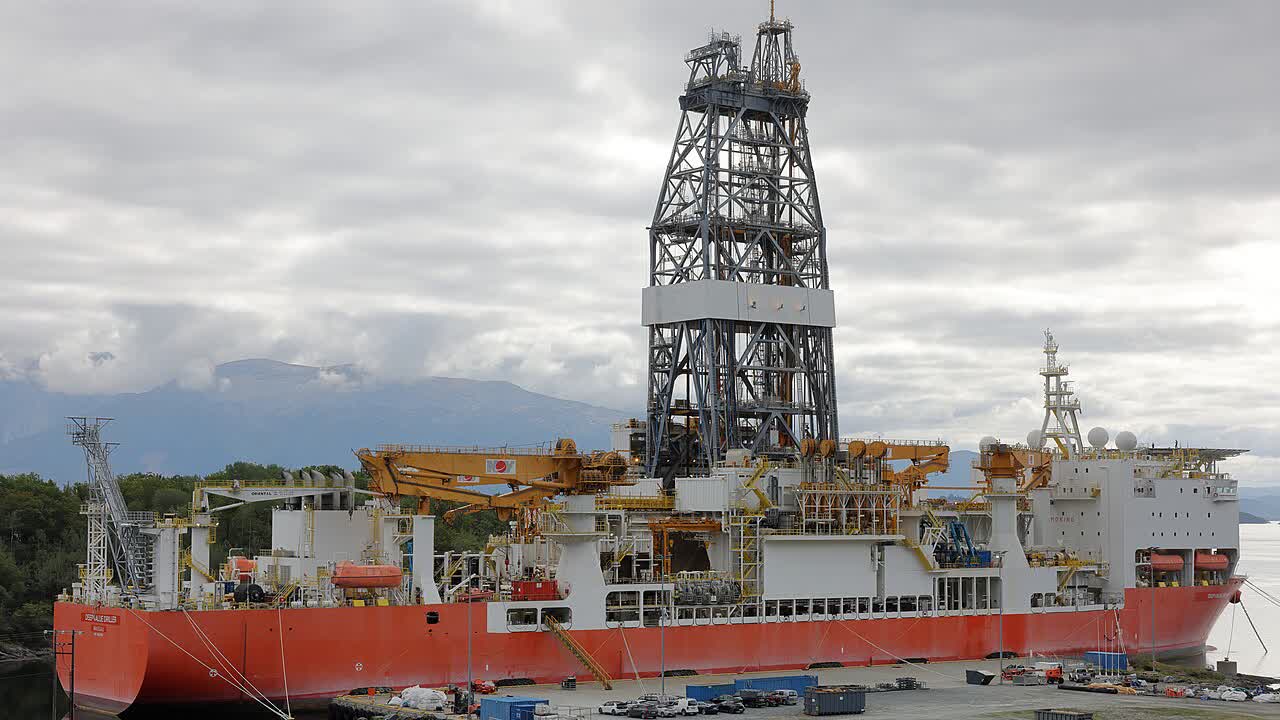
Another highlight of the report is the expansion of activities into ultra-deep waters. From 2020 to 2024, 9% of wells were drilled in water depths above 2,500 meters, compared to 6% in the previous period. However, the success rate in these locations was only 3%, with just one success among 35 drilled wells.
The data indicate possible failures in the geological models used and raise doubts about the viability of drilling in such challenging environments, even with advanced technologies. The drop in discoveries in these contexts pressures the sector to revise its exploratory approaches.
Decline In Global Hydrocarbon Production Replacement Worries Oil And Gas Sector
Despite the stability in the number of high-impact wells drilled, the contribution of these new petroleum reserves to replenish conventional oil and gas production has dropped from 33% to just 11% at the global level. This means that the pace of discoveries is falling far short of production expansion, creating a potential mismatch between future supply and demand if new large-scale petroleum reserves are not identified.
This trend reinforces concerns that large-scale exploratory opportunities are becoming rarer and less accessible at the same time that companies are adopting a strategy of quality over quantity.
Expectation For 2025 Is Stability In Activities
The projection for 2025 indicates the completion of approximately 75 high-impact wells, a number consistent with the average of recent years. Westwood points out that the sector is operating at half the scale observed in the previous decade, but with greater focus, efficiency, and dependence on the large oil companies and state-owned enterprises.
Jamie Collard, exploration research manager at Westwood Energy, emphasizes that reversing the downward trend in discoveries will require boldness: “It will be necessary to explore new basins and geological concepts, which will demand creativity, new technologies, and a willingness to take risks,” he stated.
Sector Must Balance Innovation And Caution Amid Uncertainties
The report suggests that balancing technological innovation, business strategy, and risk management will be crucial in the coming years. The growing demand for energy security needs to be reconciled with environmental and economic challenges, as well as changes in global market behavior.
The drop in high-volume discoveries raises alarms about the future of the sector, even at a time of greater drilling efficiency. The path to maintaining the viability of oil and gas production may pass through new exploration models, international collaboration, and greater integration between geological research and infrastructure investments.