Portuguese
  Spanish


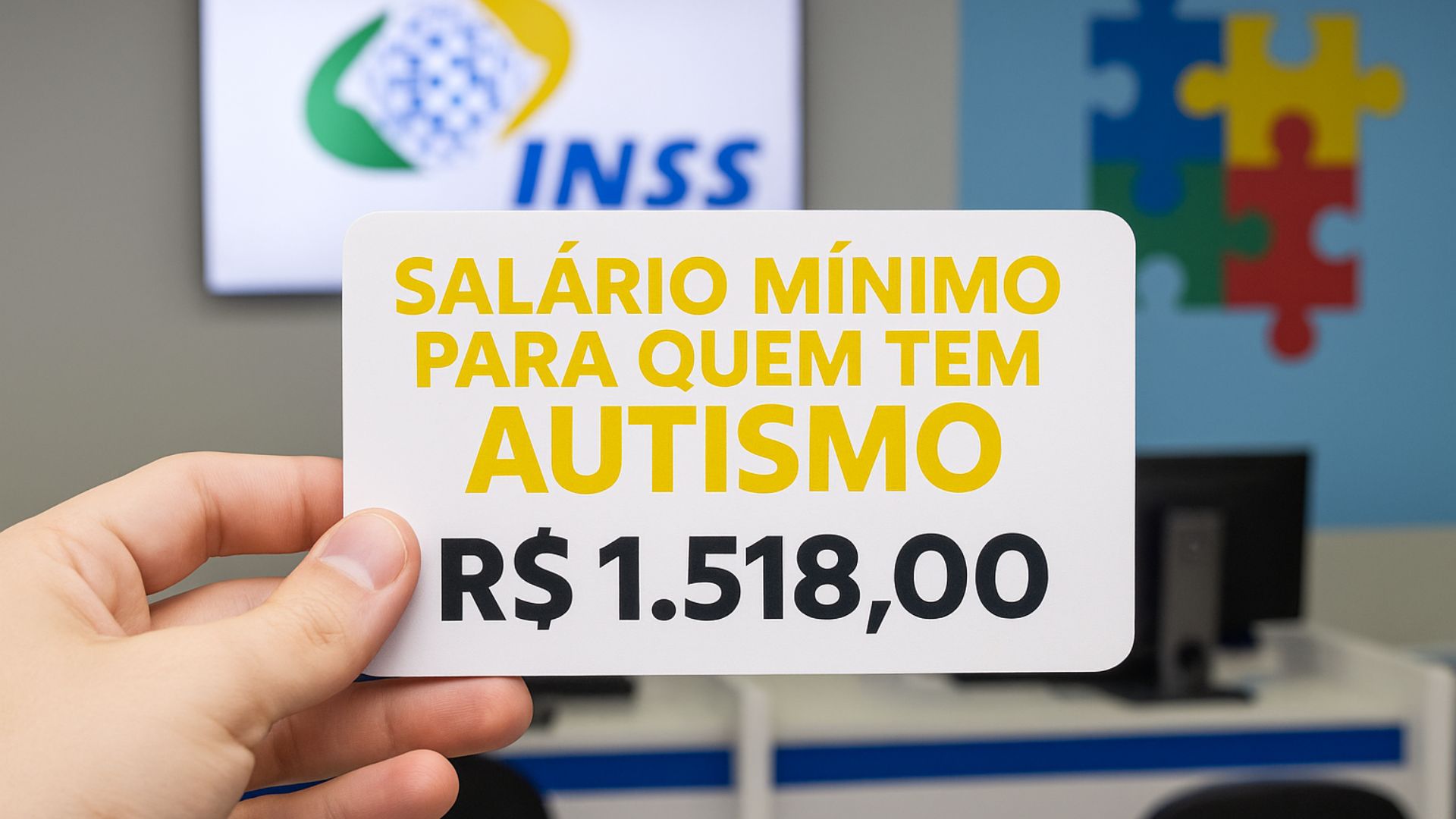

Justice Recognizes Rights of People with Autism and ADHD to INSS Assistance Benefits. Understand Who Can Apply, the Updated Criteria in 2025, the Required Documents, and How the Medical and Social Analysis of BPC Works.
Parents and guardians of children with autism spectrum disorder (ASD) or attention deficit hyperactivity disorder (ADHD) may be entitled to the Continuous Cash Benefit (BPC), paid by the INSS, according to judicial rulings and the rules of the Organic Law of Social Assistance (LOAS).
The amount is equivalent to one minimum wage per month — R$ 1,518 in 2025 — and does not include the 13th salary or death pension.
What is BPC/LOAS and Who Can Apply
BPC is an assistance benefit, provided for in the Federal Constitution and regulated by the Organic Law of Social Assistance (LOAS).
-
Seniors Over 60 Can Travel for Free Across Brazil: Elderly Statute Ensures Two Free Bus Seats and 50% Discount When Full for Low-Income Passengers

-
Detran RJ starts requiring a toxicological test for those obtaining their first driver’s license in the car and motorcycle category starting June 29; see who will be affected.

-
Florida takes TikTok to court and accuses the Chinese giant ByteDance of ignoring the law that bars minors under 14, while parents and authorities demand more protection for children on social networks.
-
Chamber approves constitutional amendment reducing the age of criminal responsibility from 18 to 16 years; what now?



It is intended for individuals aged 65 and older and people with disabilities of any age who can prove low family income.
There is no need for prior contributions to the INSS. The aim is to guarantee a minimum level of dignity for people in situations of social vulnerability.
In the case of children and adolescents, the analysis considers the existence of a long-term impairment and the economic conditions of the family group.
Do ASD and ADHD Entitle to the Benefit?
According to Law No. 12.764/2012, individuals diagnosed with autism are considered people with disabilities for all legal purposes.
Thus, children and adolescents with ASD may qualify for BPC if the disorder causes functional limitations and barriers to social or school interaction, as demonstrated in medical and educational reports.
In the case of ADHD, the disorder is not automatically recognized as a disability.
However, according to the INSS and court decisions, there is a possibility of granting the benefit if it is proven that the condition causes significant and long-lasting impairments that compromise the child’s development and autonomy, especially when there are associated comorbidities.
2025 Criteria: Updates and Changes in Family Income
In 2025, the official criterion of the INSS for granting BPC remains at ¼ of the minimum wage per capita, which represents R$ 379.50 per person.
However, court decisions have recognized that this amount can be increased to up to ½ of the minimum wage, provided that social vulnerability is demonstrated.
This flexibility follows precedents from the Federal Supreme Court (STF), which removed the limit of ¼ as an absolute rule.
The INSS also began to consider documented expenses related to the disability for the purpose of calculating family income.
Among these are expenses with continuous medications, therapies, diapers, special diets, and transportation for treatment, provided they are not funded by SUS.
These deductions may allow the inclusion of families that, at first glance, would be outside the income criteria.
Social Security Law specialists state that these changes bring the analysis closer to the reality of families that incur high fixed expenses for the child’s care.
How the INSS Evaluates Cases
The process of analyzing BPC involves two stages: medical examination and social assessment.
In the first, the INSS expert reviews reports, examinations, and medical records, as well as observing how the disorder affects the child’s daily life.
Factors such as autonomy, communication, learning, and social interaction are examined.
The social assessment is conducted by a social worker, who checks the housing conditions, income, access to public services, and family support network.
According to the INSS, the intersection of the two evaluations determines whether the child meets the legal criteria for disability and vulnerability.
Since 2025, the agency has also begun to waive medical reassessments for individuals with permanent impairments that have already been proven, a measure that, according to the Ministry of Development and Social Assistance, seeks to avoid unnecessary summons.
Required Documentation to Request the Benefit
To apply for BPC, it is necessary to gather the personal documents of the child and family members, as well as the updated Single Registry (CadÚnico).
The INSS also requires recent medical reports with the corresponding ICD (such as F84.0 for ASD and F90.0 for ADHD) and detailed reports on functional limitations.
Reports from health and education professionals — such as pediatric neurologists, psychiatrists, speech therapists, psychologists, and occupational therapists — help demonstrate the impact of the condition on the child’s routine.
School evaluations can also be included.
Expenses for treatment, medications, and transportation must be proven by invoices, medical prescriptions, and payment receipts, as they can be deducted from family income, according to the updated rules.
Step by Step of the Request and Possibility of Appeal
The application can be made through the Meu INSS portal or app, via Central 135, or in person, by appointment.
After submitting the documents, medical examination and social assessment appointments are scheduled.
If the benefit is denied due to income exceeding the limit, the applicant can file an administrative appeal within the INSS, attaching new evidence of medical and treatment expenses.
If the denial persists, there is the possibility of turning to the judiciary, where the analysis tends to be broader and can take into account the real vulnerability of the family.
Experts point out that judicial decisions have recognized the right to BPC even when income slightly exceeds the legal limit, provided that the situation of social fragility is demonstrated by reports and evidence of expenses.
Points of Attention for Families
To increase the chances of approval, it is essential to keep the CadÚnico updated and present descriptive medical reports, detailing how the disorder interferes in the child’s daily life.
It is also advisable to keep all proof of monthly health and treatment expenses.
The Identification Card for Individuals with Autism Spectrum Disorder (CIPTEA) is not mandatory but can facilitate the recognition of the condition in public and private services.
The BPC remains an assistance benefit, with no social security nature, and aims to ensure minimum living conditions for people with disabilities and low-income families.