






 Portuguese
  Spanish
 4 min of reading
  2 comments





New Railway Will Connect Porto Alegre to Gramado in One Hour, with Billion-Dollar Investment, Serving 19 Cities and Stations in Strategic Points. The Project Marks the Return of Passenger Rail Transport in Brazil and Promises Regional Impact.
The government of Rio Grande do Sul authorized on August 7 the concession of a new passenger railway, marking Brazil’s return to medium-distance rail transport on a large scale.
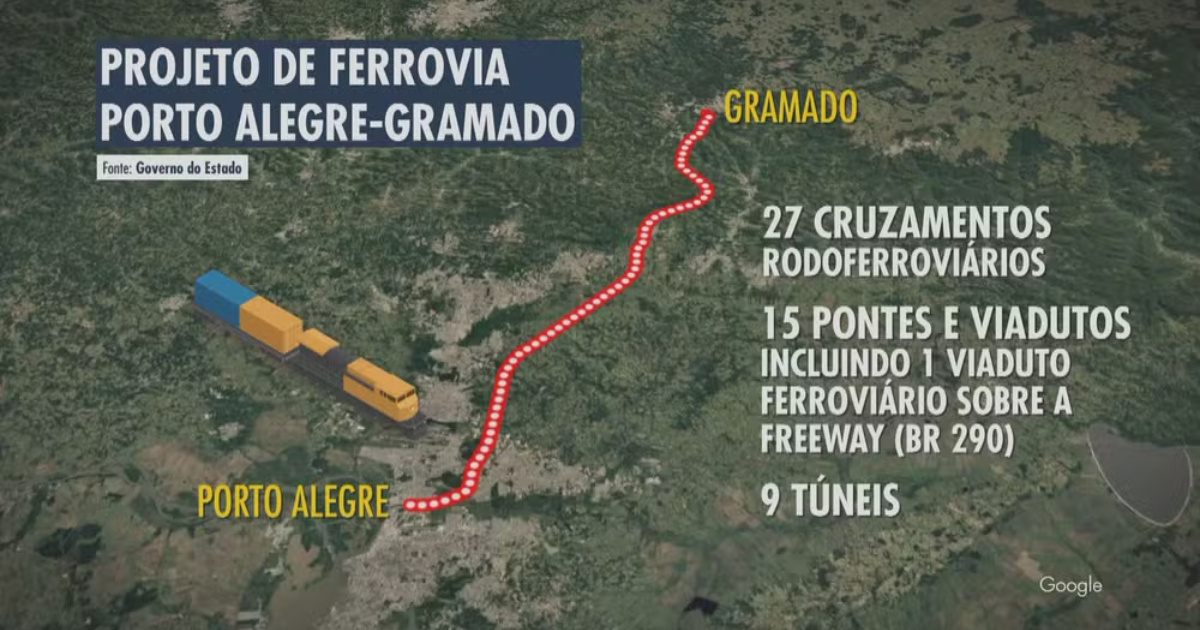
The project, considered one of the largest recent investments in railway infrastructure in the country, provides for a direct connection between Porto Alegre and Gramado in just one hour of travel.
With an estimated investment of R$ 4.5 billion, the new railway is expected to operate on two tracks, allowing simultaneous circulation in both directions.
-
Railway returns to prominence in Brazil after STF approval: a R$ 25.2 billion project promises to save R$ 9 billion in freight, transport 50 million tons per year, and transform Sinop into a logistics powerhouse for agribusiness.

-
Retired trains leave European tracks and become tons of steel, aluminum, and copper in dismantling yards where recycling exceeds 90%, but batteries, composites, and electronics create a new frontier of railway waste.

-
The strategic railway of Santa Catarina will receive R$ 608 million, will undergo historic modernization, and could transform logistics between Mafra and the Port of São Francisco do Sul.
-
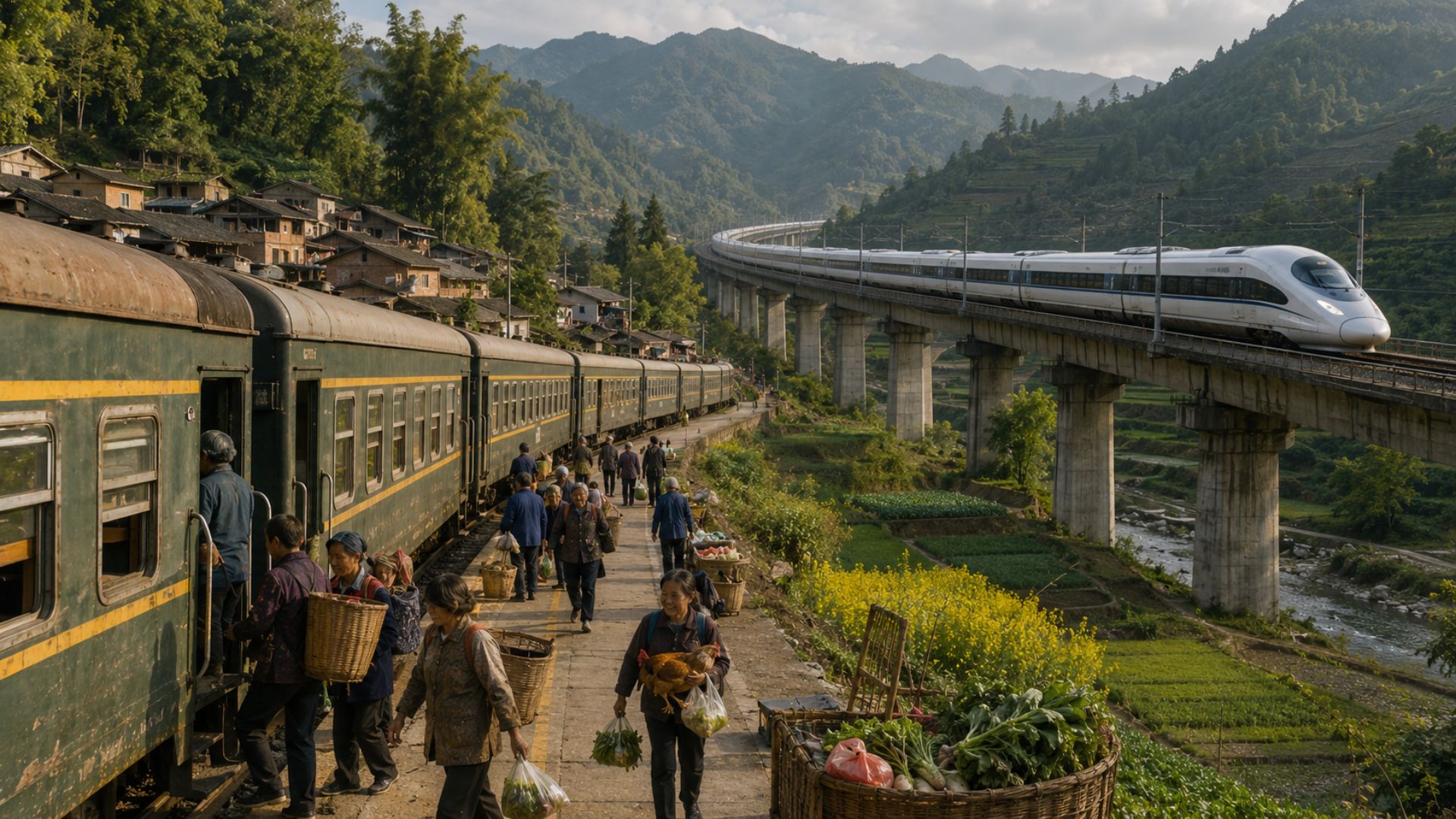
While showcasing bullet trains traveling at over 300 km/h, China maintains about 81 slow train lines that travel at 40 km/h, charge less than R$ 2 for a ticket, and cross remote villages carrying residents, students, and even chickens and vegetables to the market.


In total, 19 municipalities in Rio Grande do Sul will be directly served, with an influence area that reaches 22 cities, according to information released by the state government.
The concession model will be valid for 99 years, during which the private sector will be responsible for the management, operation, and maintenance of the service.
Strategic Stations and Rail Integration
The route will have strategic points for boarding and alighting.
In Porto Alegre, one of the stations will be located near the Salgado Filho International Airport, expanding access to passengers coming from different regions of Brazil and abroad.
In Gramado, the railway terminal will be built on Avenida das Hortênsias, a corridor that concentrates a significant part of the hotel, restaurant, and tourist attraction offerings in Serra Gaúcha.
The choice of locations for the stations aims to facilitate visitor mobility and reduce dependence on cars or buses.
The new mode will provide an alternative to heavy traffic, especially during holidays and peak season, times when demand for Gramado often exceeds the capacity of conventional roads.
Impact on Tourism and Regional Development
Gramado has established itself as one of Brazil’s main tourist hubs, attracting millions of visitors annually.
The municipality is recognized for its architecture influenced by European traditions, typical cuisine from cold regions, and a wide range of events.
Among the highlights is Natal Luz, held from late October to mid-January, featuring cultural and artistic programs that stimulate the local and regional economy.
In addition to seasonal festivals, attractions such as theme parks, ice skating rinks, and indoor skiing — like Snowland — as well as wineries and water parks help diversify tourist flow throughout the year.
The implementation of the railway also aims to better distribute visitation among different municipalities in Serra Gaúcha, promoting routes that pass through Canela, a neighboring city of Gramado and part of the so-called Região das Hortênsias, and Bento Gonçalves, a reference for Vale dos Vinhedos.
According to the state government, the project addresses a growing demand for modern and efficient transport infrastructure.
The expectation is that the new line will provide economic and social benefits, from the generation of direct jobs in construction to the strengthening of the tourism services chain.
The concession notice also includes commitments to accessibility and sustainability, although operational details regarding fares, schedules, and service capacity are still in the process of being defined.
Execution Timeline and Details of the Railway Project
The official estimate indicates that the construction of the railway between Porto Alegre and Gramado will be completed and operational within seven years from the signing of the concession contract.
The detailed schedule includes environmental licensing stages, preparation of executive projects, expropriations, and execution of civil works and systems.
The government of Rio Grande do Sul emphasizes that all phases must be monitored by regulatory agencies and by civil society, in order to ensure transparency and compliance with safety and efficiency standards.
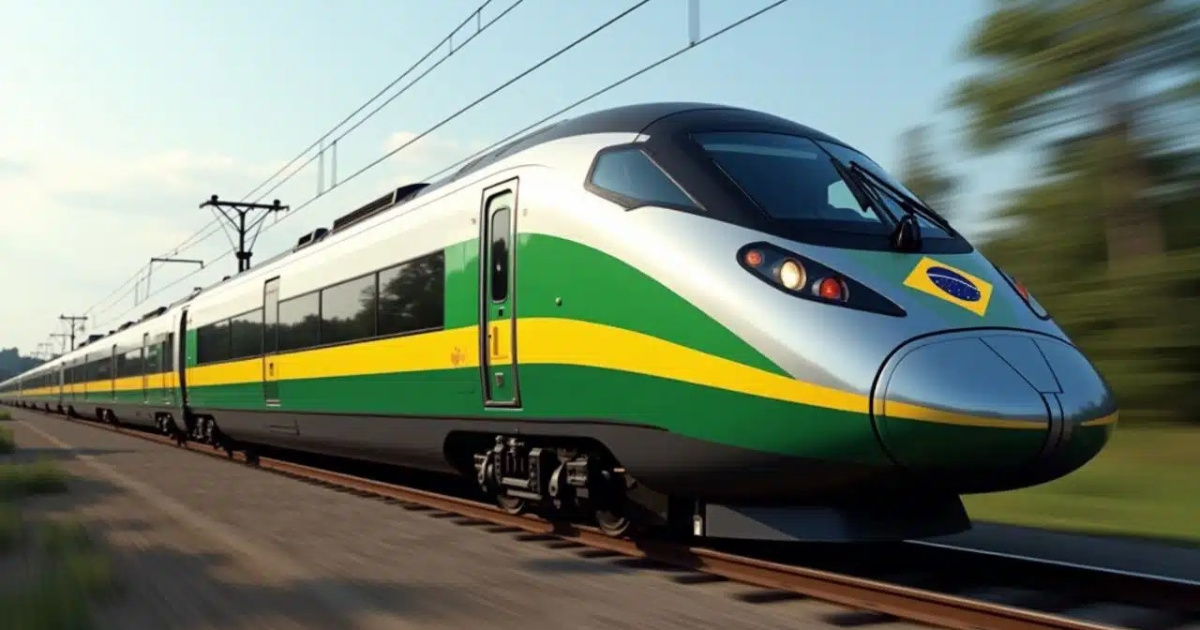
There is still no official confirmation on the technology of the trains that will be used, but there is an expectation that the mode will be equipped with modern systems for comfort, safety, and accessibility.
Railway sector experts point out that the 99-year concession model — considered unusual for projects of this scale — has been designed to attract national and international investors willing to invest in long-lasting infrastructure with high potential demand.
Expansion, Integration, and Future of Railways in Brazil
The Porto Alegre-Gramado railway project is viewed as a strategic step for the resumption of investments in rail transport in Brazil, which in recent decades has been virtually restricted to the movement of cargo.
If the model proves viable and sustainable, state and federal authorities do not rule out the possibility of future expansions or integration with other tourist and urban routes in the southern part of the country.
As the proposal progresses, part of the population awaits clarifications on fares, environmental impacts, and the actual capacity of the train to alleviate congestion and make Serra Gaúcha more accessible.
Discussions about the benefits and challenges of the project are expected to mark the coming years in the debate on regional mobility and sustainable development.
Amid the enthusiasm for the return of passenger trains and optimism regarding the tourism potential, the question remains: will the new railway concession model be able to transform transport in Southern Brazil and inspire the modernization of other national tourist corridors?






As rodovias brasileiras são uma carnificina. Isso precisa acabar. Está dando 😱 viajar. Trens não transportam cargas até o domicílio.
Finally! Brazil makes it into the 20th century.