






 Portuguese
  Spanish





Understand How the Theory About Ratanabá, A Supposed Lost City in the Amazon, Went Viral on Social Media and Why Scientists Classify It as Dangerous Fake News.
In recent years, a fantastic theory has taken over Brazilian social media: the existence of Ratanabá, a supposed lost city in the Amazon that would be the “capital of the world,” built by an advanced civilization 450 million years ago. The narrative, fueled by viral videos and posts, has made a strong resurgence, often ignored by mainstream media at first, but gaining traction in messaging groups and online forums.
However, for the scientific community, the story of Ratanabá is nothing more than an elaborate conspiracy theory with no archaeological, geological, or historical basis. Experts warn that, behind the fascination with a lost city in the Amazon, there is a dangerous smokescreen that diverts attention from real and urgent problems in the region, such as illegal deforestation and violence against indigenous peoples.
What Does the Theory of Ratanabá Say?
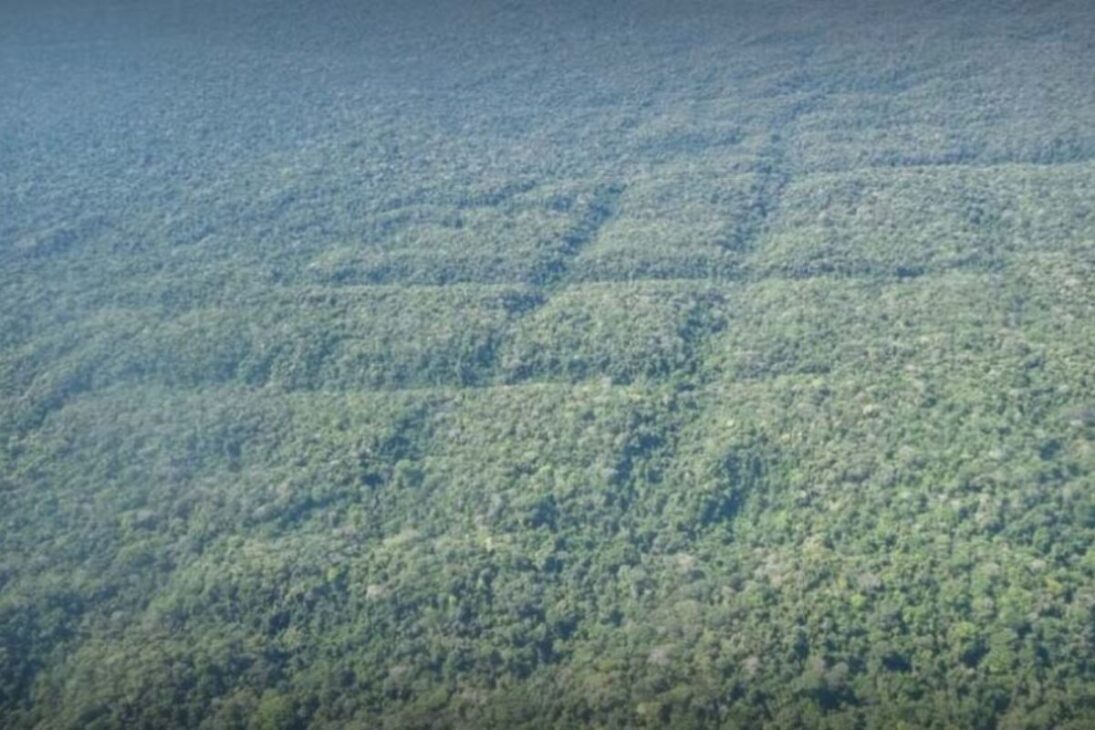
Promoted mainly by the pseudoscientific organization Dakila Pesquisas, led by Urandir Fernandes de Oliveira, the theory claims that Ratanabá would be an underground metropolis, located on the border between Mato Grosso, Amazonas, and Pará. Founded by the “Muril civilization,” the first on Earth, the city would have advanced technologies, tunnels connecting to other parts of the world, and untold riches.
-
Raised in a Family of 16, Mechanic’s Daughter Overcomes Challenges to Become a Leading Female Figure in Brazil’s Automotive Industry

-
Brazilian Sisters, Aged 103, 104, and 109, Set Guinness World Record as Oldest Sibling Trio, Totaling 316 Years; Attract Scientific Interest for Longevity DNA Study
-
14-Year-Old Australian Entrepreneur Goes Viral After Y Combinator Rejection, Runs Two Startups Including an AI Company After Sock Business Failure

-
100-Year-Old Brazilian Sets World Record by Swimming 50 Meters in 1 Minute and 9 Seconds, Inspired by Tarzan Films


Proponents of the theory often use satellite images and rock formations as “evidence,” but no concrete proof has ever been presented.
Science Debunks: Why Ratanabá is Impossible?
Scientists and researchers from renowned institutions, such as USP and the National Institute of Amazonian Research (INPA), unanimously refute the theory.
Geological and Biological Impossibility: The date of 450 million years is one of the most absurd points. During this period, known as the Ordovician, life on Earth was primitive, limited to marine invertebrates. There were no humans, dinosaurs, or even the Amazon rainforest as we know it.
The Truth About the Geoglyphs: The supposed “ruins” shown by the theorists are, in fact, geoglyphs, large drawings made on the ground by ancient indigenous civilizations. Archaeologist Eduardo Góes Neves from USP explains that these structures, found mainly in Acre, are about 2,000 to 3,000 years old, not millions.
The Danger Behind the Myth
For the Brazilian public, the theory of Ratanabá is more than just a simple fanciful story. It is dangerous because:
It Diverts Attention from Real Problems: While discussing an imaginary city, deforestation, illegal mining, and violence in the Amazon continue to advance.
It Undervalues Indigenous History: The theory erases the rich history of indigenous peoples, attributing their constructions to aliens or mythical civilizations.
It Encourages Predatory Exploitation: The promise of hidden treasures can be used as justification for new invasions and deforestation in the forest.
The true wealth of the Amazon is not in an underground city of gold, but in its biodiversity, its culture, and the peoples who have inhabited and protected it for millennia.
And you, what do you think? Why do theories like that of the lost city in the Amazon gain so much strength on social media? Share your opinion in the comments.


