






 Portuguese
  Spanish
  5 min of reading
  0 comments


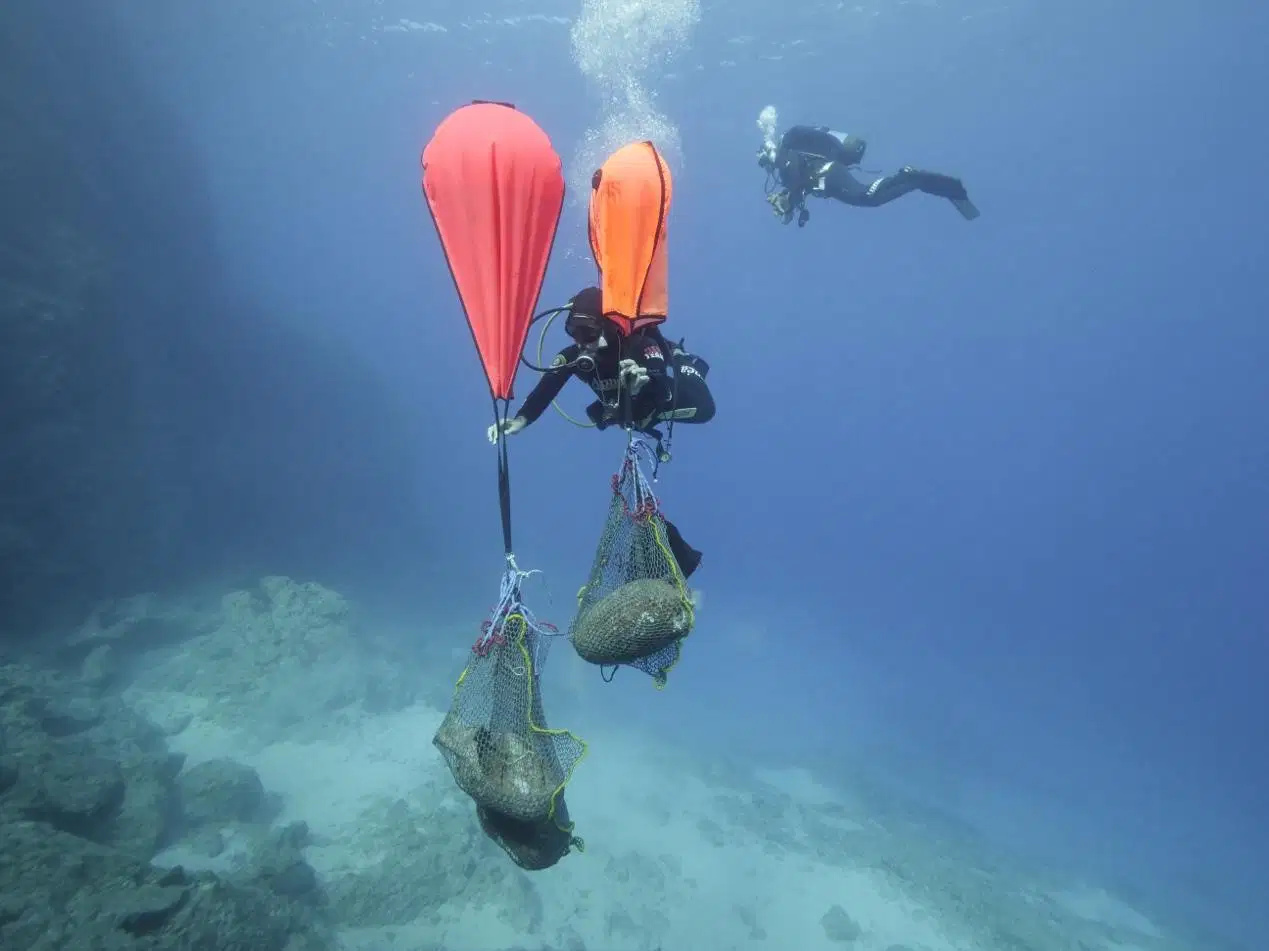
Underwater research in Greece found five shipwrecks, amphorae, ancient ports, and more than 20 Byzantine anchors in the Aegean Sea.
For decades, the waters between the Greek islands of Karpathos and Saria were seen only as part of an ancient maritime route of the Aegean Sea. But an international archaeological campaign transformed this region into something much greater: a gigantic submerged archive capable of reconstructing more than 2,600 years of navigation, trade, and movement of peoples in the eastern Mediterranean. In one of the largest recent underwater surveys conducted in Greece, archaeologists completed more than 120 dives between 3 and 45 meters deep, identifying five shipwrecks, dozens of commercial amphorae, ancient port structures, and more than 20 anchors from the Byzantine period.
The set of discoveries revealed a continuous maritime network that spans practically the entire history of the Mediterranean, from the 7th century BC to the 19th century.
More than 40 specialists participated in the research that investigated the north of Karpathos and the island of Saria
The campaign was coordinated by the Ministry of Culture of Greece through the Ephorate of Underwater Antiquities in partnership with the Hellenic National Research Foundation.
-
Federal Police involved in the case to identify the person responsible for hacking the Civil Defense system, which sent ten false alerts, frightened residents of different capitals, and turned messages about real risks into notifications with “misanthropy” and even alien attacks.

-
Extreme drought causes ghost village to reappear at the bottom of the reservoir that supplies Athens, revealing houses, a school, and ruins swallowed since the 1980s as the lake shrinks and exposes the water crisis threatening the capital of Greece.

-
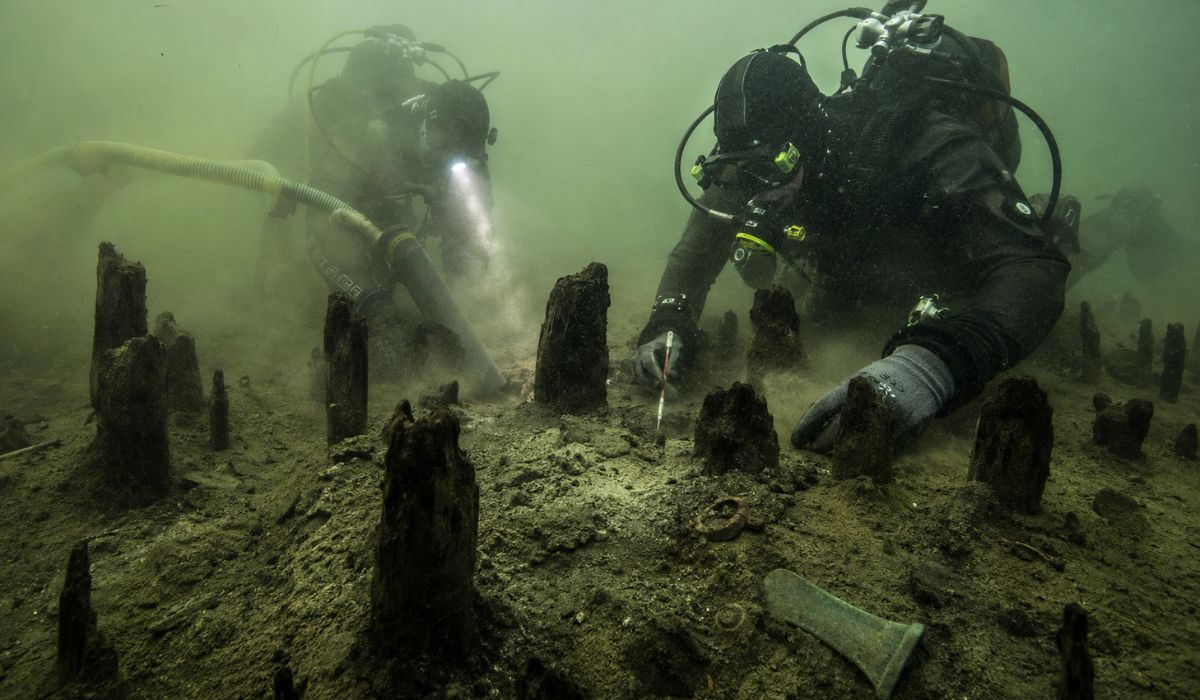
An entire village lay asleep at the bottom of a lake for 3,000 years: divers suction sediments in Italy and reveal more than 600 wooden stakes, bronze tools, and traces of a Bronze Age settlement hidden underwater.
-
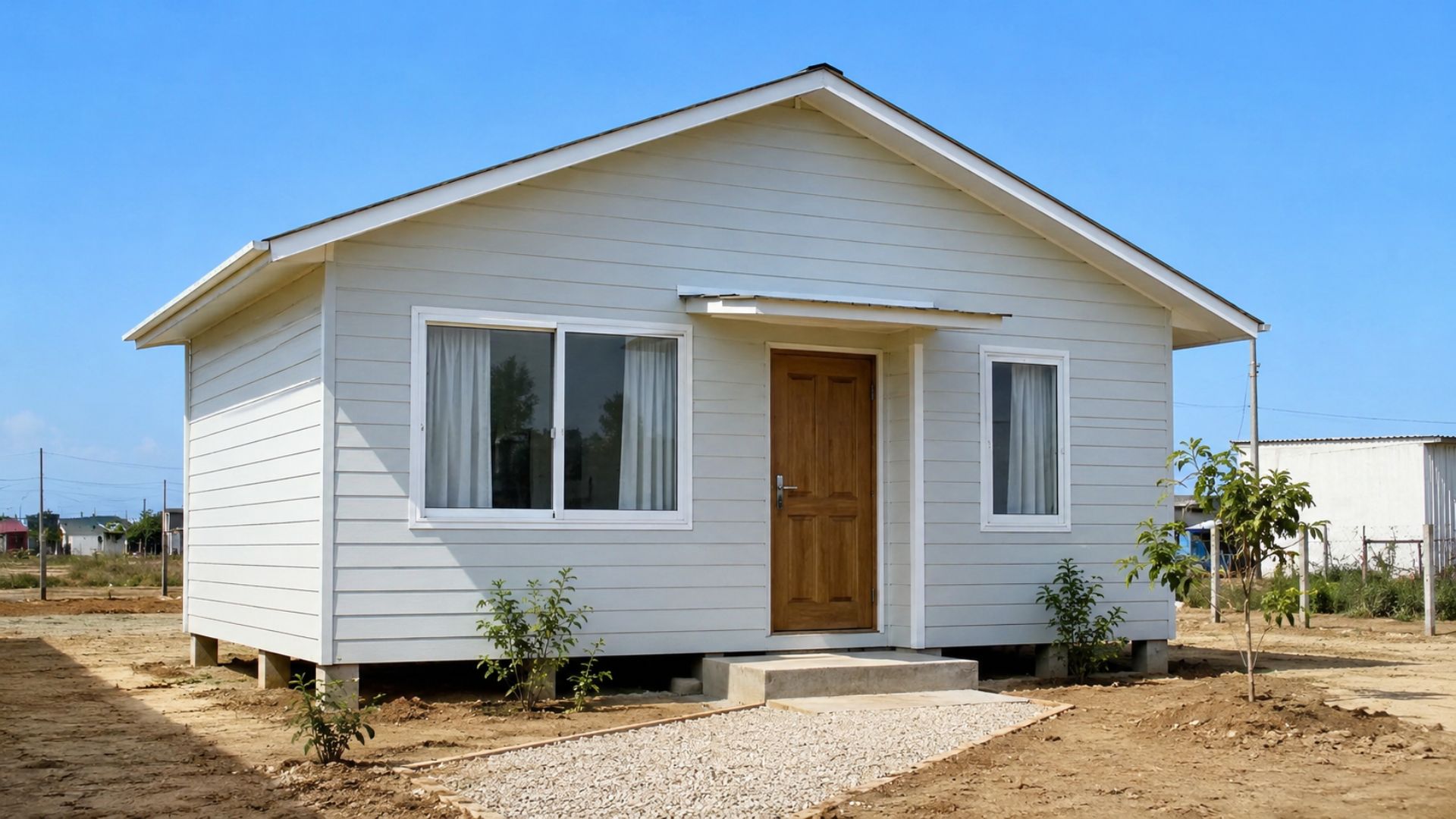
They call it the “Shopee house” and even cardboard, but the R$ 20,000 house is a certified Wood Frame from Alea, financed by Minha Casa Minha Vida: understand if it’s worth more than masonry.


According to Greek authorities, the work brought together more than 40 scientists and international specialists, including teams from the National Institute of Anthropology and History of Mexico and the Norwegian Maritime Museum.


The researchers concentrated operations in the north of Karpathos and the small island of Saria, an area that appears in historical records since Antiquity and occupied a strategic position between the Aegean Sea and the eastern Mediterranean.
Five shipwrecks revealed a maritime timeline that spans 26 centuries
One of the most important discoveries was the identification of five distinct shipwrecks. Four of them belong to Antiquity and the Roman period, while one is associated with a much more recent era. Some of the ships still preserved part of the original cargo at the bottom of the sea.

According to the researchers, the collection covers a chronology from the late 7th century BC to the first half of the 19th century AD, creating an extremely rare archaeological sequence for the study of Mediterranean navigation.
Amphorae still preserve the memory of ancient Mediterranean trade routes
Several shipwrecks were found with large quantities of amphorae. These ceramic containers were used to transport products like wine, olive oil, preserves, and other commercial goods that circulated between ports of the ancient Mediterranean.
In some cases, the amphorae remained grouped exactly where they were when the vessels sank centuries ago. This allows archaeologists to reconstruct trade patterns, the origin of goods, and economic connections between different regions of the ancient world.
More than 20 Byzantine anchors indicate that the region functioned as a strategic maritime corridor
Among the most impressive finds are the anchors found in the protected bay of Tristomo. Researchers recorded more than 20 anchors from the Byzantine period, a concentration considered unusual for a relatively small area.

According to the Ministry of Culture of Greece, the quantity of anchors suggests intense maritime traffic during Late Antiquity, indicating that the site functioned as a stopping point for vessels crossing the Aegean and the eastern Mediterranean.
Submerged port structures show that Karpathos had organized maritime infrastructure
The research did not find only ships. Archaeologists also documented remains of ancient port facilities scattered along the coast.

These structures help confirm that the region had organized maritime infrastructure integrated into the Mediterranean trade routes.
According to the researchers, the remains indicate that Karpathos played a much more important role in ancient maritime trade than previously imagined.
Discoveries are linked to cities mentioned by Strabo almost 2,000 years ago
A large part of the dives was conducted near the archaeological sites of Vrykous and Nisyros. These locations were part of the so-called Tetrapolis of Karpathos, a group of cities mentioned by the Greek geographer Strabo in his work Geographica.
The connection between the terrestrial remains and the submerged finds allowed researchers to reconstruct part of the historical relationship between coastal settlements, ports, and navigation routes in the region. The documented materials cover an extraordinary time span.
The finds span the Greek archaic period, the classical era, Roman rule, the Byzantine phase, and reach up to the modern era.
This transforms the region into a kind of maritime time capsule capable of showing how different civilizations used the same routes for more than two millennia. Few places in the Mediterranean offer such a long historical sequence preserved underwater.
Project also investigates how to protect archaeological sites from the impact of climate change
Alongside the historical research, scientists conducted a program focused on underwater conservation.
The goal was to test methods of direct preservation of artifacts in the marine environment in the face of risks posed by climate change, more intense storms, and changes in ocean conditions.

The initiative was applied in areas near Kasos, south of Karpathos, and is part of a growing effort to protect archaeological heritage that remains hidden under the sea.
Aegean Sea continues to reveal a history that remained invisible for centuries
Researchers believe that the region still holds many other unidentified archaeological sites.
The combination of shipwrecks, ancient ports, amphoras and anchors shows that Karpathos occupied a central position in a maritime network that connected different parts of the Mediterranean long before the formation of modern states.
Under the waters of the Aegean, just a few meters from the surface, lies a hidden history built by merchants, sailors, and empires that crossed the sea for more than 26 centuries and is now beginning to reappear piece by piece.




Be the first to react!