Portuguese
  Spanish



With New Draft and Strategic Works, Port of Paranaguá Breaks Record by Receiving Largest Fertilizer Ship in History by Volume, Reinforcing Its Leadership in Sector Imports
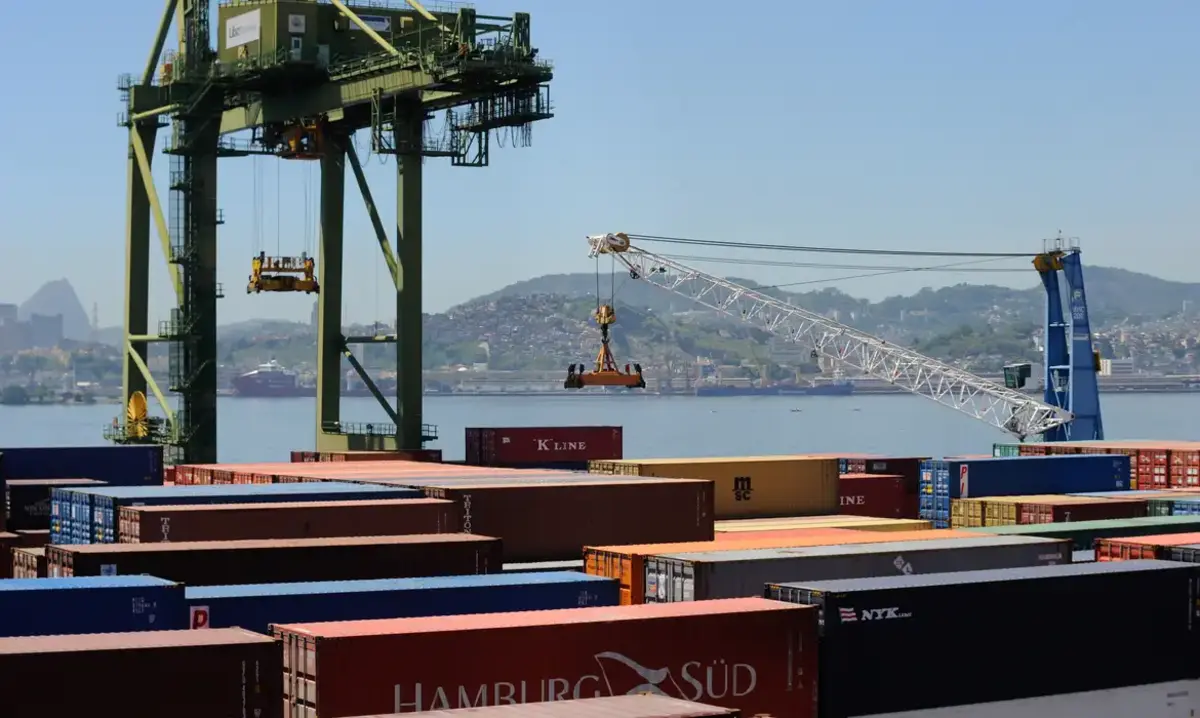
The ship Tai Knighthood achieved an unprecedented feat at the Port of Paranaguá. With 78,325 tons of ammonium sulfate coming from China, it became the largest vessel by volume of fertilizers ever received at the location. The previous record was held by the ship Red Marlin, which unloaded 77,911 tons in March of this year.
The docking of the Tai Knighthood took place last Friday (2) and reinforces the strategic position of the Port of Paranaguá in the national scenario.
Today, it is responsible for more than a quarter of all fertilizer imports in Brazil. The CEO of Portos do Paraná, Luiz Fernando Garcia, emphasized that the trend is for growth: “With the increase in draft, the rise in our numbers will become more and more common.”
-
The U.S. Navy Conducts Submarine Tests in Idaho Lake to Detect Underwater Noises Hidden by the Ocean

-
Nuclear Submarine USS Alexandria Retired After 35 Years, Having Completed Over 1 Million Miles in Missions

-
MODEC Introduces New Hull Design for FPSO Gato do Mato to Produce Up to 120,000 Barrels of Oil Per Day in Brazil’s Pre-Salt Region
-
This Massive 12-Meter, 21-Ton Underwater Drone Can Operate Autonomously for Up to Five Days


New Draft, More Capacity
The draft is the measure between the deepest part of the ship, called the keel, and the water’s surface. At the end of last year, several berths of the port underwent dredging that increased this depth by 30 centimeters. Now, with a draft of 13.1 meters, it is possible to receive larger vessels and with more cargo.
The new depth was officially announced by Ordinance No. 306/2024, in accordance with the maritime traffic regulations of the ports of Paranaguá and Antonina.
The Operations Director, Gabriel Vieira, commented on the importance of the change: “International trade has advanced significantly in recent years, and therefore, the need for larger ships, with greater capacity, has arisen to reduce logistical costs. We are prepared for this change.”
Excavation Work Was Decisive
The increase in draft was only possible due to the excavation work, completed in November. The intervention removed part of a rocky formation called Pedra da Palangana, which impeded the navigation of large ships in the maneuvering area.
About 20 thousand cubic meters of rock were removed, equivalent to 10% of the estimated total of the formation, under federal environmental licensing No. 1144/2016, issued by Ibama.
With information from Diário Induscom.